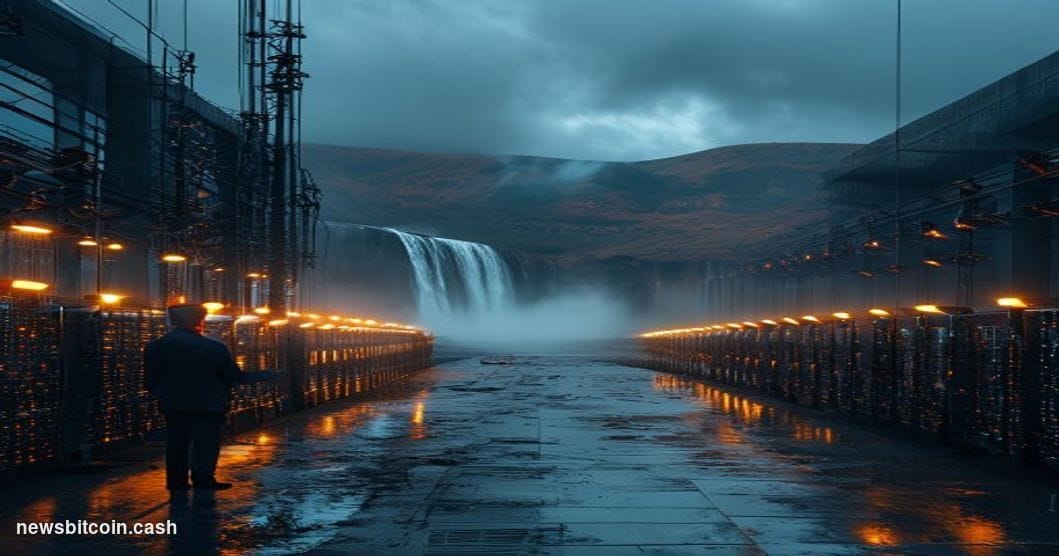
Kazakhstan has taken one of the most assertive steps yet by any sovereign government to integrate cryptocurrency mining into national economic strategy, approving new rules that impose strict infrastructure requirements on miners and mandate the transfer of a portion of mined digital assets into a state-backed reserve. The move signals that Astana is no longer content to simply tax and regulate the industry from a distance — it now wants a direct, ongoing stake in the crypto assets being produced on its soil.
The Central Asian nation has spent several years cultivating one of the world's more prominent crypto mining ecosystems, capitalizing on its abundant and historically cheap energy resources to attract large-scale operations that fled China's 2021 mining ban. That influx transformed Kazakhstan into a top-tier global mining jurisdiction almost overnight. The new rules, approved in July 2026, suggest the government has been watching that wealth-generating machinery operate within its borders and has decided the state should capture a more direct share of the output — not merely in tax revenue, but in the underlying digital assets themselves.
Under the approved framework, miners must satisfy stringent infrastructure standards before they can operate. The specifics of what those standards entail — whether related to energy sourcing, hardware efficiency, grid connectivity, or physical facility requirements — reflect a broader governmental push to ensure that mining operations contribute positively to national infrastructure rather than simply drawing on it. Countries that have allowed unrestricted mining growth have often found themselves managing power grid instability, unauthorized operations, and environmental strain. Kazakhstan's framework appears designed to front-load compliance, filtering out opportunistic or underequipped operators before problems arise.
The reserve mandate is the more structurally significant element, however. Requiring miners to transfer a share of their mined crypto assets directly to a state-backed reserve positions the Kazakh government as an active accumulator of digital assets — not through market purchases, but through production levies. This is a meaningfully different approach from the sovereign wealth fund models being discussed in the United States or the spot Bitcoin reserve proposals gaining traction in various legislative chambers. Kazakhstan would be acquiring assets at the point of creation, at cost, rather than purchasing them on the open market. The economic efficiency of that approach, from a state perspective, is considerable.
It also sets a precedent that other resource-rich nations will watch carefully. Much as energy-exporting states tax oil and gas production at the wellhead, Kazakhstan is effectively treating mined cryptocurrency as a productive national resource subject to a royalty regime. The parallel is imperfect — crypto mining is not geographically bound in the same way hydrocarbon extraction is — but the regulatory logic is structurally similar. Produce within our borders, use our energy, benefit from our infrastructure, and the state takes a cut in kind.
The risk in this model is that it may push more marginal or mobile operations to reconsider Kazakhstan as a base. Mining economics are notoriously thin at certain points in the market cycle, and a mandatory asset transfer on top of existing taxes and compliance costs could erode the jurisdiction's attractiveness for smaller or mid-scale operators. Larger industrial miners with more favorable power purchase agreements and established infrastructure may be better positioned to absorb the additional burden, which could concentrate the industry further among a handful of well-capitalized players — a structural outcome the government may, in fact, prefer.
There is also the question of how the state-backed reserve will be managed once assets begin flowing into it. Sovereign crypto reserves are a novel institutional challenge. Decisions around custody, key management, liquidation policy, and whether to hold, stake, or deploy the accumulated assets will require frameworks that most governments have not yet built. Kazakhstan will need to develop that infrastructure in parallel with enforcement of the new mining rules, and the sophistication with which it does so will determine whether the reserve becomes a genuine strategic asset or a governance liability.
What this means for the broader industry is worth tracking closely. Kazakhstan's approach — mandating infrastructure standards while extracting a share of production for state coffers — is arguably the most integrated sovereign mining policy enacted to date. If the reserve accumulates meaningful holdings and the infrastructure standards succeed in professionalizing the sector, it could serve as a template for other energy-abundant developing nations looking to convert their comparative advantage in cheap electricity into long-term digital asset positions. If it drives operators away or creates administrative dysfunction, it will serve as an equally instructive cautionary tale. Either way, the era of governments treating crypto mining as a peripheral taxable nuisance rather than a strategic productive sector appears to be ending.
Written by the editorial team — independent journalism powered by Bitcoin News.