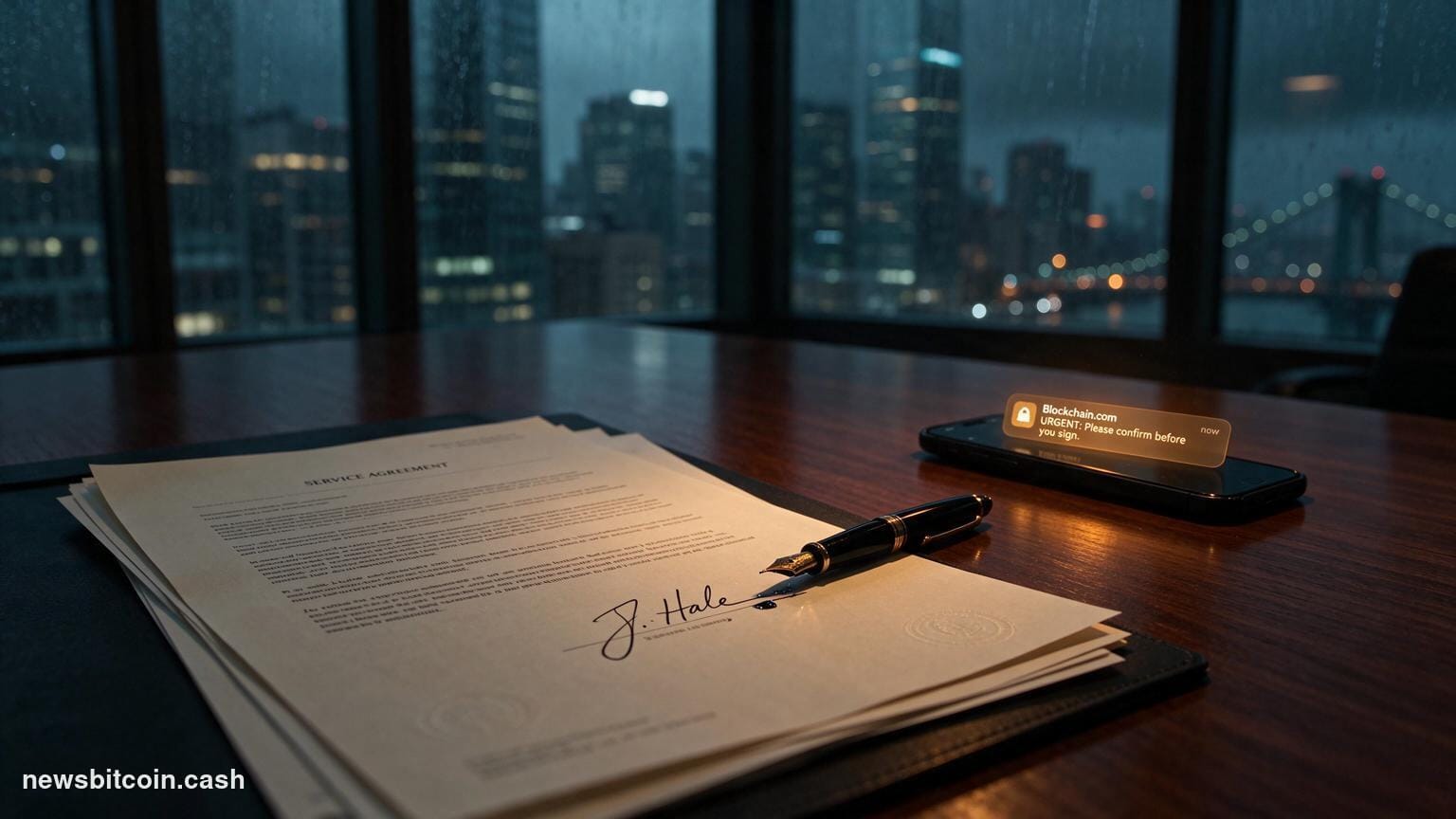
In the chaotic final hours of FTX's collapse in November 2022, ten minutes separated a potential $4 billion rescue from one of the most catastrophic exchange failures in cryptocurrency history. That is the account offered by Constance Wang, the former Chief Operating Officer of FTX, who has now revealed that Justin Sun placed a serious buyout offer on the table — only to have it arrive mere minutes after Sam Bankman-Fried had already relinquished control of the exchange to restructuring specialist John Ray.
The revelation reframes one of the most studied episodes in crypto's short but turbulent history. For years, the FTX implosion has been analyzed as a story of fraud, mismanagement, and regulatory failure. Wang's account adds another dimension: the possibility that the exchange's creditors, customers, and the broader digital asset market might have experienced a radically different outcome if a single phone call had come a fraction of an hour earlier.
The Offer That Came Too Late
According to Wang, Sun's $4 billion offer was genuine and potentially sufficient to cover the liquidity hole that had triggered FTX's catastrophic bank run. The figure is not trivial — it represents a sum that, at the time, could plausibly have stabilized customer withdrawal demands and kept the platform operational while a longer-term solution was engineered. Sun, the founder of the TRON blockchain and one of the more polarizing figures in the digital assets industry, had the resources and the apparent motivation to make such a move. A distressed acquisition of FTX's customer base and infrastructure at a fraction of peak valuation would have been an extraordinary strategic coup.
But the window had already closed. By the time Sun's offer materialized, Bankman-Fried had signed the paperwork transferring FTX's fate to John Ray, the veteran restructuring attorney who had previously overseen the Enron bankruptcy — one of the largest corporate collapses in American history. With Ray's appointment formalized, any acquisition offer became legally and procedurally far more complicated. The bankruptcy machinery had been set in motion, and there was no mechanism to simply unwind the signing that had just occurred.
What Ten Minutes Cost the Industry
The human cost is worth stating plainly. Billions of dollars in customer funds were locked, and millions of users faced prolonged uncertainty about whether they would ever recover their assets. FTX's collapse sent contagion rippling through the crypto market, contributing to cascading failures at other firms and triggering a global regulatory crackdown that reshaped the entire industry's trajectory. If Sun's $4 billion had arrived ten minutes sooner, none of that is guaranteed to have been prevented — but the possibility existed, however uncertainly, that the worst outcomes might have been avoided or at least mitigated.
Wang's credibility as a source is significant. As Chief Operating Officer, she was among the most senior figures inside FTX during its final hours, with direct visibility into the negotiations, communications, and decision-making that occurred as the exchange spiraled toward insolvency. Her account of the timing is not secondhand gossip — it comes from someone who was present in the room, or close enough to it, to understand the sequence of events firsthand.
Sun's Position in the Story
Justin Sun's involvement adds a layer of complexity that the crypto industry will find difficult to process cleanly. Sun has been a controversial figure — simultaneously a prolific dealmaker, an aggressive promoter, and a subject of regulatory scrutiny in multiple jurisdictions. The idea that he might have been FTX's unlikely savior sits uncomfortably alongside his public image. Yet Wang's account suggests his offer was real, substantive, and — in the cruelest twist of timing — entirely credible at $4 billion.
It also raises questions that will never have clean answers. Would a Sun-controlled or Sun-backed FTX have been a better outcome for customers than the John Ray-led bankruptcy process? The restructuring under Ray has been painstaking and prolonged, but it has operated under judicial oversight with a mandate to recover and return assets to creditors. A private rescue by a figure with Sun's profile would have carried its own risks and complications, and there is no guarantee that customers would have fared better under that scenario.
What This Means for Crypto's Memory of the Collapse
Wang's disclosure matters not because it changes the legal or financial outcomes of FTX's bankruptcy — those are locked in place and proceeding through the courts. It matters because it complicates the neat narrative that FTX's collapse was entirely inevitable once Bankman-Fried's mismanagement came to light. Contingency, timing, and the precise sequence of events played a role that history had not fully accounted for until now.
Ten minutes is an almost absurdly small margin given the scale of what was at stake. The crypto industry, which prides itself on operating at the speed of code and instant settlement, was undone in this instance by the irreversible finality of a pen on paper — and a phone call that rang just moments too late. For anyone still parsing the lessons of FTX, Wang's account is a reminder that history is often made not by grand forces but by the brutal precision of timing.
Written by the editorial team — independent journalism powered by Bitcoin News.