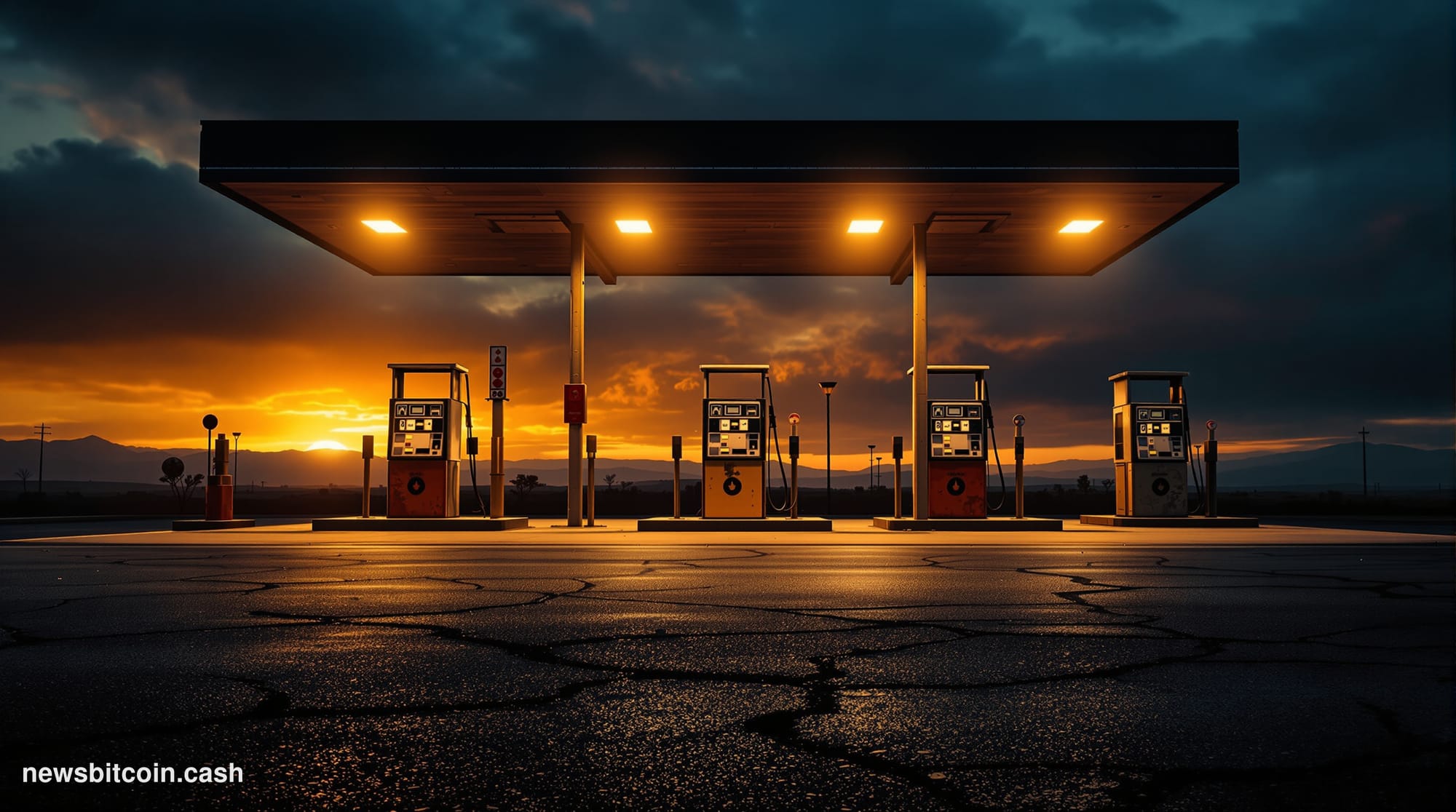
Two hundred and three days into the conflict triggered by United States and Israeli strikes on Iran on February 28, the global energy system is showing unmistakable signs of structural stress. At least five countries are rationing fuel or reporting empty pumps as of September 19, 2026, and Brent crude has climbed to nearly $110 per barrel this month — its strongest level since spring — as the Strait of Hormuz, one of the most consequential shipping chokepoints on the planet, remains largely sealed shut.
The sequence of events matters. When US and Israeli forces struck Iran on February 28, Tehran's retaliation was swift and targeted at the one lever it controls most decisively: the narrow 21-mile passage through which roughly a fifth of the world's seaborne oil has historically flowed. The Strait of Hormuz has been largely closed ever since. What began as a military and geopolitical crisis has become, over 203 days, an enduring energy emergency with cascading consequences for economies that had little buffer to absorb them.
The Price Signal Everyone Ignored
Markets spent years operating on the assumption that Hormuz disruptions, however alarming in theory, would be temporary and manageable in practice. That assumption has now been tested to destruction. Brent crude at nearly $110 a barrel is not a spike driven by speculative positioning — it reflects a genuine, sustained reduction in supply throughput that no combination of strategic reserve releases and alternative routing has fully offset. The countries now facing empty forecourts are not outliers or poorly governed economies caught flat-footed. They represent a broader vulnerability baked into a global supply chain that was optimized for efficiency, not resilience.
The fuel shortages spreading across at least five nations simultaneously also expose the uneven geography of energy dependence. Countries in South and Southeast Asia, parts of Africa, and smaller European importers who relied heavily on Gulf crude routed through Hormuz have found alternative supply chains either unavailable, slower, or priced well beyond what subsidized domestic markets can absorb. The result is rationing — government-imposed limits on how much fuel a household, a farmer, or a small business can purchase — and in the most acute cases, pumps that simply run dry.
What $110 Oil Does to Everything Else
Energy is not a standalone commodity. At $110 a barrel, the second-order effects compound quickly. Freight costs rise, pushing food prices higher in import-dependent markets. Power generation in countries that still rely on oil-fired electricity becomes rationed alongside transport fuel. Agricultural output — in regions where mechanized farming depends on diesel — faces input cost shocks that will echo through harvest cycles well into 2027. Central banks that had declared victory over post-pandemic inflation are facing a new external price shock they cannot resolve through interest rate policy alone.
For the Bitcoin and broader digital assets community, the situation crystallizes arguments that have been made for years but rarely tested under genuine duress. When physical supply chains for the most foundational commodity in the industrial economy seize up, the conversation about monetary sovereignty, censorship-resistant value transfer, and energy-independent payment infrastructure accelerates from theoretical to urgent. Populations in countries experiencing fuel rationing are also, in many cases, experiencing currency pressure, import payment disruptions, and reduced access to dollar liquidity — precisely the conditions under which demand for permissionless financial infrastructure has historically surged.
Crypto Mining's Double-Edged Exposure
The sustained high oil price environment cuts two ways for the crypto industry. Proof-of-work mining operations in regions where electricity generation is oil-linked face sharply higher operating costs, compressing margins and accelerating the shift of hash rate toward jurisdictions with renewable or gas-to-power generation that is insulated from Brent pricing. On the other hand, elevated energy costs have historically correlated with increased institutional interest in Bitcoin as a macro hedge — a non-sovereign asset that cannot be embargoed, rerouted, or rationed at a government checkpoint.
Stablecoin and cross-border payment infrastructure is already seeing elevated use in regions where traditional correspondent banking relationships are fraying under sanctions pressure and currency volatility linked to the conflict. The Strait of Hormuz is a physical chokepoint; SWIFT and legacy payment rails are their financial equivalent. Both are now under stress simultaneously.
What This Means
Day 203 is not a milestone anyone wanted to reach. The Strait of Hormuz remaining largely closed for over six months, Brent crude holding near $110, and at least five countries managing active fuel shortages together constitute a systemic shock — not a temporary disruption. The energy architecture that underwrote the past four decades of globalization is being stress-tested in real time, and the results are not reassuring. For investors, policymakers, and the builders of decentralized financial infrastructure alike, the lesson is identical: systems optimized purely for efficiency, with no redundancy and no alternative routing, do not survive chokepoints. That principle applies equally to oil tankers in the Gulf and to the legacy financial plumbing that the digital asset industry was built to replace.
Written by the editorial team — independent journalism powered by Bitcoin News.