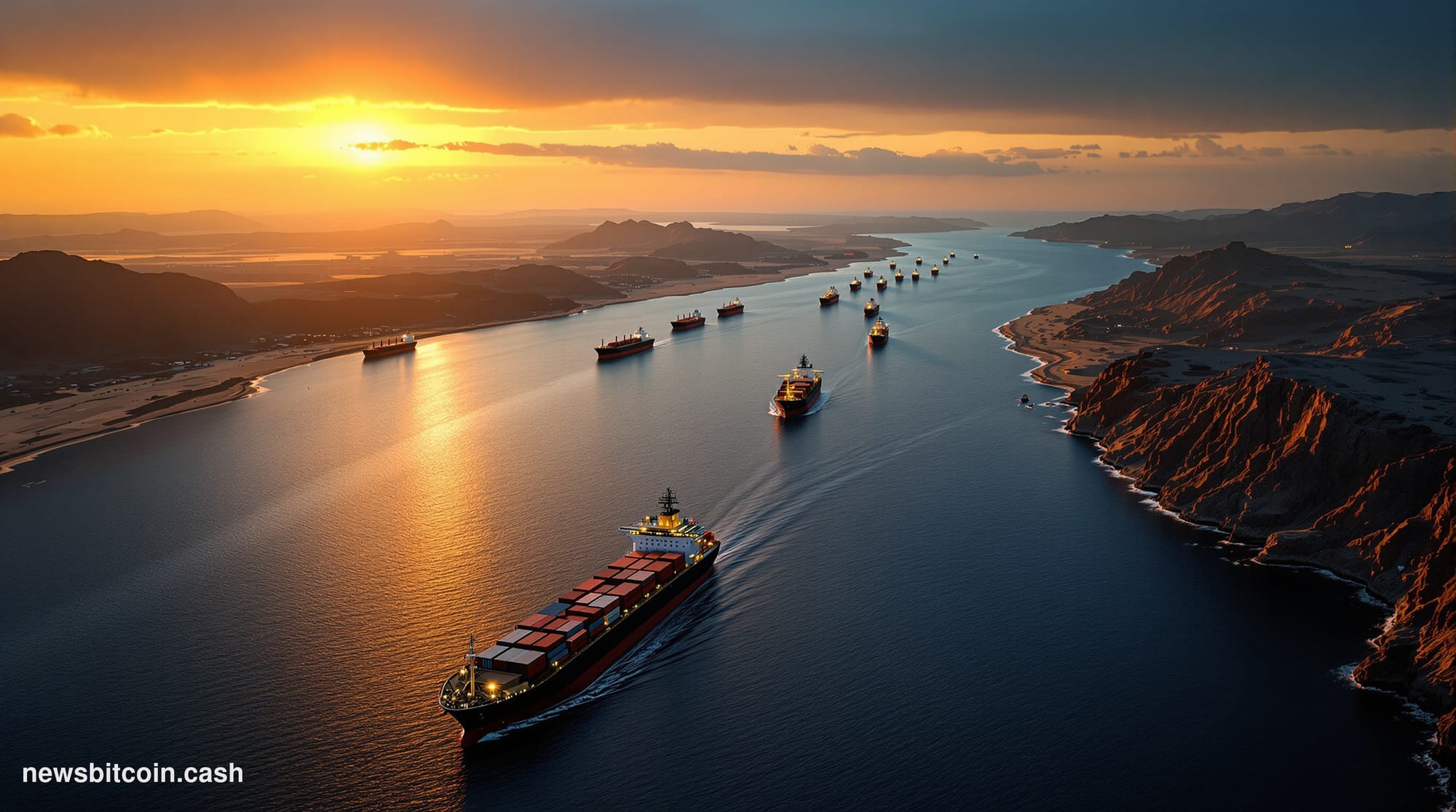
Iran has closed the Strait of Hormuz and begun demanding Bitcoin and stablecoin payments for vessel transit rights, marking an unprecedented escalation in the use of cryptocurrency to circumvent Western financial sanctions. The move transforms the world's most critical energy shipping lane into a testing ground for digital assets as geopolitical weapons.
The closure of this strategic waterway, through which roughly 20 percent of global oil supplies pass daily, represents more than maritime muscle-flexing. By requiring cryptocurrency payments instead of traditional banking channels, Iran has weaponized digital assets in ways that could fundamentally alter how sanctioned nations interact with global commerce. The policy challenges Western financial sanctions by creating an alternative payment rail that operates outside the dollar-dominated international banking system.
This development marks a significant evolution in cryptocurrency's geopolitical role. While digital assets have long been theoretical tools for sanctions evasion, Iran's Strait of Hormuz gambit represents their first deployment as mandatory infrastructure for critical global trade routes. The implications extend far beyond regional politics, potentially destabilizing global energy markets that depend on predictable, cost-effective transit through these waters.
The timing appears calculated to maximize leverage. With energy prices already volatile due to ongoing geopolitical tensions, Iran's crypto payment demands create a new friction point in global supply chains. Shipping companies now face an uncomfortable choice: comply with Iran's cryptocurrency requirements or seek alternative routes that could add weeks and significant costs to deliveries. The additional expenses and delays could ripple through global energy markets, affecting everything from gasoline prices to industrial production costs.
From a technical perspective, the policy highlights cryptocurrency's dual nature as both a liberation technology and a tool of state power. Tether and other stablecoin issuers find themselves in an awkward position, with their tokens suddenly becoming mandatory currency for passage through one of the world's most strategic waterways. The situation tests the limits of stablecoin compliance programs and anti-money laundering controls when faced with state-level demands.
The move also exposes the growing sophistication of sanctioned nations in leveraging cryptocurrency infrastructure. Iran's approach suggests detailed planning around digital asset acquisition, custody, and conversion mechanisms necessary to handle potentially billions of dollars in transit fees. This operational capability indicates that major sanctioned economies have moved well beyond theoretical cryptocurrency adoption into practical implementation at scale.
For the broader cryptocurrency ecosystem, Iran's actions create an uncomfortable precedent. While digital asset advocates have long championed their technology's ability to enable financial freedom and bypass restrictive banking systems, the Strait of Hormuz situation demonstrates how these same capabilities can be deployed by authoritarian regimes to advance geopolitical objectives that may conflict with Western interests.
The policy's success or failure could influence other sanctioned nations considering similar strategies. North Korea, Russia, and other countries facing international financial restrictions are likely monitoring the situation closely for lessons about cryptocurrency's effectiveness as a sanctions circumvention tool. A successful Iranian model could accelerate the fragmentation of the global financial system along geopolitical lines.
What this means for the cryptocurrency industry extends beyond immediate price implications. Iran's Strait of Hormuz gambit represents a stress test for digital assets' role in international relations, forcing the global community to grapple with scenarios where cryptocurrency adoption advances through coercion rather than choice. The outcome may determine whether digital assets remain primarily tools of financial innovation or become weapons in an increasingly multipolar world order where traditional financial sanctions lose their effectiveness.
Written by the editorial team — independent journalism powered by Bitcoin News.