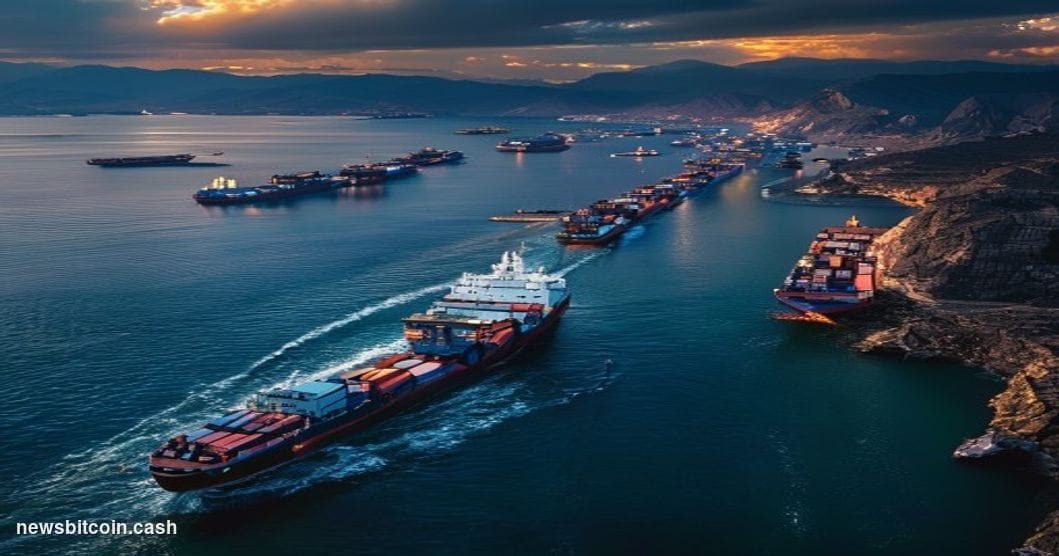
Iran has positioned itself at the intersection of two transformative forces reshaping global commerce: the decentralization of financial infrastructure and the continued dominance of maritime trade chokepoints. The Islamic Republic's launch of "Hormuz Safe," a Bitcoin-settled maritime insurance platform, represents a calculated move to monetize its geographic advantage while circumventing traditional financial systems that have increasingly excluded Iranian entities.
The platform specifically targets cargo owners and shipping firms navigating the Strait of Hormuz and Persian Gulf, waterways that handle roughly 20% of global oil shipments and serve as a critical artery for Asian-bound energy exports. Iran's projection of $10 billion in revenue from Hormuz Safe reflects both the scale of commercial activity in these waters and the premium that operators might pay for insurance products that bypass conventional Western financial infrastructure.
This development signals a sophisticated understanding of how cryptocurrency can serve strategic economic objectives beyond simple sanctions evasion. Traditional maritime insurance relies heavily on London-based Lloyd's of London syndicates and European reinsurers, institutions that have largely severed ties with Iranian entities following successive rounds of international sanctions. By creating a Bitcoin-denominated alternative, Iran offers shipping companies a mechanism to secure coverage without triggering compliance violations with existing sanctions regimes.
The choice of Bitcoin as the settlement currency proves particularly astute from Iran's perspective. Unlike stablecoins or other digital assets that maintain closer ties to traditional banking systems, Bitcoin's decentralized architecture provides the technical foundation for truly peer-to-peer transactions. This characteristic becomes crucial when insurance claims require rapid settlement across jurisdictions where traditional correspondent banking relationships have been severed.
The $10 billion revenue projection, while ambitious, reflects the substantial insurance premiums generated by Strait of Hormuz transit. Maritime insurance costs for vessels transiting Middle Eastern waters have increased dramatically over the past decade due to geopolitical tensions, attacks on shipping, and the general militarization of the region. Standard hull and cargo insurance for large tankers can exceed $1 million per voyage, creating a substantial addressable market for alternative providers.
However, the platform's success depends on Iran's ability to build credible reserves and reinsurance capacity to back potential claims. Maritime incidents involving large vessels can generate losses exceeding $100 million, requiring sophisticated risk management and capital allocation strategies. Iran's domestic insurance sector, while substantial, has limited experience with the scale and complexity of international maritime risks, potentially creating gaps in coverage or pricing that could undermine the platform's competitiveness.
The broader implications extend beyond Iran's borders. Hormuz Safe represents the first major attempt to use cryptocurrency infrastructure for large-scale commercial insurance operations, potentially establishing precedents for how decentralized financial tools can substitute for traditional insurance markets. Success could encourage other jurisdictions facing financial isolation to develop similar platforms, gradually fragmenting the global insurance ecosystem along technological and geopolitical lines.
For the shipping industry, Iran's initiative creates both opportunities and compliance challenges. Companies operating in the region gain access to potentially more competitive insurance products, but must navigate the complex legal frameworks governing sanctions compliance and cryptocurrency usage. The platform's Bitcoin settlement mechanism may appeal to operators seeking to diversify their exposure to traditional financial institutions, but could complicate relationships with banks and insurers in other jurisdictions.
The timing of Hormuz Safe's launch coincides with increasing institutional adoption of Bitcoin treasury management and growing acceptance of cryptocurrency in commercial applications. This convergence suggests that Iran's platform may find receptive markets among shipping companies already comfortable with digital asset operations, particularly those based in jurisdictions with favorable cryptocurrency regulations.
Iran's maritime insurance platform ultimately represents a test case for whether cryptocurrency infrastructure can support the complex, high-value transactions that underpin global trade. The $10 billion revenue target may prove optimistic, but the platform's mere existence demonstrates how digital assets are enabling new forms of economic organization that bypass traditional financial gatekeepers. Success or failure will provide valuable data points for policymakers, financial institutions, and technology developers working to understand cryptocurrency's role in reshaping international commerce.
Written by the editorial team — independent journalism powered by Bitcoin News.