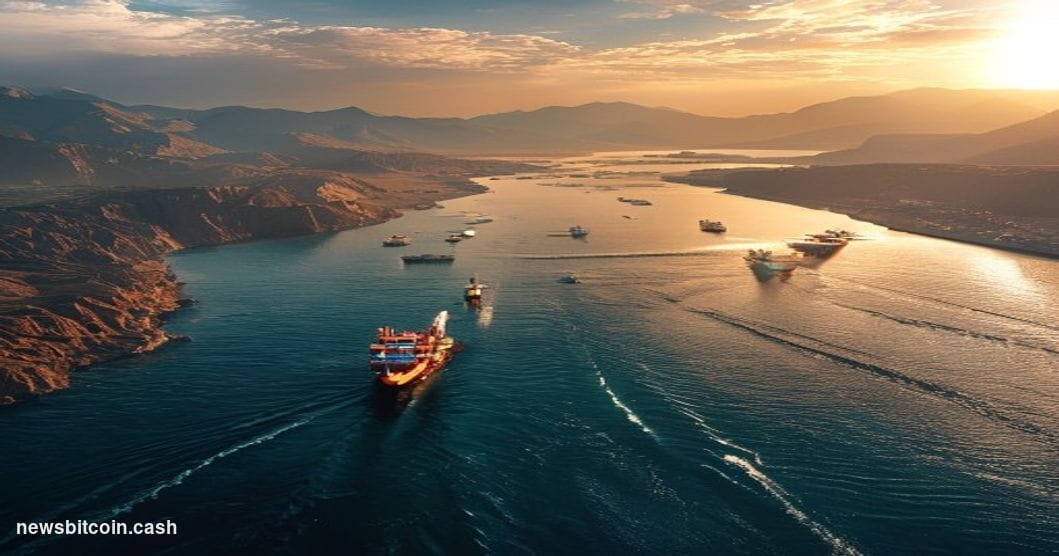
Iran has unveiled Hormuz Safe, a state-backed maritime insurance platform that settles claims in Bitcoin, targeting cargo vessels transiting the Strait of Hormuz. The initiative marks a significant escalation in cryptocurrency's integration into global trade infrastructure, particularly in sectors where traditional financial systems face geopolitical constraints.
The platform, backed by Iran's Ministry of Transportation, enables sanctioned shipping companies to purchase insurance coverage using cryptocurrency rather than traditional fiat currencies. This mechanism provides instant digital coverage for vessels navigating one of the world's most strategically critical maritime passages, where roughly 20% of global oil supplies transit daily.
The Strait of Hormuz represents a natural laboratory for alternative financial systems. Traditional insurers often struggle to provide coverage for vessels operating in politically sensitive regions, creating gaps that crypto-native solutions can potentially fill. By denominating policies in Bitcoin, Hormuz Safe sidesteps the correspondent banking relationships that sanctions typically disrupt.
Iran's approach reflects broader trends in how sanctioned nations are leveraging digital assets to maintain commercial relationships. Unlike conventional insurance markets that rely on dollar-denominated reserves and Western banking infrastructure, Bitcoin-settled policies can operate independently of traditional financial gatekeepers. The cryptocurrency's borderless nature makes it particularly suitable for insuring cross-border trade flows.
The platform's potential to unlock billions in new revenue stems from the massive volume of cargo that transits the strait annually. Energy shipments alone account for hundreds of billions of dollars in value, while containerized goods add substantially to the total. Even capturing a small percentage of this market could generate significant premium revenue for Iranian state coffers.
From an infrastructure perspective, Hormuz Safe represents a practical test case for Bitcoin's role in complex commercial arrangements. Maritime insurance requires sophisticated risk assessment, claims processing, and reserve management—functions traditionally handled by established London and European markets. Executing these processes on Bitcoin rails demands new technical and operational frameworks.
The initiative also highlights cryptocurrency's growing role in energy trade finance. As traditional banking relationships become increasingly fragmented due to sanctions regimes, digital assets provide alternative settlement mechanisms for commodity transactions. This trend extends beyond Iran to include other sanctioned entities seeking to maintain international commercial activities.
However, the platform faces substantial challenges in gaining widespread adoption. International shipping companies must weigh the benefits of crypto-denominated coverage against potential regulatory risks in their home jurisdictions. Many Western nations maintain strict sanctions compliance requirements that could complicate participation in Iranian-backed insurance schemes, regardless of the settlement currency.
The technical execution of Bitcoin-settled insurance policies also presents novel challenges. Unlike traditional fiat-denominated contracts, cryptocurrency settlements introduce volatility considerations that affect both premium calculations and claim payouts. Insurers must develop new pricing models that account for Bitcoin's price fluctuations while maintaining adequate reserves.
What this means for the broader cryptocurrency ecosystem is the emergence of state-level actors as infrastructure providers rather than mere users. Iran's willingness to build Bitcoin-native financial services demonstrates how geopolitical isolation can drive innovation in digital asset applications. As sanctions regimes proliferate globally, similar initiatives may emerge from other isolated economies seeking alternative commercial pathways.
Written by the editorial team — independent journalism powered by Bitcoin News.