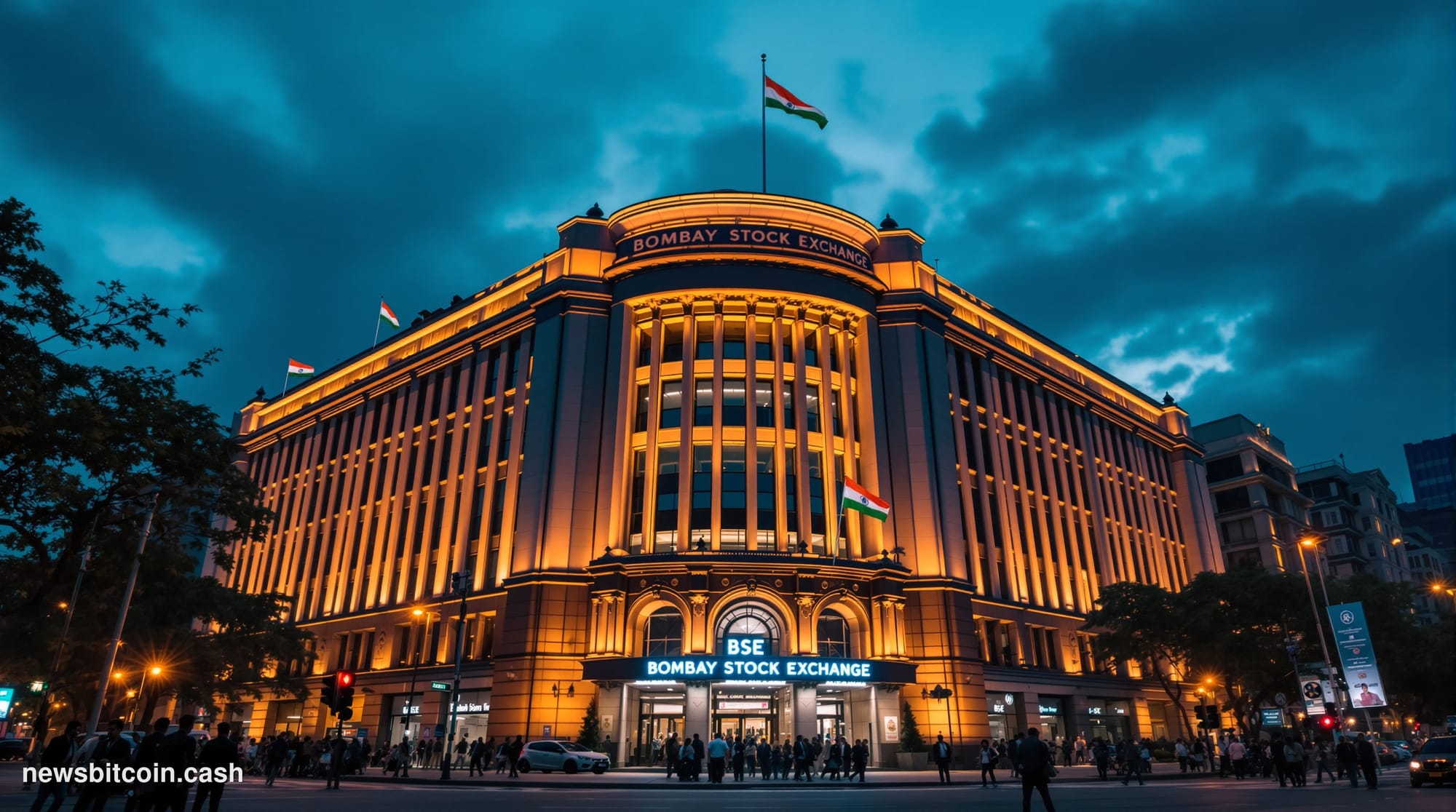
India's equity capital markets are having a moment that analysts will be citing for years. With nearly $10 billion in deals priced across a single calendar month, August is on course to become the strongest month on record for Indian equity issuance — a milestone that reflects not just domestic investor appetite, but a structural shift in how global capital views the subcontinent's financial architecture.
Leading the charge was a $3.2 billion government divestment of shares in Life Insurance Corp. of India, the state-backed insurance behemoth that has become something of a bellwether for India's public sector sell-down program. When a single government block trade of that scale clears the market cleanly, it sends a signal well beyond the transaction itself — it tells institutional allocators that Indian liquidity conditions have matured enough to absorb heavyweight issuance without significant price dislocation.
Alongside that anchor deal, Manipal Health Enterprises executed an initial public offering worth $958 million, adding meaningful depth to the healthcare sector's growing presence on Indian public markets. Block trades rounded out the month's activity, collectively pushing total deal volume toward the historic $10 billion threshold. The breadth of issuance — spanning government divestment, private healthcare, and secondary market block activity — illustrates that this is not a single-sector story. India's capital formation engine is firing on multiple cylinders simultaneously.
For observers of digital assets and blockchain-based capital markets, India's record equity month carries implications that extend beyond traditional finance. The country's rapid acceleration in equity market sophistication is precisely the kind of macroeconomic backdrop that accelerates institutional interest in tokenized real-world assets, or RWAs. When a jurisdiction demonstrates the regulatory coherence and investor depth to sustain nearly $10 billion in a single month of equity activity, it simultaneously establishes the infrastructure credibility that makes on-chain versions of those same instruments viable. The legal rails, the custody frameworks, and the investor base needed to absorb a $3.2 billion LIC offering are the same foundations upon which tokenized securities programs are built.
India's trajectory in public markets also matters for the broader conversation around digital asset adoption at the institutional level. The country has long occupied an uncomfortable middle ground in crypto policy — simultaneously hosting one of the world's largest retail crypto user bases while applying steep transaction taxes that dampened domestic trading volumes. Yet the boom in equity issuance suggests that Indian institutional and retail capital is not sitting idle; it is actively seeking return. Platforms and protocols looking to capture Indian institutional flows through tokenized instruments, yield-bearing stablecoins, or blockchain-based fixed income products are watching this record-setting month as confirmation that the appetite is there, even if the regulatory path for digital assets remains narrower than for equities.
The Life Insurance Corp. divestment also deserves attention as a geopolitical signal. Government-led share sales of this magnitude require months of coordination between ministries, underwriters, and anchor investors — many of them foreign. The fact that a $3.2 billion sovereign divestment cleared the market in August, traditionally a quieter month for global capital markets due to Northern Hemisphere summer schedules, speaks to the deliberate structural demand that global asset managers have been building toward India over the past several years. This is patient institutional capital, not speculative momentum.
The Manipal Health IPO adds another layer to the story. Healthcare has emerged as one of India's most capital-hungry and investor-favored sectors, driven by demographic tailwinds and chronic underinvestment in medical infrastructure relative to population. A sub-$1 billion healthcare IPO successfully priced alongside a $3.2 billion sovereign block trade — and both clearing in the same month — demonstrates a market with genuine depth across the size spectrum. That is not a coincidence; it is the product of years of market structure investment by Indian regulators and exchanges.
What This Means for Digital Asset Markets
India's record August is a data point that the digital asset industry should not dismiss as irrelevant to its own trajectory. Nearly $10 billion of equity deals priced in a single month tells the RWA tokenization ecosystem that India represents a serious target market — one with proven institutional scale, a growing public company pipeline, and a government willing to use capital markets as a policy tool. Protocols building tokenized equity and fixed-income products, as well as custodians and compliance infrastructure providers, would be well-served by treating India's equity market milestone not as a traditional finance headline, but as a forward indicator of where blockchain-based capital formation infrastructure will be needed next. The record is financial. The implications are structural.
Written by the editorial team — independent journalism powered by Bitcoin News.