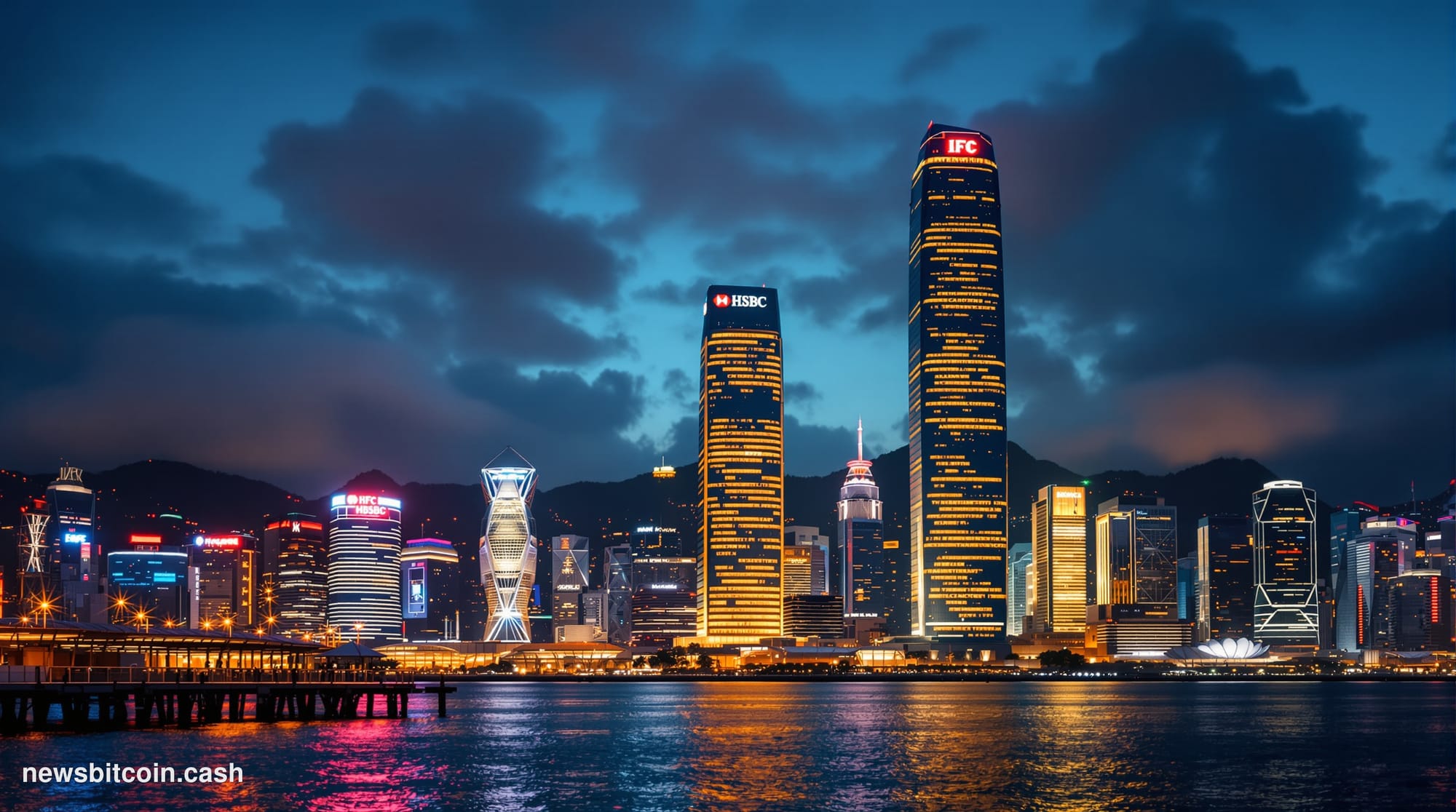
Hong Kong's financial district does not typically hum with the same intensity in July and August as it does during the frenzied deal-making of spring and autumn. But this year, bankers along Queen's Road Central have been forgoing beach holidays and family retreats, drawn back to their desks by an unprecedented wave of artificial intelligence-driven fundraising that has turned the third quarter into one of the most active capital-raising periods the city has seen. The volume and pace of deal flow signal something more significant than a seasonal anomaly — they point to a structural realignment of where the world's largest equity transactions get done.
Hong Kong's equity markets are posting a record fundraising quarter, with artificial intelligence emerging as the primary engine behind the surge. The deals cutting through the pipeline span listings, secondary offerings, and private placements tied to companies operating across the AI value chain — from semiconductor supply infrastructure to large language model developers seeking public capital. The sheer breadth of AI-adjacent activity has overwhelmed the usual seasonal lull, forcing investment banking teams to maintain peak staffing levels through what is traditionally a skeleton-crew period.
The implications reach well beyond Hong Kong's harbour. For decades, Wall Street has operated as the undisputed gravitational centre of global equity capital. Companies with global ambitions — regardless of their home market — have historically defaulted to New York as the venue where serious money gets raised and credible valuations get set. That logic is now being challenged in a direct and measurable way. The AI fundraising boom concentrating in Hong Kong suggests that the centre of gravity for technology capital formation is shifting eastward, pulled by a combination of proximity to manufacturing ecosystems, access to deep pools of Asian institutional capital, and a regulatory environment in Hong Kong that has been deliberately recalibrated to attract high-growth technology issuers.
This development carries particular relevance for the digital assets industry. Hong Kong has spent the past several years constructing a regulatory architecture for virtual assets that runs parallel to its broader push to reclaim status as Asia's premier financial hub. The city's Securities and Futures Commission has licensed crypto exchanges and moved to create frameworks for tokenized securities and digital asset funds. An influx of AI-related capital and the banking talent mobilized to deploy it creates a fertile environment for the next wave of deals that blur the line between traditional equity and blockchain-native capital structures. When sophisticated institutional investors are already active in the city executing AI transactions, the mental and operational distance to digital asset deals shrinks considerably.
The decision by bankers to skip summer holidays is also a meaningful data point about deal urgency. In capital markets, calendar disruptions of this kind only happen when the opportunity cost of absence is deemed unacceptably high. Mandates are being awarded, books are being built, and allocations are being set in a compressed timeframe. That urgency reflects genuine investor demand rather than manufactured pipeline — a distinction that matters when assessing whether the record quarter represents durable momentum or a one-time flush of pent-up issuance. Given that the underlying driver is artificial intelligence adoption across industries rather than a single speculative theme, the structural case for continued activity is stronger than typical deal-cycle explanations would suggest.
Wall Street's position is not disappearing overnight. New York retains enormous advantages in depth of liquidity, breadth of institutional participation, and the legal infrastructure that underpins the most complex structured transactions. But dominance in global capital markets is rarely lost in a single dramatic rupture — it erodes through the accumulation of deals done elsewhere, talent recruited to competing hubs, and investor habits gradually reset by repeated successful transactions in new venues. Hong Kong's record quarter is precisely the kind of data point that reshapes those habits over time, particularly when the sector driving the activity — artificial intelligence — is widely understood to be one of the defining investment themes of the next decade.
For digital asset investors and the infrastructure builders who serve them, the broader message is worth absorbing carefully. Capital is becoming more multipolar, and the institutions moving it are increasingly comfortable operating across jurisdictions that were once considered peripheral to the main event. Hong Kong's AI fundraising surge is a reminder that the geography of money is not fixed — and that platforms, exchanges, and protocols positioned to serve capital flows wherever they concentrate will have a structural advantage over those optimized exclusively for the incumbent centres.
Written by the editorial team — independent journalism powered by Bitcoin News.