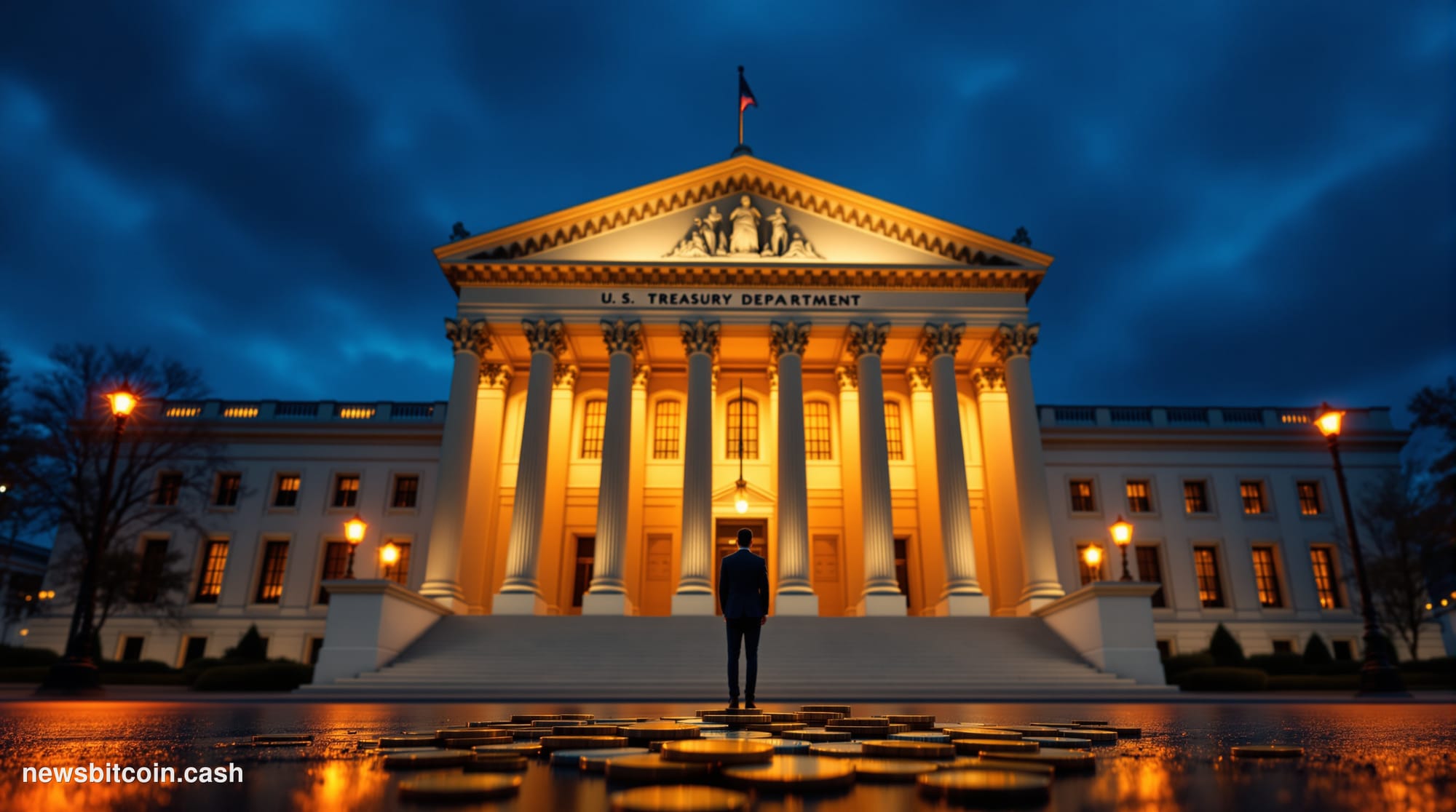
A new report from the government watchdog group Public Citizen has injected a pointed question into one of the more unusual political spectacles of the crypto era: exactly who is showing up to Donald Trump's memecoin dinner? According to the organization's analysis, 66 of the 130 wallets that qualified for the exclusive event received their tokens from cryptocurrency exchanges that explicitly restrict access to United States-based users — meaning, in plain terms, that roughly half the guest list may be composed of foreign nationals or entities operating outside US jurisdiction.
The dinner, centered around Trump's personal memecoin project, was designed as an incentive mechanism: holders of sufficient token quantities would earn a seat at the table — literally. It is a novel form of political access, and one that has drawn intense scrutiny since its announcement. But the Public Citizen findings elevate what was already a thorny ethical debate into something with sharper regulatory edges. If the majority of qualifying wallets are linked to platforms that bar American customers, the composition of the attendee pool raises significant questions about foreign influence, donor disclosure, and the nature of access being sold through a blockchain-native instrument.
The Exchange Trail
Blockchain forensics of this kind rely on tracing the origin of token flows — following the on-chain movement of assets from their source exchange to the wallet in question. When Public Citizen identified that 66 of the 130 qualifying wallets had their tokens originate from exchanges that do not serve US users, it was not merely speculating about nationality. It was following the money back through a transparent, immutable ledger to its point of departure. The fact that these exchanges restrict American users is not incidental; it is their defining regulatory characteristic. They operate in jurisdictions where US securities and anti-money-laundering frameworks either do not apply or are deliberately avoided.
This distinction matters enormously in the context of a dinner with a sitting US president. American campaign finance law prohibits foreign nationals from contributing to federal campaigns or making expenditures in connection with any US election. While purchasing a memecoin is not, on its face, a campaign contribution, critics argue the dinner format creates a close enough functional analogy to warrant serious scrutiny. Buying tokens to gain access to a president is, to many observers, the equivalent of buying access — and the question of who is doing the buying is not merely academic.
Memecoin as Access Vehicle
The Trump memecoin dinner concept is unprecedented in its directness. Previous political fundraising vehicles — PACs, bundlers, donor events — operated through layers of institutional intermediation. This model collapses that distance entirely. A wallet address either holds the requisite number of tokens or it does not. There are no gatekeepers, no vetting processes, no Know Your Customer checks applied at the dinner-eligibility layer. The blockchain is the bouncer, and the blockchain does not ask for a passport.
That structural openness is precisely what makes the Public Citizen findings so significant. In a traditional donor event, the campaign would at minimum collect identifying information from attendees and be legally obligated to disclose contributions above certain thresholds. Here, the qualifying mechanism is pseudonymous by design. The token itself carries no identity. And as the analysis demonstrates, nearly half the tokens that opened these virtual doors came from platforms that by definition serve a non-American user base.
The Regulatory Vacuum at the Center
The United States has spent the better part of four years debating how to regulate cryptocurrency markets, with the Securities and Exchange Commission and Congress locked in jurisdictional and legislative standoffs. That vacuum has real consequences in cases like this. There is no settled legal framework that clearly governs what a memecoin-denominated access event constitutes under campaign finance, securities, or foreign influence statutes. The ambiguity is not accidental — it is the product of regulatory inertia — and it is being exploited, whether deliberately or by circumstance.
Public Citizen's methodology, tracing wallet funding sources back through the chain to exchange origin, is the kind of due diligence that should have preceded the event's design. The fact that it had to be done retroactively by an external watchdog, rather than proactively by organizers or relevant agencies, is itself a statement about the state of oversight in this space.
What This Means
The 66-of-130 figure is not a rounding error or an edge case. It represents a structural outcome of building a political access mechanism on top of a permissionless financial system without identity controls. Half the qualifying wallets sourcing tokens from non-US exchanges means half the potential dinner guests are, at minimum, persons whose national identities are obscured behind pseudonymous addresses and foreign trading venues. For an event involving a US president, that is not a minor compliance footnote — it is a foundational problem. As the dinner approaches and the Public Citizen report circulates, the burden of explanation falls squarely on the event's organizers to account for who is actually sitting at that table, and by what right they got there.
Written by the editorial team — independent journalism powered by Bitcoin News.