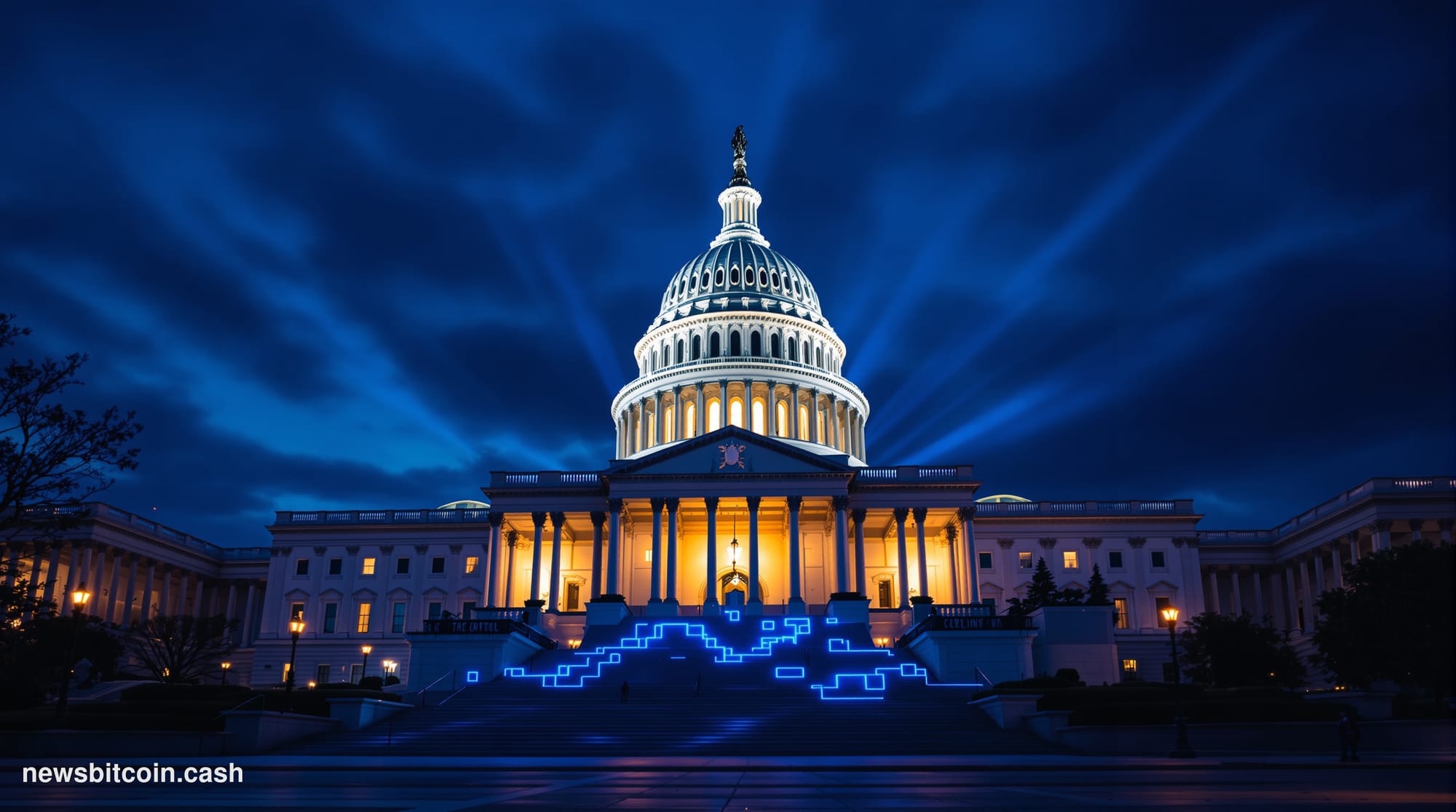
After years of false starts, partisan gridlock, and competing draft bills that seemed to dissolve before they could gather momentum, the United States has finally done it. The Guiding and Establishing National Innovation for U.S. Stablecoins (GENIUS) Act is now law — the first comprehensive federal regulatory framework specifically governing stablecoins ever enacted in the country. The significance of that fact is difficult to overstate. For an industry that has operated in a state of regulatory limbo since its inception, the GENIUS Act represents not just a legal milestone but a structural shift in how digital dollars are positioned within the broader global financial system.
The absence of a clear federal framework had long been one of the most cited obstacles to institutional participation in crypto markets. Banks, asset managers, payment processors, and corporate treasuries capable of deploying capital at meaningful scale had consistently pointed to regulatory uncertainty as the primary reason for staying on the sidelines — or limiting exposure to a cautious minimum. The GENIUS Act removes that excuse. It establishes clear definitions, reserve requirements, and oversight structures for stablecoin issuers, giving institutions the legal ground they need to engage with dollar-denominated digital assets at scale.
The implications for institutional adoption are immediate and concrete. With a federal framework now in place, compliance teams at major financial institutions have a rulebook to follow rather than a patchwork of state money-transmission licenses, informal guidance letters, and enforcement actions to interpret. That matters enormously in practice. Regulated entities do not move on ambiguity — they move on clarity, and the GENIUS Act delivers exactly that. Expect the months following enactment to be characterized by a wave of product launches, custody partnerships, and stablecoin integration announcements from institutions that had been waiting precisely for this moment.
Circle, issuer of the USD Coin (USDC) stablecoin, and Tether, which operates the world's largest stablecoin by market capitalization, now face a defined compliance landscape. For U.S.-domiciled issuers like Circle, the GENIUS Act is broadly constructive — it legitimizes the asset class and creates a level playing field where regulatory compliance becomes a competitive advantage rather than a cost center. For offshore issuers, the calculus is more complex. The law introduces standards that any stablecoin seeking meaningful access to U.S. markets and U.S. users may ultimately need to meet, shifting the center of gravity in the global stablecoin market toward federally compliant issuers.
The global dimension of this legislation deserves particular attention. The European Union moved first with its Markets in Crypto-Assets (MiCA) regulation, which came into force ahead of the GENIUS Act and established Europe as an early mover on comprehensive crypto regulation. The United States, by contrast, spent years mired in jurisdictional disputes between the Securities and Exchange Commission (SEC), the Commodity Futures Trading Commission (CFTC), and Congress itself. The GENIUS Act ends that stalemate on the stablecoin question specifically, and the timing matters: digital asset markets are increasingly global, and regulatory arbitrage — the practice of domiciling operations wherever rules are most favorable — becomes harder to sustain when the world's largest economy establishes clear minimum standards.
It would be premature, however, to treat the GENIUS Act as a complete solution to the regulatory uncertainty surrounding digital assets in the United States. Stablecoins are one category within a far broader ecosystem. Questions around the regulatory classification of other cryptocurrencies, the treatment of decentralized finance (DeFi) protocols, and the oversight of crypto exchanges remain unresolved at the federal level. The GENIUS Act is a beginning, not an ending — a first chapter in what will necessarily be a longer legislative story. The framework it establishes for stablecoins could serve as a template for that broader effort, but the hard work of building consensus around more contested categories of digital assets still lies ahead.
What the Act does accomplish, clearly and consequentially, is signal a directional commitment from the U.S. government. After years in which federal crypto policy seemed to consist primarily of enforcement actions and ambiguous agency guidance, Congress has passed — and the President has signed — affirmative legislation designed to foster innovation rather than simply constrain it. That posture shift, more than any specific provision of the law, may be the GENIUS Act's most durable contribution. It tells the market, domestic and international alike, that the United States intends to compete in the digital asset space rather than regulate it into irrelevance.
For builders, investors, and institutions navigating the digital asset landscape, the message from Washington is now unmistakable: stablecoins have a legal home in the United States, and the framework designed to govern them is built to encourage growth. The next test will be implementation — how regulators interpret the law's provisions, how issuers adapt their operations, and whether the clarity promised on paper translates into frictionless compliance in practice. Those answers will emerge over the coming months. But the foundation, at long last, has been laid.
Written by the editorial team — independent journalism powered by Bitcoin News.