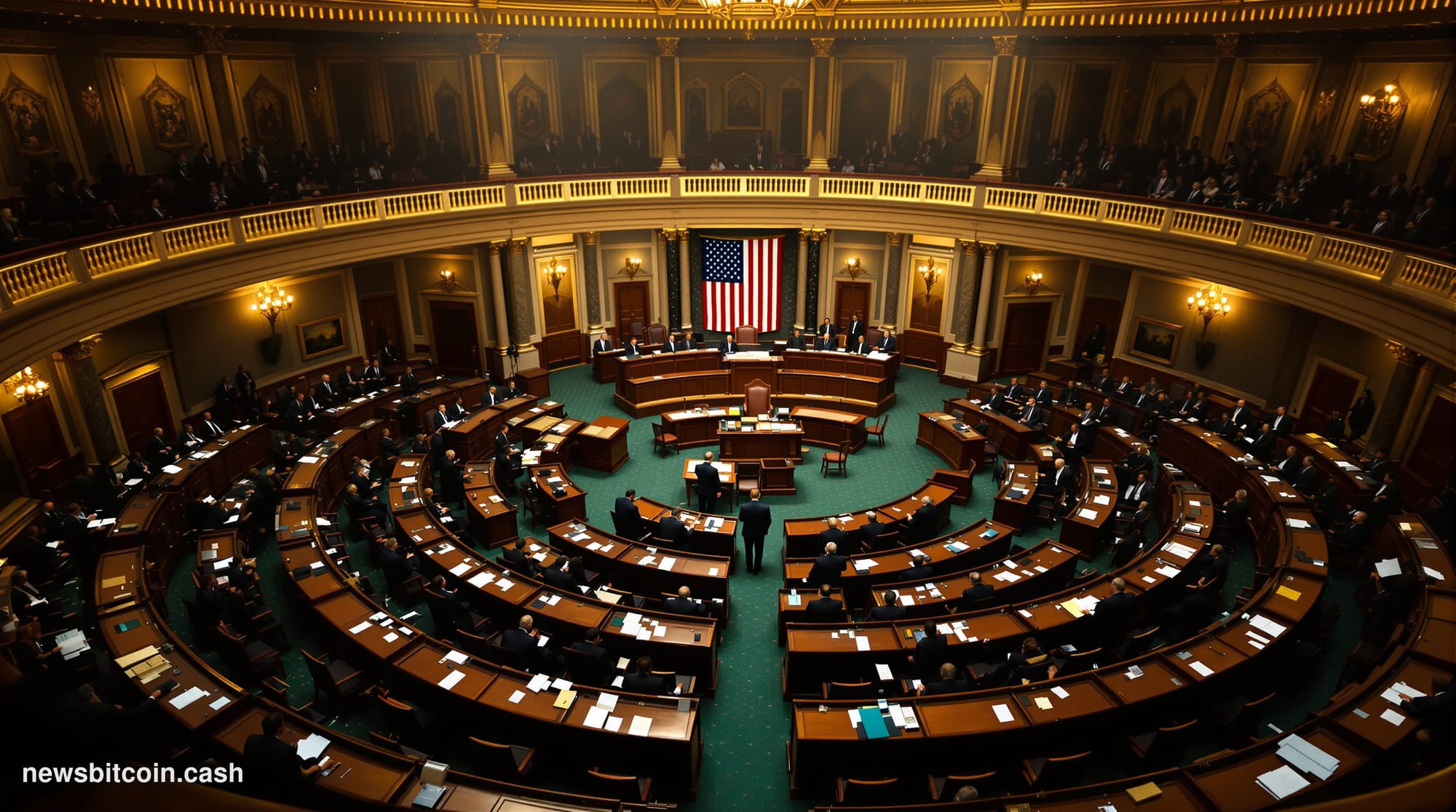
The crypto industry's hopes for comprehensive regulatory clarity took a measured hit this week as Galaxy Digital research head Alex Thorn revised downward his probability assessment for the Clarity Act's passage in 2026. Thorn cut his odds from 75% to 60%, citing not policy objections but the harsh arithmetic of Senate scheduling—a reminder that even bipartisan legislation can fall victim to calendar mathematics.
The 15-percentage-point reduction reflects a pragmatic reassessment of legislative realities rather than any fundamental shift in political support for crypto regulation. Thorn's analysis points to the compressed Senate calendar as the primary obstacle, suggesting that procedural constraints rather than substantive opposition now represent the bill's greatest challenge. This distinction matters considerably for industry stakeholders tracking the legislation's prospects.
The Clarity Act has emerged as one of the most closely watched pieces of crypto legislation, promising to establish clearer regulatory frameworks for digital assets and reduce the regulatory uncertainty that has plagued the industry. The bill's fate has significant implications for how crypto companies operate in the United States and whether the country can maintain its competitive position in the global digital asset ecosystem.
Galaxy's revised assessment underscores a recurring theme in crypto policy: the gap between political momentum and procedural reality. While industry observers often focus on whether lawmakers support or oppose crypto-friendly legislation, the mechanics of congressional scheduling can prove equally decisive. The Senate's packed agenda leaves limited floor time for bills that lack emergency status, regardless of their bipartisan appeal.
Thorn's methodology in adjusting these odds reflects the analytical rigor that institutional players now bring to crypto policy forecasting. Rather than relying on political rhetoric or media coverage, Galaxy's assessment appears grounded in the mundane but critical realities of legislative process—committee schedules, floor time allocation, and competing priorities. This approach signals the maturation of crypto policy analysis beyond wishful thinking toward evidence-based probability assessment.
The timing of this revision also highlights the increasing sophistication of institutional crypto players in managing regulatory risk. By publicly adjusting probability estimates based on procedural developments, Galaxy demonstrates the kind of systematic policy analysis that traditional financial institutions have long employed. This represents a significant evolution from the industry's earlier tendency to treat regulatory outcomes as binary possibilities.
The Senate calendar crunch affects more than just the Clarity Act, creating a bottleneck that could impact multiple pieces of crypto-related legislation. This procedural reality means that even bills with strong bipartisan support may struggle to advance, not because of policy disagreements but simply due to time constraints. The implications extend beyond any single piece of legislation to the broader pace of regulatory development in the crypto sector.
For market participants, Galaxy's revised odds offer a more nuanced framework for assessing regulatory timeline expectations. Rather than betting on binary outcomes, institutional players can now calibrate their strategies around probability-weighted scenarios. This analytical sophistication reflects the industry's growing integration with traditional financial markets, where regulatory risk assessment follows established quantitative methodologies.
The reduction to 60% passage odds, while disappointing to crypto advocates, still suggests better-than-even chances for the Clarity Act's advancement in 2026. This probability level indicates that while procedural hurdles have increased, the fundamental political dynamics supporting the legislation remain intact. The challenge lies in navigating the compressed timeline rather than building additional support.
What emerges from Galaxy's analysis is a sobering reminder that crypto policy progress depends as much on congressional mechanics as on political will. The industry's regulatory future may hinge not on dramatic policy battles but on the mundane arithmetic of Senate scheduling—a reality that demands both patience and strategic sophistication from market participants positioning for regulatory clarity.
Written by the editorial team — independent journalism powered by Bitcoin News.