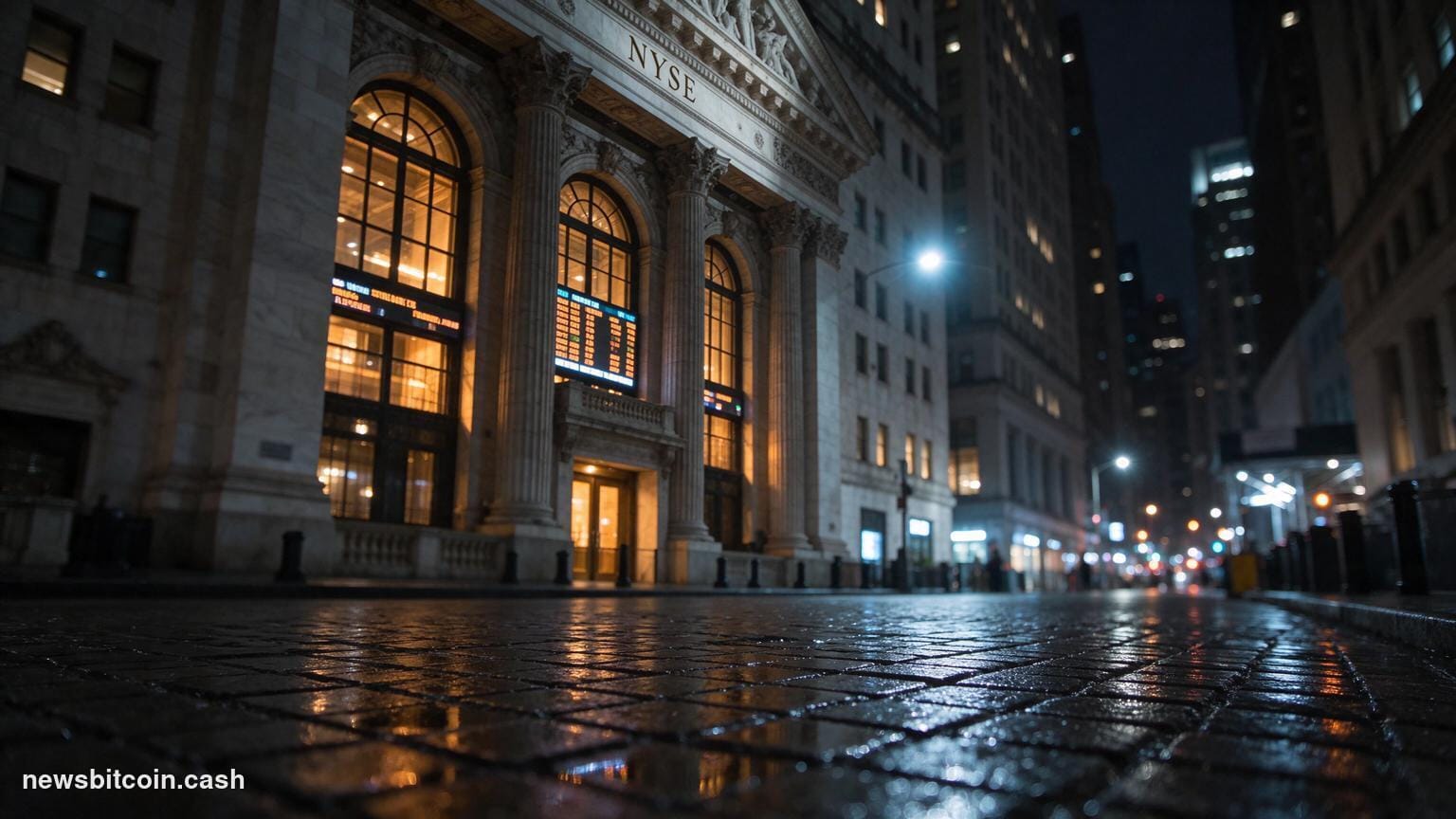
Five American stock exchanges have converged on December 6 as their shared target date to launch overnight trading — a structural change that would, for the first time, put after-hours equity quotes and executed trades directly onto the consolidated tape. The ambition is clear, the clearing infrastructure is already in place, and the remaining obstacle is deceptively prosaic: the data feeds need to be ready. For digital asset markets that have operated around the clock since inception, the development is a landmark signal that traditional finance is finally bending toward the always-on model that crypto normalized.
The consolidated tape — the unified, real-time stream of quote and trade data that all U.S. equity participants rely on — has historically operated within defined market hours. Extending it into overnight sessions is not simply a scheduling decision. It requires that every data feed supplier, exchange system, and downstream consumer be synchronized well enough that price discovery during off-hours is reliable, auditable, and legally defensible. Clearing, which involves the netting and settlement of trades after execution, has already cleared that bar. The data layer has not, at least not yet, which is why December 6 remains a target rather than a guarantee.
The convergence of five exchanges on a single date is itself notable. U.S. equity market infrastructure is famously fragmented, with exchanges competing fiercely on latency, fee structures, and order flow incentives. When five of them align on the same launch window, it suggests either coordinated pressure from large institutional clients demanding extended access, regulatory encouragement from the Securities and Exchange Commission (SEC), or both. The overnight session has been a decades-long aspiration for certain institutional players — global asset managers, sovereign wealth funds, and multinational corporations operating across time zones — who have watched cryptocurrency markets trade without interruption and found the contrast increasingly difficult to justify to clients.
For the digital assets industry, this trajectory carries direct competitive implications. One of the most durable arguments crypto advocates have deployed against traditional equities is structural: stocks sleep, Bitcoin does not. Bitcoin and the broader crypto market have absorbed global macro shocks, earnings surprises, and geopolitical events in real time, 365 days a year, while equity investors were locked out of their positions until the opening bell. Overnight stock trading, once fully operational and liquid, begins to close that gap — and it may accelerate the pressure on crypto exchanges to compete not just on asset class but on market quality, spreads, and institutional-grade data infrastructure.
The data feed dependency flagged in the exchange timeline is worth examining carefully, because it speaks to a problem that crypto markets have grappled with in a different form for years. In decentralized finance (DeFi), oracle networks exist precisely because getting reliable, manipulation-resistant price data into on-chain smart contracts is genuinely hard. Traditional equity markets have a different architecture — centralized, regulated, governed by the SEC's Regulation NMS (National Market System) — but the core challenge rhymes: a trade only means something if the price data attached to it is trustworthy and universally accessible in near real-time. If the feeds are not ready by December 6, the launch will slip. The exchanges have been explicit about that dependency rather than papering over it, which at minimum reflects a degree of institutional seriousness about getting the rollout right rather than fast.
Crypto-native infrastructure companies and tokenization platforms should read this moment carefully. The push toward 24-hour equity trading is part of a broader convergence between traditional financial market structure and the always-on, global liquidity model that blockchain networks pioneered. Tokenized equities — real-world assets (RWAs) representing shares of stock settled on-chain — have been pitched partly on the basis of enabling overnight and cross-border trading without the friction of legacy systems. If the legacy systems themselves solve for 24-hour access, the incremental value proposition of tokenized equities narrows, even as the broader RWA market continues to expand for other asset classes like credit, real estate, and treasury instruments.
The December 6 date is now approximately one week away from the publication of the original reporting, which means the industry will know quickly whether the data feed infrastructure held or whether the launch is deferred into early 2027. Either outcome matters. A clean launch validates that traditional exchange operators can execute the kind of infrastructure modernization that crypto has long insisted they were too slow to attempt. A delay, on the other hand, illustrates exactly the kind of coordination failure that proponents of blockchain-based settlement argue is endemic to legacy systems — and hands digital asset advocates a pointed talking point heading into the new year.
What this means for Bitcoin News readers is straightforward: the boundary between crypto market structure and traditional equity market structure is eroding faster than most analysts projected even two years ago. Overnight trading on the consolidated tape is not a crypto story per se, but it is unambiguously a story about crypto's gravitational pull on the financial system — and about the infrastructure race that will define which platforms, technologies, and asset classes dominate the next decade of global capital markets.
Written by the editorial team — independent journalism powered by Bitcoin News.