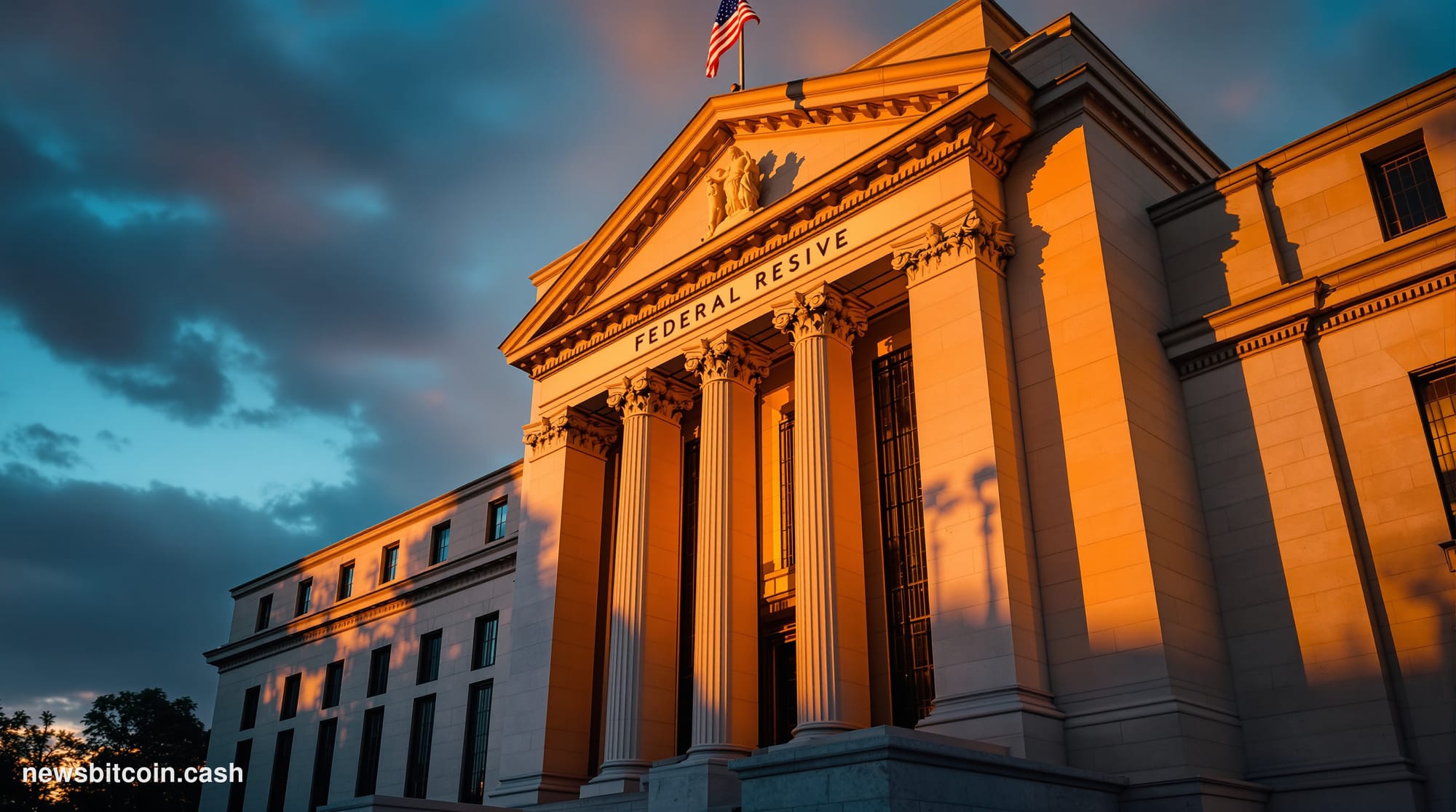
The Federal Reserve appears poised for a significant regulatory recalibration on digital assets, as Vice Chair Michelle Bowman's recent testimony on banking supervision hints at a more accommodating stance toward cryptocurrency integration within the traditional financial system. This potential policy shift represents a marked departure from the central bank's historically cautious approach to digital assets, signaling what could become a watershed moment for institutional crypto adoption.
Bowman's testimony before Congress outlined a regulatory framework that prioritizes both innovation and stability in digital finance, suggesting the Federal Reserve is prepared to embrace a more nuanced approach to cryptocurrency oversight. Rather than maintaining the arm's-length relationship that has characterized Fed policy for much of the past decade, this emerging stance indicates a recognition that digital assets have evolved beyond speculative instruments to become legitimate components of the broader financial ecosystem.
The implications of this regulatory pivot extend far beyond mere policy adjustments. For traditional banks that have been navigating uncertain regulatory waters around crypto services, a more defined and supportive framework could unlock significant opportunities for digital asset custody, trading, and lending products. Regional banks, in particular, stand to benefit from clearer guidance that allows them to compete with crypto-native financial institutions while maintaining their regulatory standing.
Stablecoin issuers represent another critical constituency that could see substantial benefits from the Fed's evolving position. Companies like Circle and Tether have long operated in a regulatory gray area, with their dollar-pegged tokens serving as crucial infrastructure for the crypto economy while lacking explicit federal oversight frameworks. A more accommodating Fed stance could provide the regulatory clarity these issuers need to expand their operations and integrate more deeply with traditional banking infrastructure.
The timing of this potential shift reflects broader changes in the political and economic landscape surrounding digital assets. With institutional investors increasingly viewing cryptocurrency as a legitimate asset class and major corporations incorporating digital assets into their treasury strategies, the Fed's previous stance of regulatory skepticism had become increasingly untenable. Bowman's testimony suggests the central bank recognizes that attempting to constrain digital asset innovation could push critical financial infrastructure offshore, weakening rather than strengthening the US financial system.
For investors, this regulatory evolution could catalyze a new wave of institutional capital allocation toward digital assets. Traditional investment funds and pension systems that have been held back by regulatory uncertainty may find the clarity they need to increase their crypto exposure. The prospect of Fed-supervised banks offering comprehensive digital asset services could also reduce the operational friction that has historically limited institutional participation in crypto markets.
However, this pro-crypto regulatory shift comes with significant implementation challenges. The Federal Reserve must balance its mandate for financial stability with the inherent volatility and technological complexity of digital assets. Any framework that emerges will need to address concerns about systemic risk, consumer protection, and monetary policy transmission while avoiding regulations so restrictive that they stifle the innovation the Fed appears eager to foster.
The broader cryptocurrency industry has reason for cautious optimism, but the devil will remain in the regulatory details. Previous statements from Fed officials have often been interpreted as supportive of digital asset innovation, only for subsequent policy actions to prove more restrictive than anticipated. The true test of this apparent pivot will come in the specific rules and guidance the Fed issues in the coming months, and how those policies translate into practical changes for banks seeking to expand their digital asset offerings.
What emerges most clearly from Bowman's testimony is recognition that the Federal Reserve can no longer treat digital assets as a peripheral concern. With the crypto economy representing hundreds of billions in market value and serving critical functions in global finance, the central bank's approach to digital asset regulation will significantly influence whether the United States maintains its position as the world's leading financial center or cedes that advantage to more crypto-friendly jurisdictions.
Written by the editorial team — independent journalism powered by Bitcoin News.