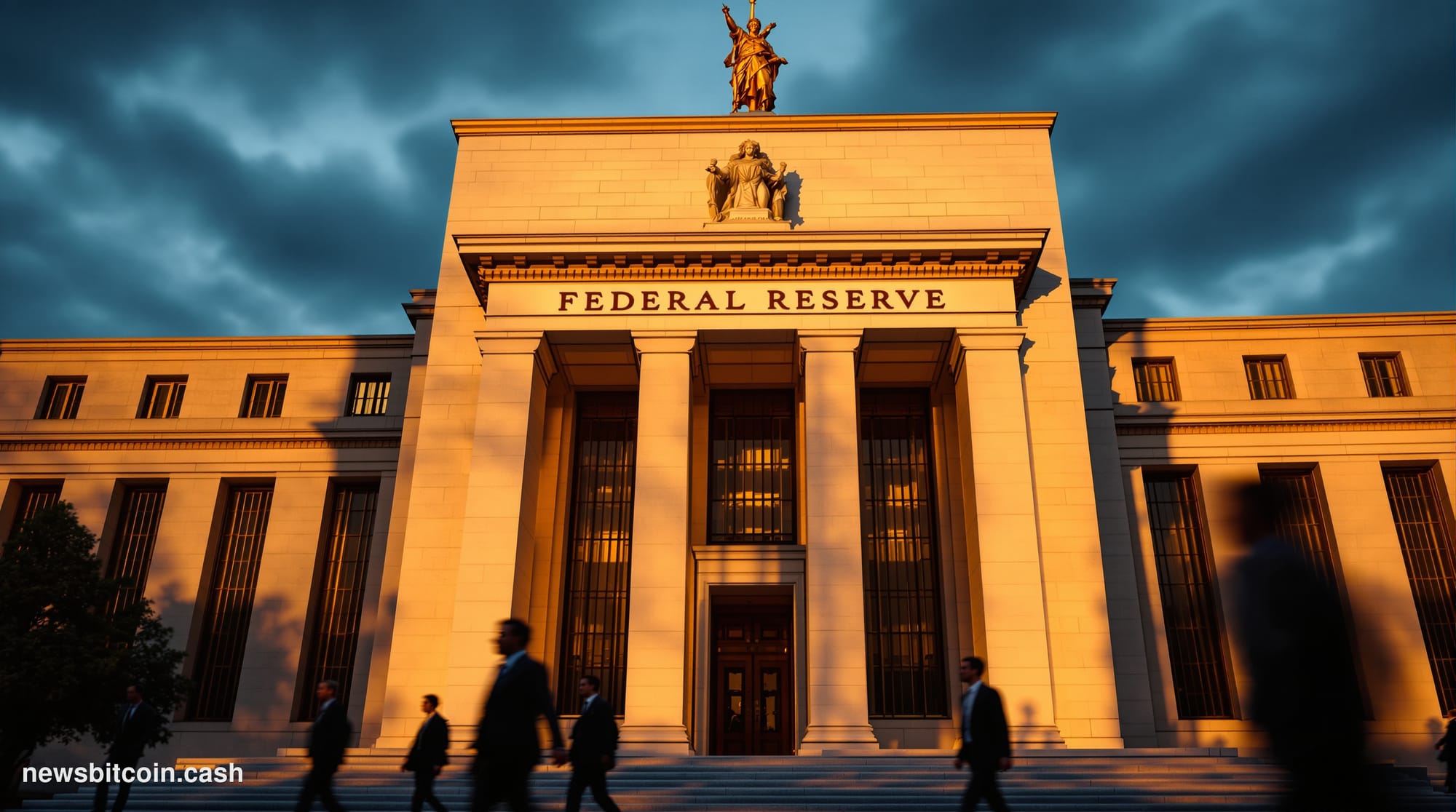
The Federal Reserve finds itself under intensifying market scrutiny as robust employment data fuels speculation about potential interest rate increases, creating fresh uncertainty for cryptocurrency markets already navigating a complex macroeconomic landscape. The prospect of tighter monetary policy represents a fundamental shift that could reshape investment flows across digital assets and traditional markets alike.
Strong jobs reporting has reignited debates within financial circles about the central bank's next moves, with analysts parsing employment metrics for signals about inflationary pressures and economic momentum. The employment strength suggests underlying economic resilience that could provide the Fed with room to maneuver on interest rates, potentially reversing the accommodative stance that has supported risk assets including cryptocurrencies over recent periods.
For cryptocurrency markets, the implications of potential rate hikes extend beyond simple correlation patterns. Higher interest rates fundamentally alter the opportunity cost calculation for holding non-yielding assets like Bitcoin and Ethereum. When risk-free Treasury yields climb, the relative attractiveness of speculative investments diminishes as investors can capture meaningful returns without assuming the volatility inherent in digital assets.
The technology sector, which has historically moved in tandem with cryptocurrency valuations, faces similar headwinds from tightening financial conditions. Rate increases typically pressure high-growth companies that rely on future earnings prospects rather than current cash flows. This dynamic creates cascading effects throughout the broader risk asset ecosystem, where crypto often trades as a leveraged bet on tech sector performance and monetary liquidity.
Institutional cryptocurrency adoption has accelerated dramatically as pension funds, endowments, and corporate treasuries allocate portions of their portfolios to digital assets. However, these same institutions maintain sophisticated risk management frameworks that factor in macroeconomic conditions and yield alternatives. Rising rates could trigger rebalancing activities as fiduciaries reassess their strategic asset allocation models in light of improved fixed-income opportunities.
The Federal Reserve's communication strategy around potential rate adjustments will prove crucial for market stability. Cryptocurrency markets have demonstrated particular sensitivity to central bank rhetoric, with Bitcoin and altcoin prices often experiencing significant volatility around Fed meeting announcements and policy guidance updates. Clear forward guidance could help market participants adjust positioning gradually rather than through sudden, disruptive movements.
Market microstructure considerations add another layer of complexity to the rate environment discussion. Cryptocurrency trading volumes and liquidity provision often depend on leveraged market makers and algorithmic trading strategies that become more expensive to fund when interest rates rise. Higher borrowing costs could reduce market depth and increase volatility, particularly during periods of stress or uncertainty.
The global nature of cryptocurrency markets means that Federal Reserve policy decisions reverberate internationally, affecting digital asset flows and pricing across jurisdictions. While the Fed focuses primarily on domestic economic conditions, its monetary policy choices carry outsized influence over global risk sentiment and capital allocation patterns that directly impact cryptocurrency valuations worldwide.
What this means for the cryptocurrency ecosystem is a potential recalibration of risk premiums and investment thesis validation. Projects with strong fundamentals, clear revenue models, and demonstrable utility may weather rate increases better than speculative tokens dependent purely on momentum and liquidity conditions. The environment could accelerate the maturation process within digital assets, separating sustainable value propositions from purely speculative ventures while testing the resilience of cryptocurrency infrastructure and market mechanisms under different monetary conditions.
Written by the editorial team — independent journalism powered by Bitcoin News.