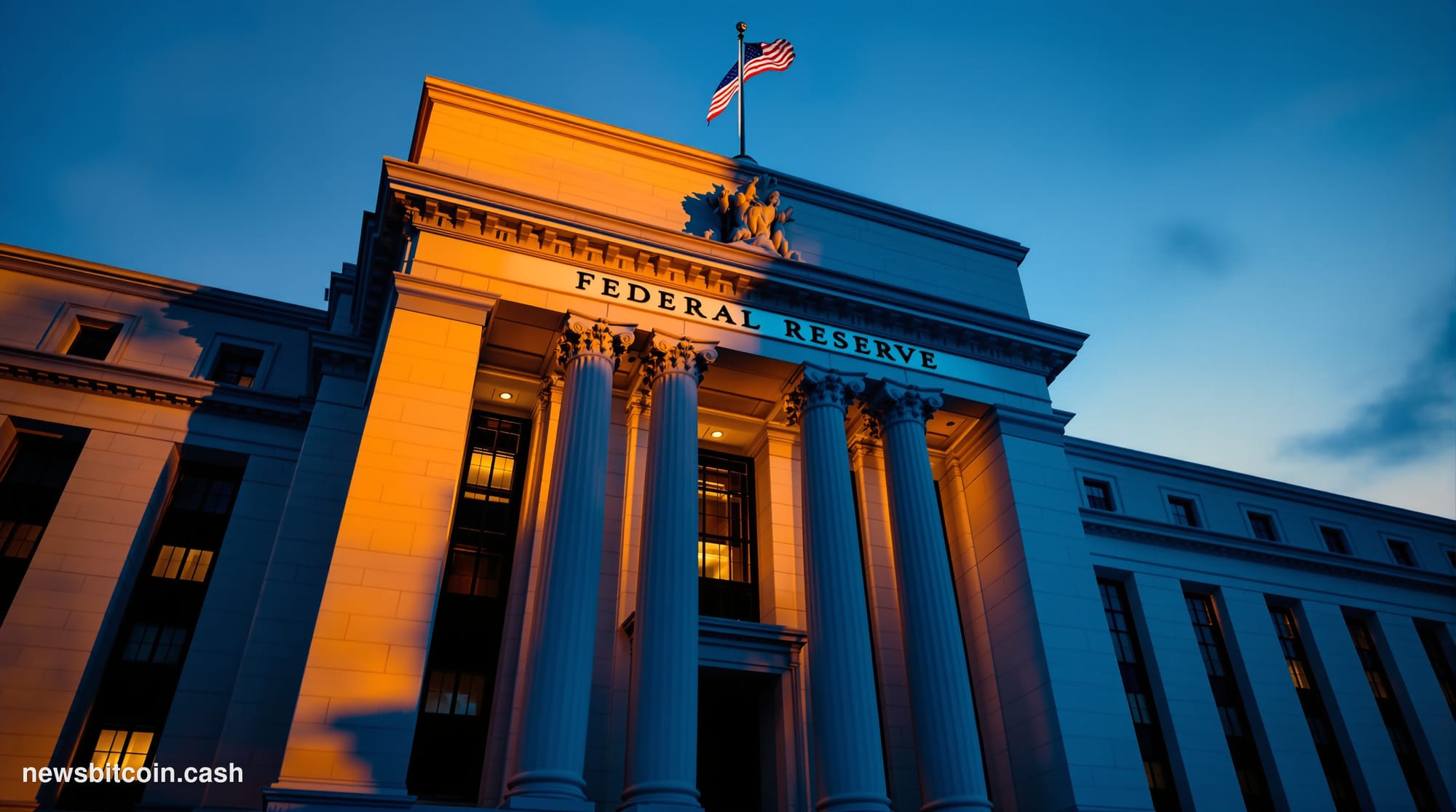
The Federal Reserve finds itself in an unusual leadership limbo as Jerome Powell maintains his temporary role as chair while Kevin Warsh, freshly confirmed by the Senate, prepares to assume the central bank's top position. This transitional period introduces a layer of governance complexity that extends far beyond typical bureaucratic shuffles, carrying profound implications for monetary policy direction and market confidence during an already uncertain economic landscape.
The interim arrangement highlights the institutional challenges that emerge when central bank leadership changes hands. Powell's temporary stewardship represents more than a simple administrative holdover—it creates a potential policy vacuum where major decisions may face scrutiny over their long-term viability. Market participants now must navigate an environment where current policy directions could face reversal or modification once Warsh formally takes control.
Warsh's Senate confirmation signals a significant philosophical shift in Fed leadership. His previous tenure at the Federal Reserve from 2006 to 2011 established him as a more hawkish voice on monetary policy, particularly regarding inflation concerns and financial stability. This background suggests potential changes to the Fed's approach toward interest rates, quantitative easing programs, and regulatory oversight of financial institutions.
The governance challenges during this transition period extend beyond traditional monetary policy considerations. Financial markets operate on certainty and predictable institutional behavior, yet the current arrangement introduces variables that complicate long-term planning for both institutional and retail investors. The interim leadership structure may constrain the Fed's ability to respond decisively to economic developments, particularly if Powell hesitates to implement major policy shifts that Warsh might later reverse.
Market Stability in Question
Market uncertainties stemming from the leadership transition create ripple effects across asset classes, with particular implications for digital assets and traditional financial markets. The Federal Reserve's monetary policy decisions directly influence liquidity conditions, risk appetite, and institutional investment flows—all factors that significantly impact cryptocurrency valuations and trading volumes. During leadership transitions, markets often experience heightened volatility as traders position for potential policy changes.
The economic stability implications reach beyond immediate market reactions. Central bank credibility depends heavily on consistent communication and predictable policy frameworks. When leadership changes create ambiguity about future directions, it can undermine the Fed's ability to guide market expectations effectively. This credibility gap becomes particularly problematic during periods requiring decisive monetary intervention.
Financial institutions face operational challenges in adapting their strategies to accommodate potential policy shifts. Banks, investment firms, and cryptocurrency exchanges must prepare for various scenarios while operating under current policies that may not persist. This uncertainty can lead to more conservative lending practices, reduced risk-taking, and delayed investment decisions across the financial sector.
Implications for Digital Assets
The Fed leadership transition carries specific significance for cryptocurrency markets, which remain sensitive to regulatory signals and monetary policy changes. Warsh's appointment may herald a different approach to digital asset regulation and central bank digital currency development. His previous statements on financial innovation and regulatory oversight suggest a more cautious stance toward cryptocurrency integration into traditional financial systems.
What this means for the broader financial ecosystem extends beyond immediate policy considerations. The transition period reveals institutional vulnerabilities in how central banks manage leadership changes while maintaining operational effectiveness. Future transitions may require more structured handover procedures to minimize market disruption and maintain policy continuity. The current situation serves as a case study for how governance challenges can create unintended economic consequences, even when leadership changes follow established constitutional processes.
Written by the editorial team — independent journalism powered by Bitcoin News.