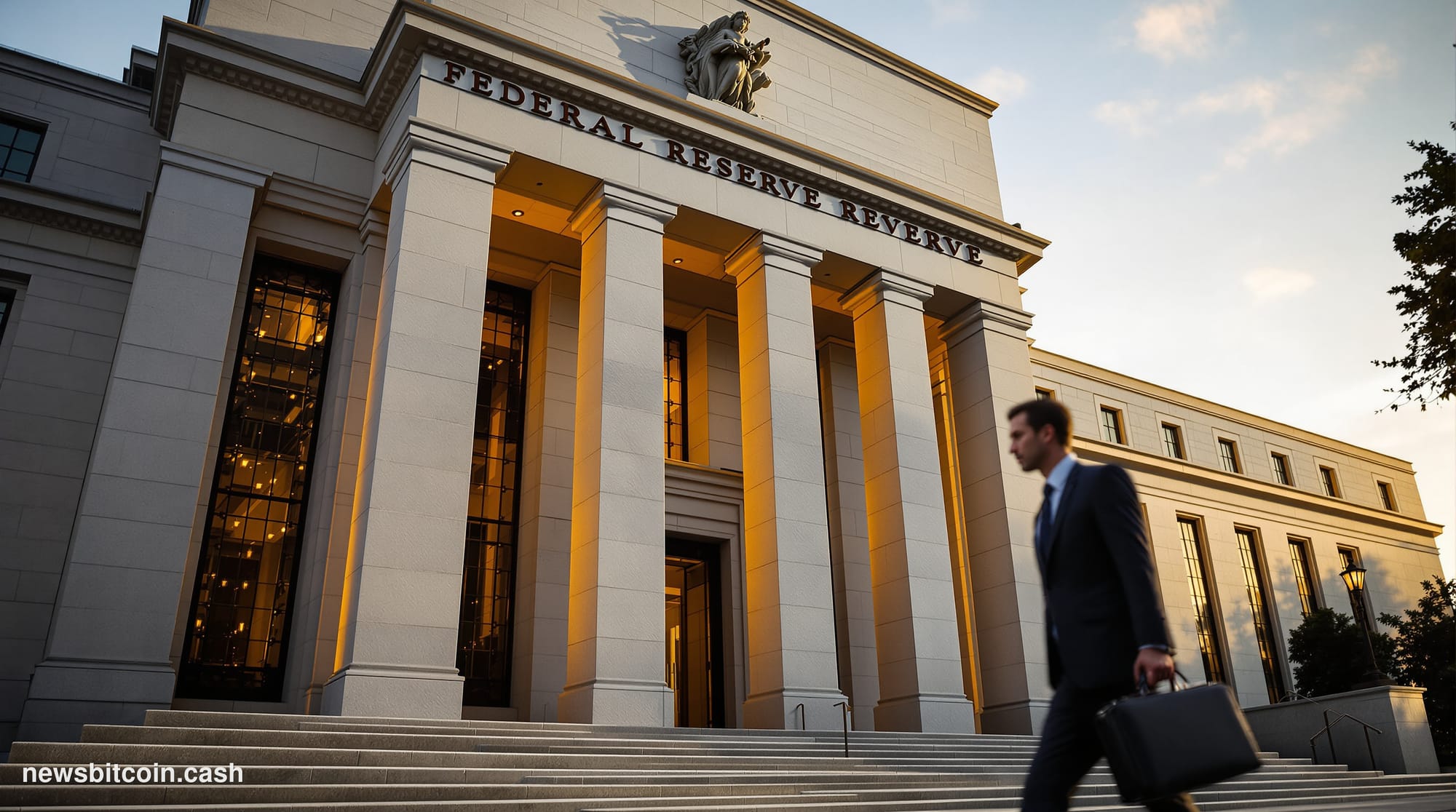
The Federal Reserve's latest policy minutes have delivered an unwelcome surprise to digital asset markets, revealing a more aggressive stance on interest rates than investors anticipated. The central bank's hawkish pivot, documented in minutes from its April 28-29 meeting, signals a potential shift that could maintain sustained pressure on Bitcoin and other risk assets for the foreseeable future.
The minutes exposed a notable divide within the Federal Open Market Committee, with many policymakers advocating to completely remove the central bank's easing bias—a stance that caught markets off guard. More concerning for crypto investors, a majority of Fed officials signaled their support for additional rate hikes, suggesting the central bank's tightening cycle may extend well beyond current market expectations.
This hawkish revelation arrives at a particularly sensitive moment for digital assets, which have historically exhibited strong inverse correlations with interest rate movements. Bitcoin, often characterized as a risk-on asset despite its intended role as digital gold, faces mounting headwinds as the prospect of prolonged elevated borrowing costs reshapes investor appetite for speculative investments.
The Federal Reserve's apparent determination to maintain restrictive monetary policy reflects persistent concerns about underlying economic pressures that have proven more resilient than initially forecast. This "higher-for-longer" narrative directly challenges the market consensus that had priced in a more dovish trajectory, potentially forcing a fundamental recalibration of risk asset valuations across traditional and digital markets.
For Bitcoin specifically, sustained elevated interest rates present a multifaceted challenge. Higher rates increase the opportunity cost of holding non-yielding assets, making Treasury securities and other fixed-income instruments more attractive relative to cryptocurrencies. Additionally, tighter monetary conditions typically reduce liquidity in financial markets, constraining the speculative capital flows that often drive crypto market cycles.
The implications extend beyond immediate price pressures to the broader institutional adoption narrative that has underpinned Bitcoin's legitimacy thesis. Corporate treasuries and institutional investors increasingly view digital assets through the lens of portfolio allocation models that weigh risk-adjusted returns against traditional alternatives. Extended high interest rates could delay or reverse allocation decisions that have driven institutional adoption over recent years.
Market participants now face the prospect of navigating an environment where monetary policy remains a persistent headwind rather than the accommodative backdrop that characterized much of the previous decade. The Fed's apparent commitment to maintaining restrictive conditions suggests that digital asset markets may need to demonstrate resilience independent of favorable monetary conditions—a test that could ultimately strengthen the sector's long-term foundations while creating near-term volatility.
The divergence between market expectations and Fed intentions highlighted by these minutes underscores the importance of policy communication in shaping investor behavior. As central bank officials continue to emphasize their commitment to combating persistent economic pressures, digital asset investors must recalibrate strategies around a potentially extended period of challenging monetary conditions that could redefine the relationship between traditional and crypto markets.
Written by the editorial team — independent journalism powered by Bitcoin News.