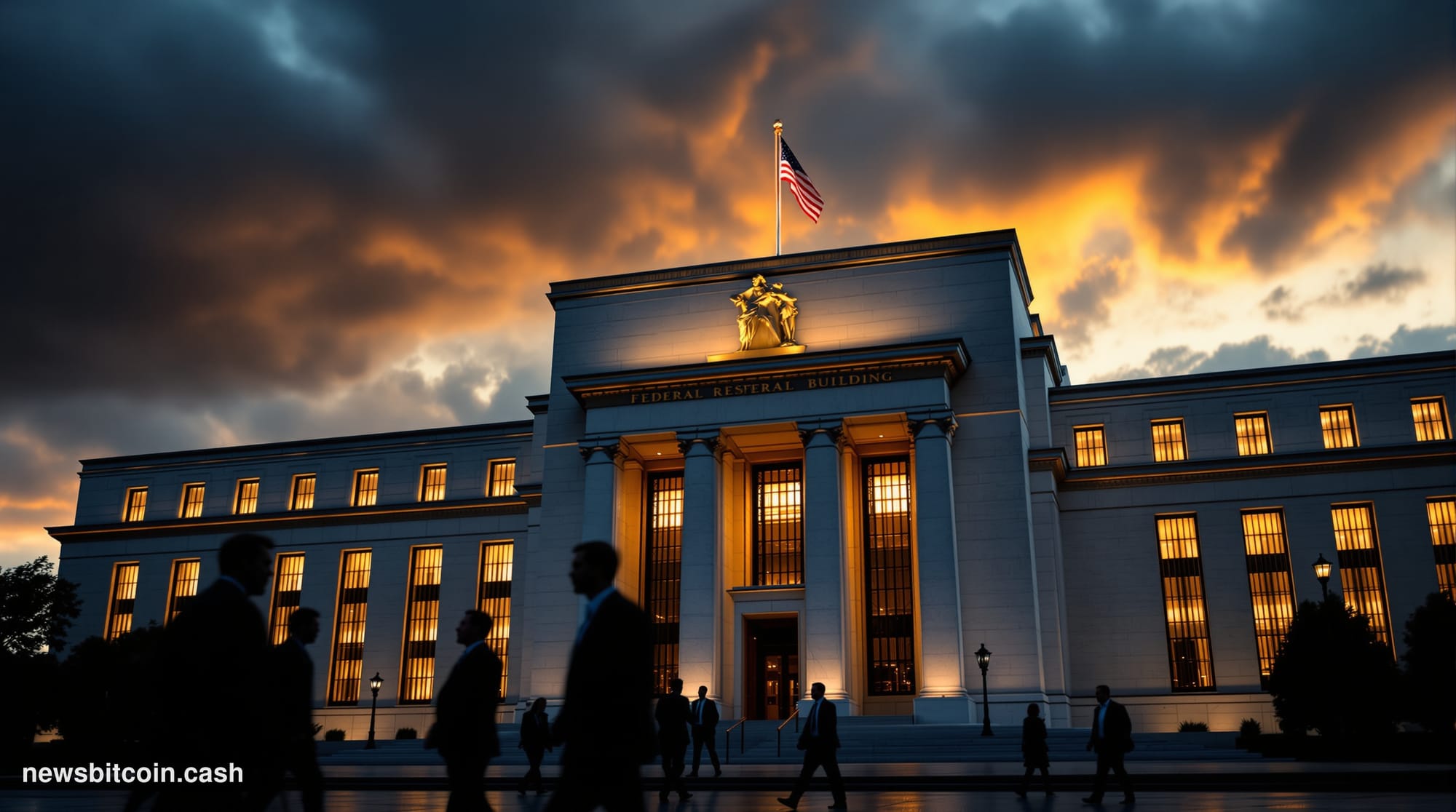
The Federal Reserve has documented a troubling uptick in US bank loan delinquencies throughout 2025, with mortgages and student loans leading the deterioration in credit quality. This development arrives at a pivotal moment for digital assets, as traditional banking stress historically drives institutional and retail interest toward alternative financial systems.
The Fed's latest data reveals that loan delinquencies have risen across multiple categories, with particular weakness in housing and education financing sectors. Mortgage delinquencies, a bellwether for broader economic health, have shown measurable increases after years of relative stability following the post-2008 regulatory overhauls. Student loan defaults have similarly accelerated, reflecting ongoing challenges in education financing and employment markets.
These patterns carry significant implications beyond traditional banking. When conventional financial institutions face credit stress, capital markets typically reassess risk across all asset classes. The crypto sector, which has matured considerably since its early boom-bust cycles, now represents a parallel financial infrastructure that operates independently of traditional banking credit mechanics. Major crypto exchanges like Coinbase and decentralized finance protocols maintain no direct exposure to mortgage or student loan portfolios.
Economic Stress Signals Mount
The Federal Reserve's acknowledgment that continued delinquency trends could signal broader economic stress into 2026 reflects growing concerns about systemic financial stability. Rising defaults typically precede tighter lending standards, reduced credit availability, and potential economic contraction. For crypto markets, such conditions historically create both challenges and opportunities.
Traditional financial stress often correlates with increased regulatory scrutiny across all financial sectors, including digital assets. However, it also tends to highlight the value proposition of decentralized financial systems that operate without reliance on traditional credit intermediaries. Stablecoin adoption, for instance, has consistently grown during periods of banking sector uncertainty as institutions and individuals seek alternatives to traditional deposit accounts.
The timing of these developments coincides with crypto's ongoing institutionalization. Major corporations now hold Bitcoin on their balance sheets, while traditional asset managers have launched cryptocurrency investment products. This institutional adoption means that crypto markets may respond differently to traditional banking stress than in previous cycles, potentially serving as a hedge rather than merely a risk asset.
Infrastructure Divergence Accelerates
The divergent paths of traditional banking and crypto infrastructure become more apparent during periods of conventional financial stress. While banks grapple with rising delinquencies and potential credit losses, blockchain-based financial protocols continue expanding their capabilities without exposure to traditional loan portfolios. Decentralized lending platforms operate on overcollateralized models that eliminate counterparty credit risk, though they face their own volatility challenges.
Federal Reserve officials have maintained that current delinquency increases remain manageable within historical ranges, but their public acknowledgment of potential broader economic implications suggests heightened monitoring of systemic risks. This regulatory attention could extend to crypto markets, particularly as digital asset adoption grows among traditional financial institutions.
The student loan component of rising delinquencies deserves particular attention given its demographic implications. Younger borrowers, who represent a significant portion of crypto adoption, face increasing financial pressure from education debt defaults. This dynamic could either constrain crypto investment among key demographics or drive further interest in alternative financial systems that offer new income opportunities through staking, yield farming, and other crypto-native mechanisms.
What This Means
Rising bank loan delinquencies in 2025 represent an early warning system for broader economic stress that could reshape financial markets in 2026. For crypto, this environment presents a complex landscape where increased regulatory scrutiny may coincide with growing institutional interest in alternative financial infrastructure. The Federal Reserve's data underscores the importance of monitoring traditional financial stress indicators as crypto markets continue their integration with mainstream finance. Whether digital assets serve as a hedge against banking sector weakness or become correlated with broader economic stress will likely determine their role in the next phase of financial market evolution.
Written by the editorial team — independent journalism powered by Bitcoin News.