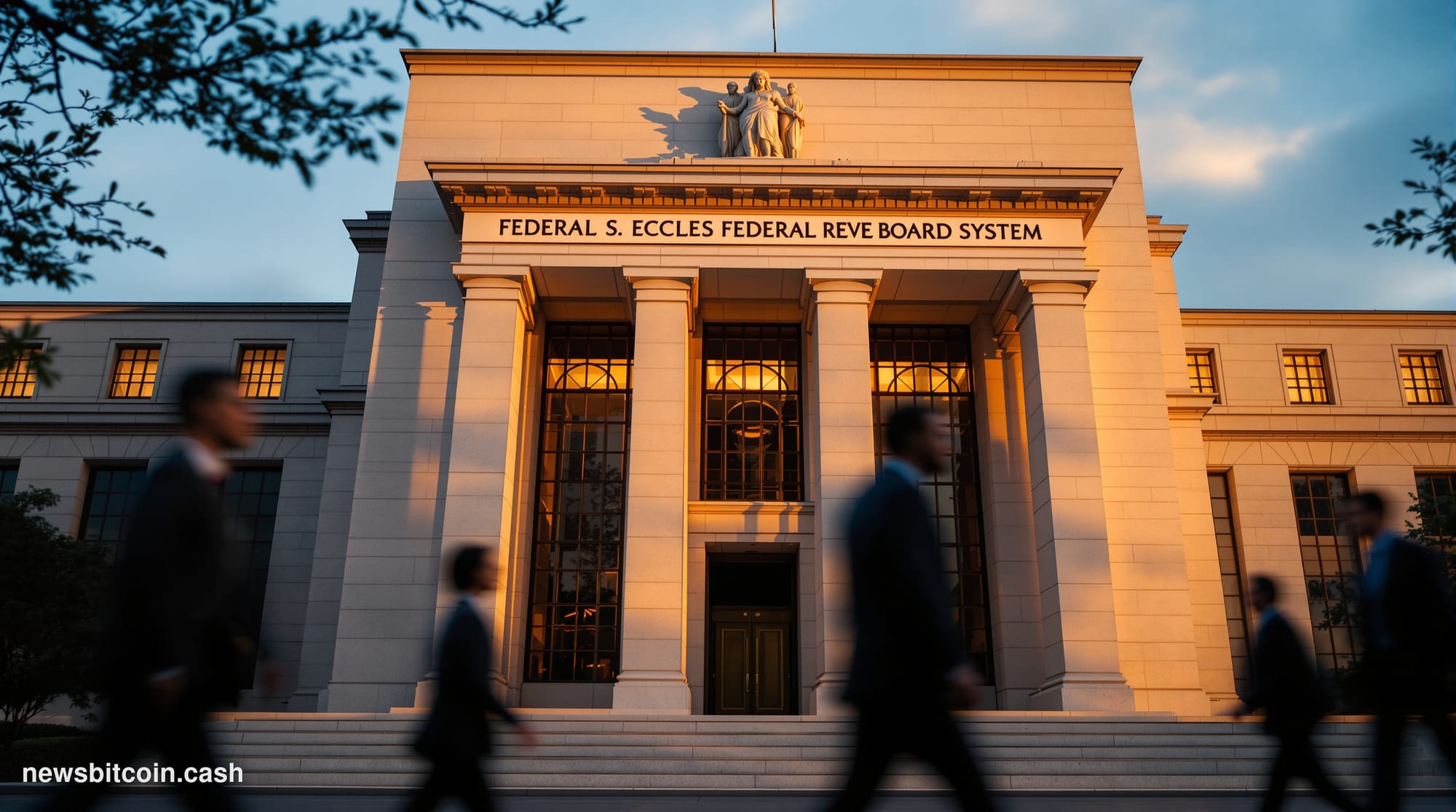
Kevin Warsh's ascension to Federal Reserve Chair arrives at a pivotal moment for monetary policy, with inflation concerns dominating his agenda as he prepares for his inaugural Federal Open Market Committee (FOMC) meeting. The timing presents immediate challenges that could fundamentally alter the investment landscape for digital assets and traditional risk markets alike.
The new Fed leadership faces a complex balancing act between containing inflationary pressures and maintaining economic stability. Warsh's potential response—monetary tightening—carries profound implications for market dynamics across asset classes. Higher interest rates typically strengthen the dollar while simultaneously dampening appetite for risk assets, a category that prominently includes cryptocurrencies.
For digital asset markets, the stakes couldn't be higher. Cryptocurrencies have historically exhibited strong correlations with traditional risk assets during periods of monetary policy shifts. When the Fed signals tightening measures, liquidity conditions change dramatically, often triggering capital flight from speculative investments toward safer, yield-bearing alternatives. Bitcoin and other major cryptocurrencies have repeatedly demonstrated sensitivity to Federal Reserve policy signals, with hawkish stances typically pressuring prices downward.
The dollar strength component of Warsh's potential policy response adds another layer of complexity for crypto markets. A stronger dollar makes dollar-denominated assets more expensive for international investors, potentially reducing global demand for cryptocurrencies. This dynamic has played out repeatedly in recent years, with crypto markets often moving inversely to dollar strength indices.
Warsh's background brings unique perspectives to these challenges. His previous experience on the Federal Reserve Board during the 2008 financial crisis provides crucial context for navigating complex monetary policy decisions under pressure. However, the current inflationary environment presents different challenges than the deflationary risks that dominated his earlier tenure.
The institutional crypto landscape has evolved significantly since previous monetary tightening cycles. Major corporations now hold digital assets on their balance sheets, and traditional financial institutions offer crypto services to clients. This increased integration means Fed policy decisions will likely have more direct and immediate transmission effects into crypto markets than in previous cycles.
Market participants are closely monitoring early signals from Warsh's Fed leadership about the pace and magnitude of potential policy adjustments. Gradual tightening might allow crypto markets to adjust incrementally, while aggressive moves could trigger more dramatic repricing across digital asset categories. The communication strategy surrounding policy changes will be crucial for market stability.
Looking ahead, the intersection of monetary policy and crypto market dynamics will likely define trading patterns throughout Warsh's early tenure. Investors must navigate an environment where traditional monetary policy tools directly impact emerging asset classes that operate on fundamentally different technological and economic principles. The challenge for crypto markets lies in maintaining growth and adoption while adapting to a potentially less accommodative monetary environment.
Written by the editorial team — independent journalism powered by Bitcoin News.