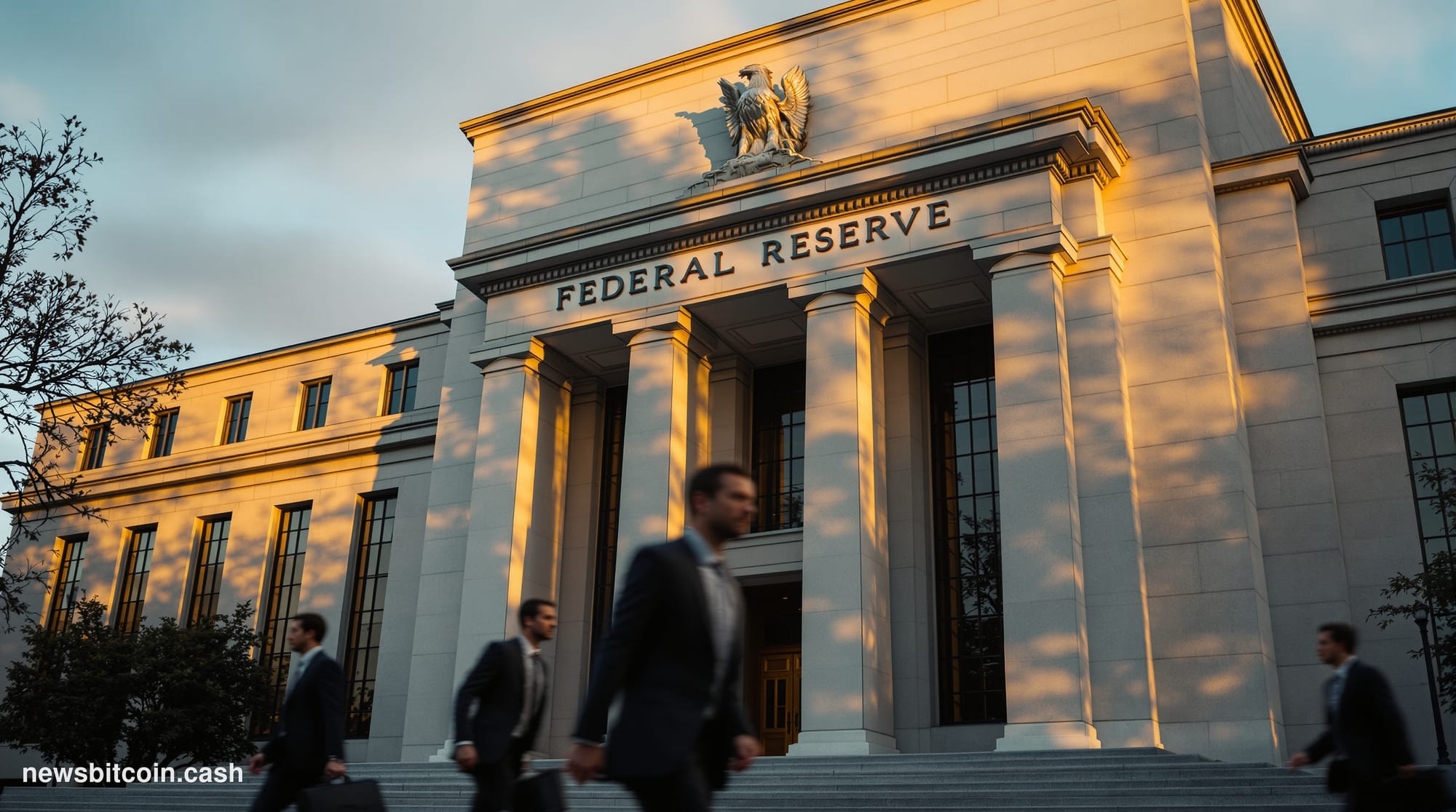
Federal Reserve Vice Chair for Supervision Michael Barr has issued a stark warning about the risks of banking deregulation, cautioning that reducing oversight could create hidden vulnerabilities capable of triggering the next major financial crisis. The timing of Barr's remarks carries particular significance as the cryptocurrency sector continues advocating for regulatory clarity and potential relief from stringent oversight measures.
Barr's warning centers on the potential for deregulation to mask systemic risks within the banking sector, creating conditions that could destabilize the broader economy. His emphasis on "hidden vulnerabilities" reflects lessons learned from previous financial crises, where seemingly stable institutions collapsed due to inadequate risk assessment and regulatory blind spots. The Federal Reserve official's call for cautious oversight suggests the central bank remains committed to maintaining robust supervisory frameworks despite political and industry pressure for lighter regulation.
The cryptocurrency industry finds itself at the intersection of these regulatory debates, having long advocated for clearer rules while simultaneously pushing back against what many perceive as overly restrictive oversight. Traditional banking institutions have increasingly sought exposure to digital assets, with major players like Coinbase and traditional finance giants forging deeper connections. This convergence means that banking deregulation could indirectly impact how crypto-related services and products are supervised and integrated into the broader financial system.
Barr's concerns about echoing past financial crises resonate particularly strongly given the cryptocurrency sector's own history of dramatic failures and contagion events. The collapse of major exchanges and lending platforms has demonstrated how interconnected the crypto ecosystem has become with traditional finance, suggesting that vulnerabilities in either sector could rapidly spread to the other. The Federal Reserve's cautious stance reflects an understanding that financial innovation and deregulation, while potentially beneficial, require careful balance with systemic stability.
The regulatory landscape facing cryptocurrency businesses remains complex and evolving, with different agencies taking varying approaches to oversight. Barr's emphasis on maintaining robust supervision could signal continued scrutiny for crypto-adjacent banking services, including custody solutions, stablecoin backing, and institutional trading platforms. This regulatory vigilance may influence how traditional banks approach their cryptocurrency strategies and partnerships.
For cryptocurrency markets, Barr's warning serves as a reminder that regulatory relief in the banking sector may not necessarily translate to lighter oversight for digital assets. The Federal Reserve's focus on preventing systemic risks could actually result in more stringent requirements for banks offering crypto services, as regulators seek to prevent any potential vulnerabilities from spreading through interconnected financial networks.
The broader implications extend beyond immediate regulatory concerns to questions about the cryptocurrency sector's long-term integration with traditional finance. As digital assets become more mainstream and institutional adoption increases, the stability of the underlying banking infrastructure becomes increasingly critical to crypto market health. Barr's cautious approach suggests that this integration will likely proceed under continued close supervision rather than through wholesale deregulation.
The Federal Reserve's position reflects a broader tension between innovation and stability that continues to shape both traditional finance and cryptocurrency markets. While the crypto sector seeks regulatory certainty and operational clarity, central bankers remain focused on preventing the kind of systemic risks that could trigger broader economic instability. This dynamic suggests that future cryptocurrency regulation will likely emphasize comprehensive oversight rather than deregulatory approaches, regardless of political pressures for lighter supervision.
Written by the editorial team — independent journalism powered by Bitcoin News.