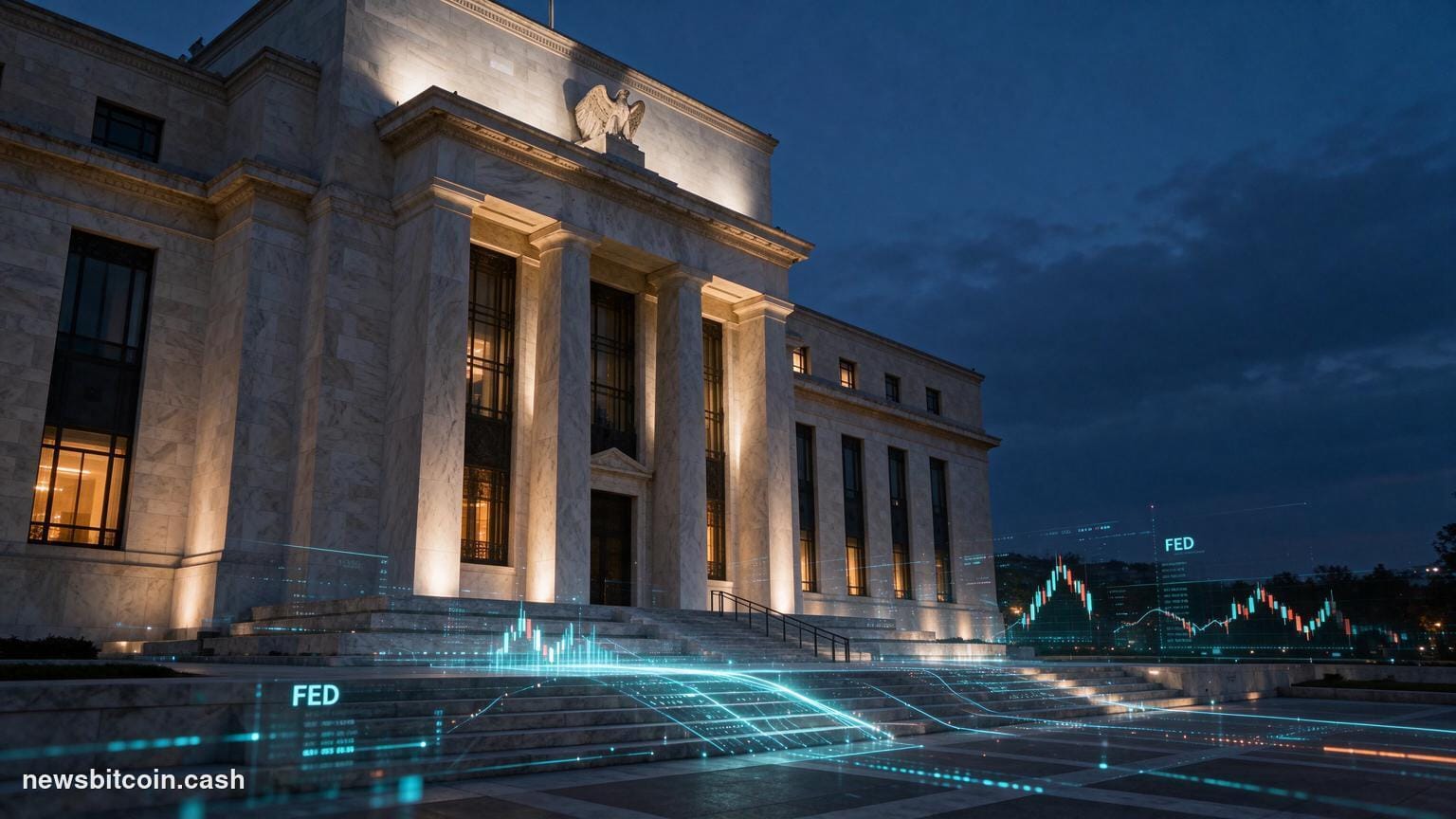
The Federal Reserve has issued a stark warning that United States banks are carrying nearly $1 trillion in exposure tied to artificial intelligence — a figure large enough to rattle the foundations of financial stability if the underlying risks are mismanaged. The warning is not merely a regulatory footnote. It is a flare fired into a sky that policymakers and market participants alike have been watching with increasing anxiety, as the rapid integration of AI into core banking operations outpaces the frameworks designed to govern it.
To put the scale in perspective: a trillion dollars is the kind of number that sits comfortably alongside discussions of sovereign debt crises and systemic bank failures. When the Fed uses that figure in the context of a single technological exposure category, it demands serious attention. The central bank's concern centers on the degree to which American financial institutions have concentrated their bets — operationally, financially, and strategically — on AI-linked assets, services, and infrastructure at a pace that may have outrun their own risk controls.
Concentration Risk in a New Coat
The dynamics at play here are not entirely unfamiliar to students of financial history. Concentration risk — the danger that too many institutions are exposed to the same vulnerability — has been a recurring villain in banking crises. What is novel is the domain. Banks' heavy AI exposure represents a category that spans multiple dimensions simultaneously: direct financial investment in AI companies and infrastructure, operational dependence on AI-driven systems for credit decisioning and fraud detection, and indirect exposure through clients whose own business models are AI-dependent. When the Fed urges vigilance, it is signaling that this multi-layered nature of AI exposure makes it harder to quantify, hedge, and stress-test than more traditional asset classes.
The systemic risk dimension is particularly acute. If a handful of major AI providers experience catastrophic failures — whether technical, regulatory, or financial — the knock-on effects could simultaneously impair operations across dozens of large US financial institutions. This is precisely the kind of correlated, non-linear risk scenario that keeps central bankers awake at night. The 2008 financial crisis demonstrated what happens when systemic interconnection is underestimated; the Fed appears determined not to allow history to rhyme in the age of machine learning.
What Banks Are Actually Exposed To
The nearly $1 trillion exposure figure encompasses a broad landscape. At one end sits direct equity and debt investment in AI-focused technology companies — exposure that has ballooned alongside the explosive valuations of the artificial intelligence sector over recent years. At the other end sits something subtler but arguably more dangerous: operational dependency. Banks that have embedded AI deeply into their underwriting models, trading algorithms, and customer service infrastructure face a form of technical concentration risk that cannot easily be liquidated. You cannot sell off your AI-dependent credit scoring model the way you can sell a bond portfolio.
This operational entanglement is what gives the Fed's warning its particular urgency. Financial regulators globally have been grappling with how to categorize and stress-test technology dependencies, and the US central bank's move to put a dollar figure on the exposure is a meaningful escalation — a signal that informal monitoring is giving way to something more structured and demanding.
The Crypto Parallel Worth Examining
For observers of the digital assets space, this moment carries a familiar resonance. The warnings regulators are now delivering about AI exposure echo arguments that crypto advocates have made for years about the financial system's reluctance to properly account for emerging technology risks. When Coinbase and other digital asset platforms were building infrastructure through the early 2020s, legacy financial institutions dismissed crypto's systemic relevance — until events like the collapse of FTX forced a rapid reassessment. The pattern is consistent: transformative technology is underweighted as a risk factor until it suddenly isn't.
The difference now is that it is the banks themselves, not outside challengers, who have accumulated the exposure. That inversion matters. It means the risk is embedded inside the regulated perimeter, making it simultaneously more visible to regulators and harder to quarantine if conditions deteriorate.
What This Means
The Fed's nearly $1 trillion AI exposure warning represents a threshold moment in how traditional finance and emerging technology intersect at the systemic level. For digital asset markets, the implications are layered. A destabilized traditional banking sector — however the trigger — historically correlates with liquidity withdrawal across risk assets, including cryptocurrencies. But the warning also accelerates a broader reckoning: the financial system's governance frameworks were built for a world of slower-moving, more legible risks. Artificial intelligence, like blockchain before it, does not respect those boundaries. The Fed is right to ring the bell. Whether the banks — and the regulators themselves — move fast enough to build adequate safeguards around nearly $1 trillion in exposure is a question the entire market has a stake in answering.
Written by the editorial team — independent journalism powered by Bitcoin News.