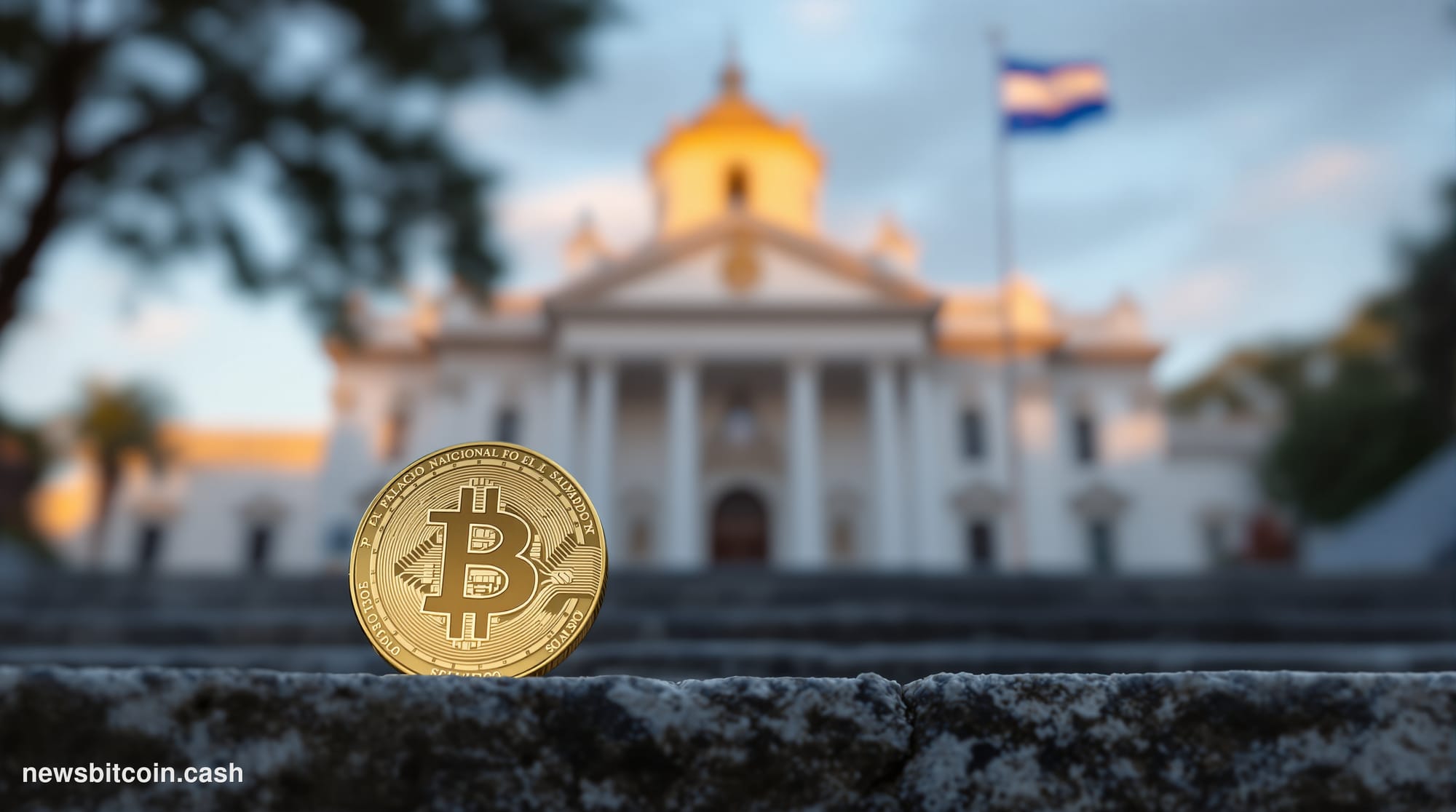
The International Monetary Fund (IMF) has delivered a notable endorsement of El Salvador's economic trajectory, confirming strong performance while simultaneously issuing a Bitcoin waiver that clears the path for critical international funding. The development marks a pivotal moment not just for a small Central American nation that bet on digital assets as legal tender, but for the broader question of whether sovereign economies can chart unconventional monetary paths without sacrificing institutional credibility.
For years, El Salvador's decision to adopt Bitcoin as legal tender alongside the U.S. dollar placed the country in a tense standoff with multilateral lenders. The IMF, a traditionally conservative institution, had long flagged Bitcoin adoption as a risk factor in its assessments of the Salvadoran economy. That posture kept the country at arm's length from the kind of concessional financing that smaller economies routinely rely on for budget support and infrastructure investment. The Bitcoin waiver fundamentally changes that calculus.
The waiver's significance should not be understated. By formally carving out an exception around El Salvador's Bitcoin policies rather than demanding their full reversal, the IMF has effectively acknowledged that the country's broader economic management is sound enough to proceed with funding. It is a pragmatic concession from an institution not known for flexibility, and it rewards what Salvadoran authorities have framed as a disciplined fiscal strategy layered on top of, rather than replaced by, the Bitcoin experiment.
What makes the IMF's strong-growth assessment particularly striking is the context in which it arrives. El Salvador operates as a fully dollarized economy outside of its Bitcoin layer, which limits its monetary policy options to fiscal discipline and structural reform. Many analysts had predicted that the distraction and reputational costs of the Bitcoin legal tender law would weigh on investor confidence and multilateral relationships alike. Instead, the IMF's current read suggests that strategic policies — likely including remittance facilitation, tourism development, and public spending management — have produced resilience robust enough to satisfy international reviewers.
The unlocking of IMF funding carries cascading practical benefits. Access to multilateral financing typically serves as a signal to private creditors and foreign investors that a country meets baseline standards of economic governance. For El Salvador, which has navigated elevated sovereign debt costs in part due to the uncertainty surrounding its crypto experiment, IMF-backed credibility could translate into improved borrowing terms, renewed foreign direct investment interest, and greater fiscal room to maneuver. These are not abstract macroeconomic concepts — they directly affect the government's capacity to fund public services and infrastructure for its citizens.
The geopolitical dimension is equally worth examining. El Salvador under President Nayib Bukele has positioned itself as a laboratory for policies that challenge Washington consensus orthodoxy — from Bitcoin legal tender to aggressive anti-gang security measures. The IMF's willingness to issue a waiver rather than hold the line on Bitcoin opposition suggests that results, not ideology, are beginning to shape how multilateral institutions engage with outlier sovereigns. That is a meaningful shift, however quietly it may be framed in official communications.
There are, of course, important caveats. A waiver is not an endorsement of Bitcoin as monetary policy. The IMF has not reversed its institutional skepticism about cryptocurrency adoption at the sovereign level. What it has done is decouple that skepticism from its assessment of El Salvador's overall economic performance — a distinction that matters enormously for how this story is read by policymakers in other emerging markets. Nations watching from the sidelines, particularly those exploring digital asset frameworks of their own, will note that El Salvador did not have to abandon its Bitcoin strategy to regain access to multilateral support.
That observation carries the article's most consequential implication. If El Salvador's experience demonstrates that a country can maintain a crypto-forward policy environment, manage its broader fiscal fundamentals responsibly, and ultimately earn IMF recognition and funding access, the template becomes exportable. Policymakers in nations across Latin America, sub-Saharan Africa, and Southeast Asia — many of whom face similar pressures around financial inclusion, remittance costs, and dollar dependency — will study this outcome carefully. The Salvadoran experiment may no longer be a cautionary tale. It may be a case study.
Written by the editorial team — independent journalism powered by Bitcoin News.