El Salvador's government-backed push to normalize Bitcoin as a national institution is accelerating in a very public way this November. The country's National Bitcoin Office has confirmed a slate of five events running from November 10 through November 20 — a concentrated ten-day stretch that amounts to the most visible burst of state-sponsored Bitcoin programming the small Central American nation has staged in recent memory. At the center of it all are the office's two most recognizable faces: Stacey Herbert and Max Keiser.
Herbert and Keiser, who jointly lead the National Bitcoin Office, have become the operational and rhetorical engine behind El Salvador's ongoing effort to position itself as a global Bitcoin hub. Since President Nayib Bukele's administration made Bitcoin legal tender in 2021 — a first for any sovereign nation — the office has served as the institutional vehicle for translating that policy ambition into cultural and economic reality. A packed November calendar signals that ambition remains firmly intact.
Bitcoin Histórico Takes Center Stage
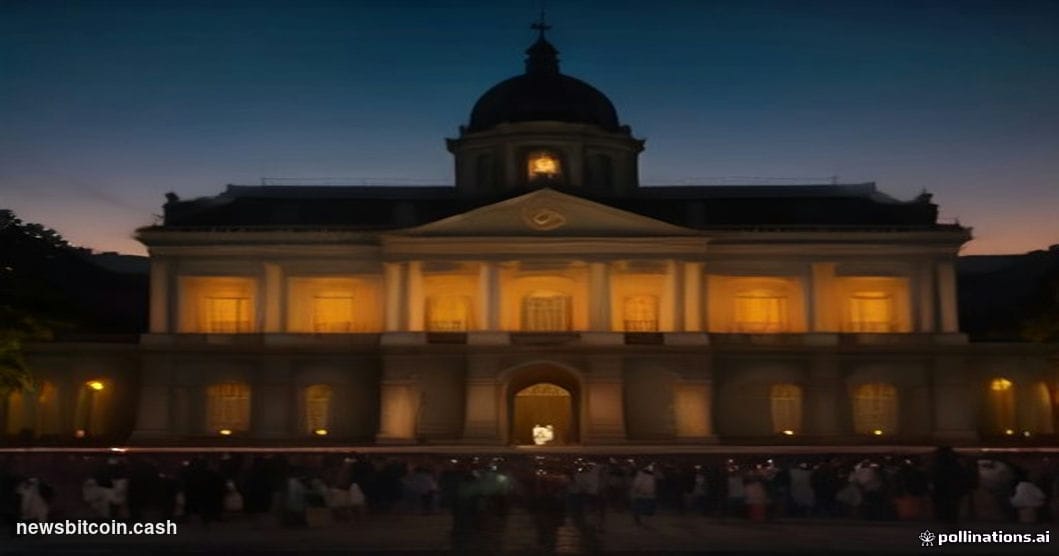
The marquee event in the lineup is Bitcoin Histórico, which is set to be held at the National Palace in San Salvador. The choice of venue is anything but incidental. The National Palace is one of the most symbolically charged buildings in El Salvador — the seat of government power for much of the country's history. Hosting a Bitcoin-focused event there carries explicit institutional weight, framing the asset not as a speculative curiosity but as a pillar of national economic identity. It is the kind of venue selection that embeds Bitcoin into the state's cultural fabric in a way that a conference center simply cannot replicate.
The decision to brand the event "Histórico" is equally deliberate. It positions El Salvador's Bitcoin experiment not as an ongoing pilot but as an already-settled chapter of national history — a narrative frame that Herbert and Keiser have consistently promoted since taking the helm of the office.
Renaissance Rodeo Signals Expanding Ambition
Alongside Bitcoin Histórico, the November program introduces a new event called the Renaissance Rodeo. Details on its format remain sparse in initial announcements, but its naming suggests a broader cultural and educational dimension to the office's programming — one that reaches beyond pure finance and technology into the kind of renaissance-of-ideas framing that Keiser in particular has long favored in his public commentary. Whether the Renaissance Rodeo evolves into a recurring fixture or serves as a one-time November feature will be worth watching.
The fact that the National Bitcoin Office is rolling out a brand-new event format within the same ten-day window as its flagship Bitcoin Histórico program speaks to an organization operating with real institutional confidence. Running five distinct events across ten days requires logistical capacity, sustained political backing, and an audience large enough to fill multiple programming slots — none of which can be assumed in a country of roughly six million people, however symbolically committed to Bitcoin its government may be.
Herbert and Keiser as State Actors
It is worth pausing on what it means that Herbert and Keiser — both internationally known Bitcoin advocates who came to El Salvador from media and commentary backgrounds — now function as senior government officials organizing state events at national monuments. Few other countries have moved Bitcoin advocacy figures so directly into formal institutional roles. Their presence at the top of the National Bitcoin Office reflects the Bukele administration's calculation that credibility with the global Bitcoin community matters as much as, or perhaps more than, traditional diplomatic or financial credentialing.
That bet has carried real reputational stakes for El Salvador internationally. The International Monetary Fund (IMF) spent years pressuring San Salvador to walk back its Bitcoin legal tender policy, and the country eventually reached a loan agreement in early 2024 that included some softening of mandatory Bitcoin acceptance requirements. Yet the National Bitcoin Office has continued to operate, and its November event calendar suggests the government has no intention of quietly winding down its Bitcoin identity even as it navigates multilateral financial relationships.
What This Means for the Broader Bitcoin Ecosystem
A national government running five Bitcoin events in ten days — anchored at a historic palace and introducing new programming formats — is not a signal of retreat. It is a signal of institutional normalization. El Salvador is now far enough into its Bitcoin experiment that the question is no longer whether the government will stay the course, but how it continues to deepen and formalize Bitcoin's role in national life. The November schedule, compact and ambitious, is the clearest evidence yet that Herbert, Keiser, and the apparatus behind them are not treating their mandate as temporary. For the rest of the world watching sovereign Bitcoin adoption, San Salvador remains the only live case study available — and it is still very much in session.
Written by the editorial team — independent journalism powered by Bitcoin News.