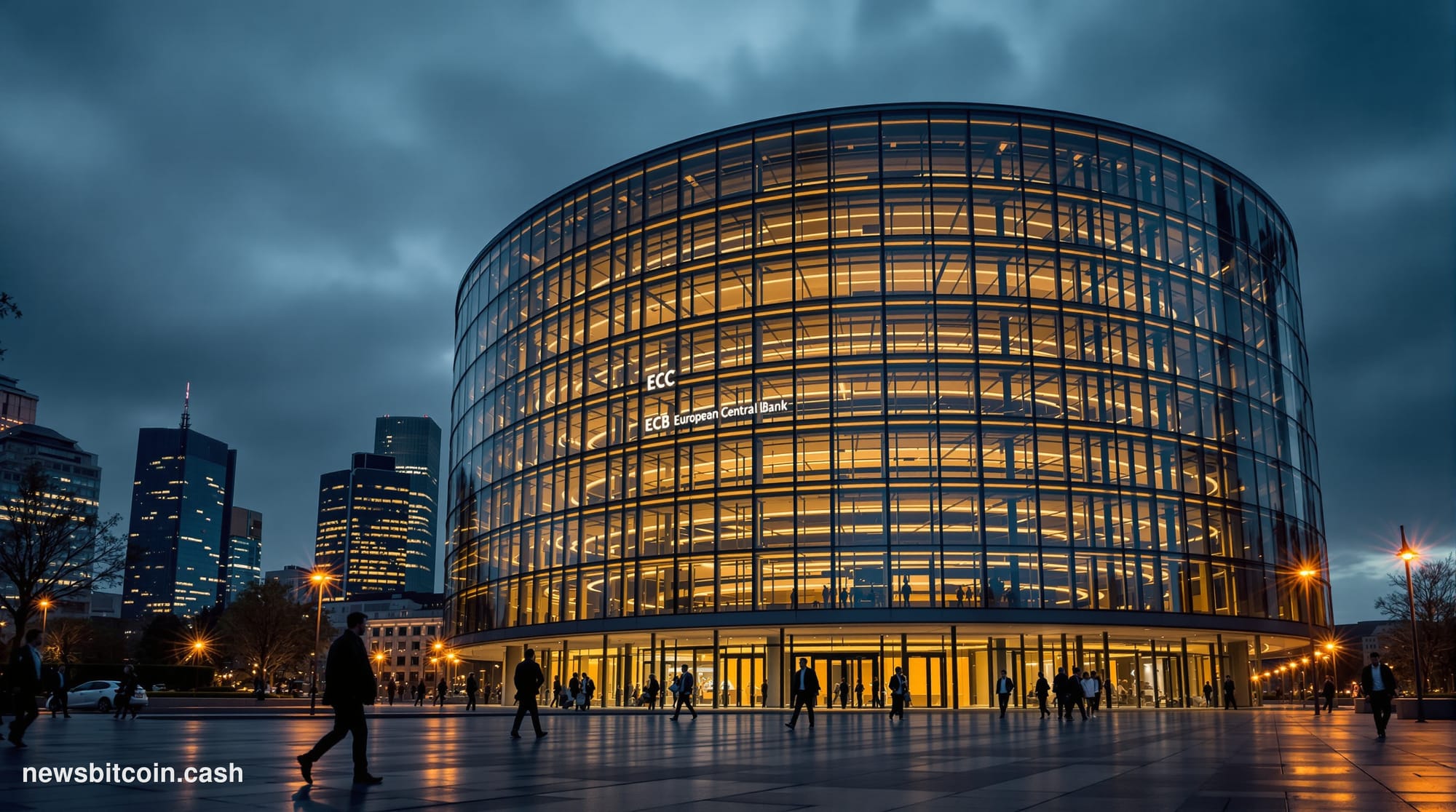
The European Central Bank has broken its three-year monetary pause, raising interest rates for the first time since 2023 as energy market disruptions cascade through the European economy. The decision signals a fundamental shift in the ECB's approach to managing inflation pressures that are now spreading beyond energy sectors into broader economic structures.
The rate increase comes as Europe grapples with an energy crisis that has created complex challenges for monetary policymakers. Unlike previous inflationary episodes driven primarily by demand-side pressures, the current energy market turmoil presents supply-side constraints that resist traditional interest rate remedies. The ECB's decision to tighten monetary policy despite these structural headwinds suggests growing concern about inflation expectations becoming entrenched across the eurozone economy.
European investment strategies face immediate recalibration as borrowing costs rise across the continent. Higher interest rates typically strengthen fiat currencies against risk assets, potentially creating headwinds for cryptocurrency adoption in European markets. However, the underlying energy crisis that prompted the rate hike may simultaneously drive demand for alternative monetary systems that operate independently of traditional energy infrastructure and centralized monetary policy.
The ECB's monetary tightening cycle creates a divergent policy landscape globally, as central banks navigate different inflationary pressures and economic conditions. This policy divergence often creates arbitrage opportunities across asset classes, including digital assets that can move capital efficiently across jurisdictions. European cryptocurrency exchanges and trading platforms may see increased activity as investors seek to hedge against both inflation risks and currency fluctuations resulting from the rate adjustment.
Energy market disruptions underlying the ECB's decision highlight the interconnected nature of modern economic systems. Cryptocurrency mining operations, particularly Bitcoin mining, have become increasingly sensitive to energy price volatility. European mining operations may face additional pressure from both higher energy costs and increased borrowing costs for expansion capital. This dual pressure could accelerate the migration of mining capacity to regions with more stable energy markets and monetary policies.
The rate hike's impact on economic growth prospects extends beyond traditional financial markets into emerging digital asset sectors. European blockchain companies and cryptocurrency startups typically rely on venture capital and debt financing for expansion, both of which become more expensive in higher interest rate environments. However, the same monetary tightening that constrains growth capital may also drive institutional interest in digital assets as portfolio diversification tools.
Inflationary pressures that prompted the ECB's action create a complex backdrop for European cryptocurrency adoption. While higher interest rates increase the opportunity cost of holding non-yielding assets like Bitcoin, persistent inflation erodes the purchasing power of euro-denominated savings. This dynamic has historically supported cryptocurrency adoption in regions experiencing monetary instability, though Europe's mature financial infrastructure and regulatory framework create different adoption patterns than emerging markets.
The ECB's return to monetary tightening after three years of accommodative policy marks a critical inflection point for European financial markets. As energy market disruptions continue to propagate through the economy, traditional monetary policy tools face limitations in addressing supply-side inflationary pressures. This environment may accelerate institutional exploration of alternative monetary systems and decentralized financial infrastructure that operate independently of centralized policy decisions and energy market dependencies.
Written by the editorial team — independent journalism powered by Bitcoin News.