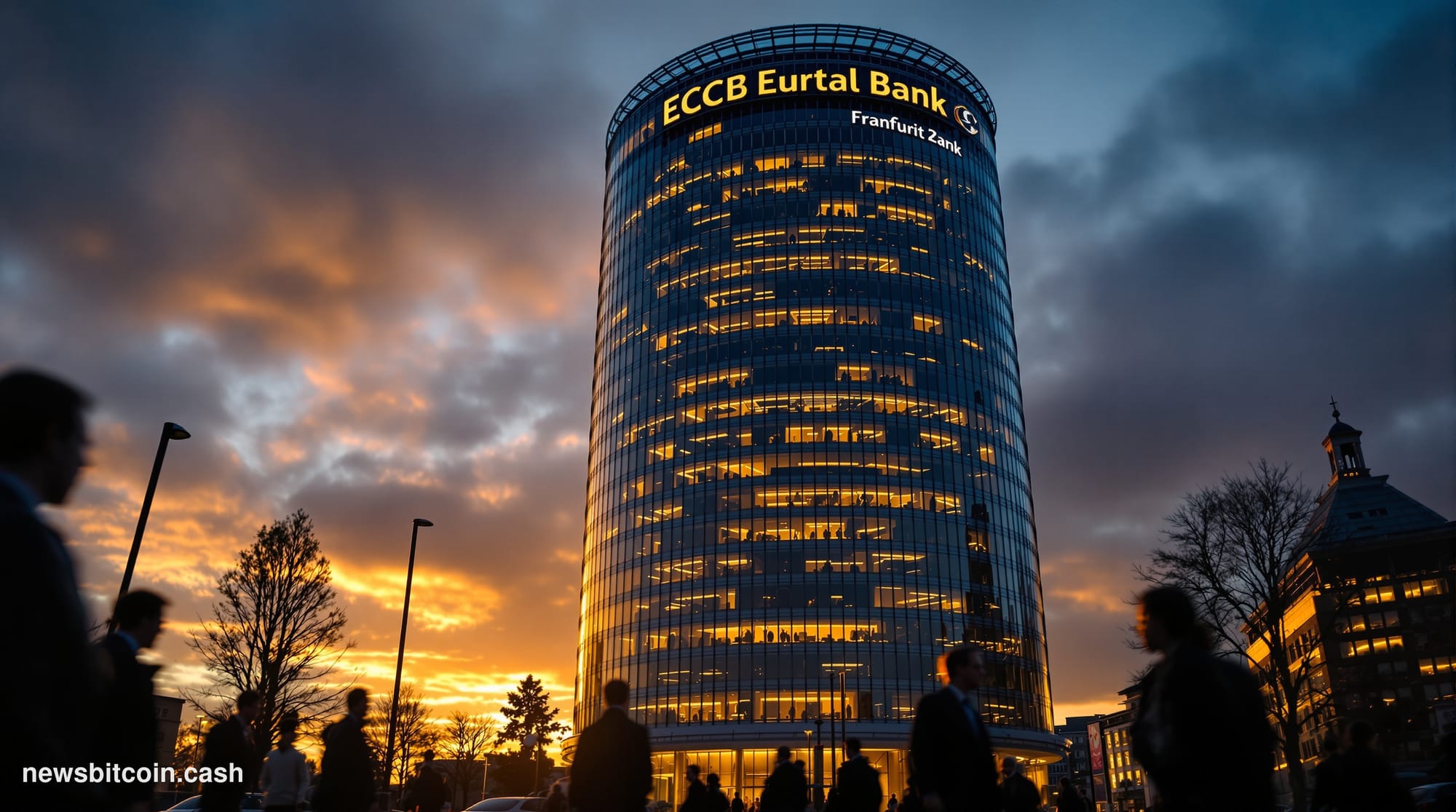
The European Central Bank delivered another 25 basis point rate increase this week, marking a decisive escalation in its battle against persistent inflation that continues to exceed the institution's target threshold. The move signals that eurozone monetary authorities remain committed to aggressive policy tightening, even as global financial markets—including digital assets—grapple with the implications of sustained restrictive conditions.
This latest rate adjustment comes as eurozone inflation metrics stubbornly refuse to retreat toward the ECB's 2% target, forcing policymakers to maintain their hawkish stance despite growing concerns about economic growth. The central bank's willingness to continue raising borrowing costs underscores the severity of inflationary pressures across the 20-nation currency bloc and suggests that the era of ultra-loose monetary policy may be definitively behind us.
For cryptocurrency markets, the ECB's rate hike represents another headwind in an already challenging macroeconomic environment. Higher interest rates typically strengthen traditional yield-bearing assets relative to non-yielding alternatives like Bitcoin, potentially dampening institutional appetite for digital asset allocation. European crypto firms, already navigating the implementation of the Markets in Crypto-Assets regulation, now face additional pressure from tightening financial conditions that could constrain both operational funding and customer demand.
Monetary Policy Divergence Creates New Dynamics
The ECB's commitment to inflation control through sustained restrictive monetary policy creates a notable divergence with other major central banks that have begun signaling potential policy pivots. This divergence could reshape capital flows across global markets, with European institutional investors potentially reducing exposure to riskier assets including cryptocurrencies in favor of higher-yielding euro-denominated instruments.
Market expectations have now shifted decisively toward anticipating prolonged monetary restriction across the eurozone. This recalibration affects not just immediate trading dynamics but also longer-term strategic planning for crypto infrastructure providers, exchanges, and institutional service providers operating in European markets. The higher cost of capital makes expansion more expensive while potentially reducing the risk appetite of traditional financial institutions exploring digital asset services.
European crypto exchanges like Bitstamp and regional operations of global platforms including Coinbase and Binance must now navigate not only regulatory compliance costs but also the headwinds of tighter monetary conditions. These firms face the dual challenge of maintaining competitiveness while adapting to an environment where traditional financial products offer increasingly attractive risk-adjusted returns.
Inflation Persistence Reshapes Risk Assessment
The ECB's decision reflects a broader recognition that inflationary pressures have proven more persistent than initially anticipated. This persistence forces a fundamental reassessment of risk across all asset classes, with particular implications for digital assets that have historically benefited from expansionary monetary conditions. The central bank's signal that restrictive policy may continue indefinitely removes one of the key supportive narratives for cryptocurrency adoption among institutional investors.
European financial institutions that have been gradually increasing their cryptocurrency exposure may now face internal pressure to reassess these allocations. Higher risk-free rates make the opportunity cost of holding volatile digital assets more pronounced, potentially leading to portfolio rebalancing away from crypto. This dynamic could be particularly pronounced among conservative institutional investors who entered the space during the low-rate environment of recent years.
The persistence of above-target inflation also raises questions about the effectiveness of monetary policy tools in the current economic environment. If traditional central banking mechanisms prove insufficient to control price pressures, this could paradoxically strengthen the long-term case for alternative monetary systems, though such benefits would likely materialize over years rather than months.
Infrastructure Implications and Strategic Positioning
What this means for the broader cryptocurrency ecosystem extends beyond immediate price implications. The ECB's sustained restrictive stance suggests that the European market may experience slower institutional adoption rates in the near term, as traditional finance players focus on optimizing returns within conventional asset classes. This environment favors crypto infrastructure providers with strong balance sheets and diversified revenue streams over those dependent on high-growth, high-risk strategies.
The monetary tightening also creates opportunities for crypto firms that can demonstrate clear value propositions beyond speculative investment. Payment processors, stablecoin issuers with strong regulatory compliance, and infrastructure providers serving real economic needs may find their services more in demand as traditional financial services become more expensive and restrictive. The key will be positioning these services as efficiency gains rather than speculative plays.
Written by the editorial team — independent journalism powered by Bitcoin News.