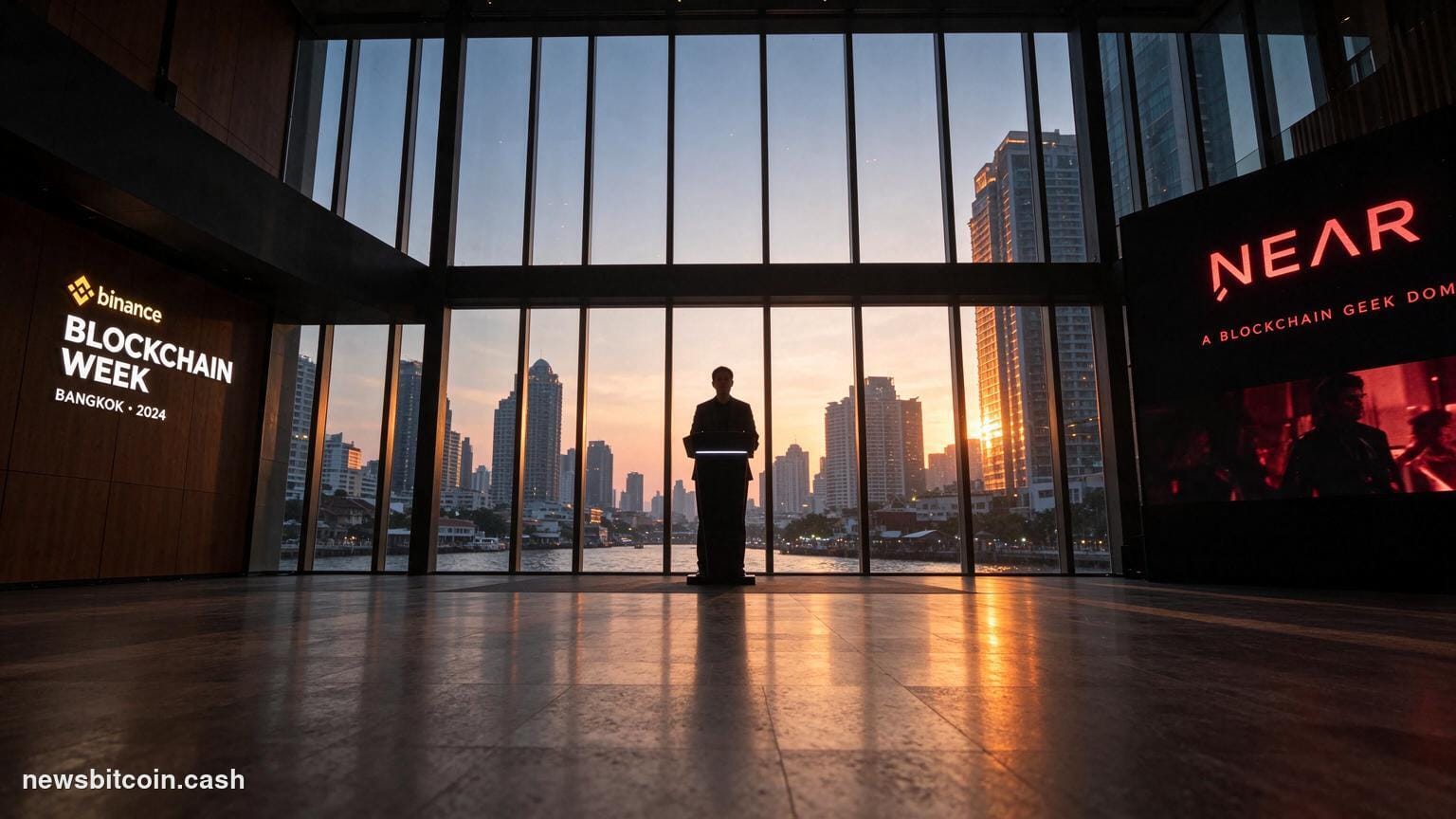
Changpeng Zhao has never been one to stay quiet when he believes he's been wronged, and his latest target is one of the world's most powerful streaming platforms. Speaking at Binance Blockchain Week in Bangkok on November 28, the exchange's founder — widely known as CZ — announced he is actively consulting lawyers about a potential defamation lawsuit against Netflix over its new dramatized FTX series, The Altruists. The grievance is pointed: the show reportedly casts CZ as a villain while treating convicted fraudster Sam Bankman-Fried in a comparatively sympathetic light. For an industry still navigating the wreckage of the FTX collapse, the dispute raises uncomfortable questions about how entertainment shapes public memory — and who controls the narrative.
A Drama Within the Drama
Netflix's foray into crypto storytelling was always going to be contentious. The FTX saga — involving billions in missing customer funds, a spectacular corporate implosion, and the criminal conviction of Sam Bankman-Fried — is one of the most consequential financial scandals of the decade. It is precisely the kind of story that lends itself to dramatization, but dramatization carries risk: real people get assigned roles, motivations get compressed into narrative arcs, and nuance becomes a casualty of runtime.
CZ's core complaint is that The Altruists inverts the moral record. In the actual sequence of events, it was CZ and Binance who first triggered FTX's public unraveling in November 2022, when Binance announced it would liquidate its holdings of FTT — FTX's native exchange token — citing risk concerns. That decision, while arguably self-interested, also exposed what regulators and prosecutors later confirmed: a massive, deliberate misappropriation of customer funds by FTX executives. SBF was subsequently convicted on multiple counts of fraud and conspiracy. CZ, by contrast, was not charged in connection with the FTX collapse itself. That distinction matters enormously when a streaming drama starts assigning heroes and villains.
Defamation in the Age of Docudrama
The legal path CZ is exploring is narrow but not unprecedented. Defamation suits against entertainment companies over fictitious or dramatized portrayals are notoriously difficult to win, particularly in jurisdictions with strong free speech protections. Netflix and other studios routinely include disclaimers that dramatized content represents creative interpretation rather than strict documentary fact. However, those disclaimers have limits. If a production makes specific, identifiable factual claims about a real, living individual — claims that damage their reputation and can be shown to be false — defamation exposure becomes real.
CZ's decision to announce the consultation publicly, from the stage of Binance's own flagship event in Bangkok, is itself a calculated move. He is not filing a lawsuit — at least not yet. He is signaling intent, applying reputational pressure, and framing himself as a victim of narrative manipulation before a global crypto audience. That framing serves multiple purposes: it reminds the industry of his role in exposing FTX, it positions him as a defender of factual accuracy in an era of streaming sensationalism, and it keeps his name prominent at a moment when he is rebuilding his public profile following his own legal difficulties in the United States.
CZ's Own Legal Shadow
It would be incomplete to discuss CZ's defamation grievance without acknowledging the context. CZ himself pleaded guilty in 2023 to violating United States anti-money laundering laws as part of a landmark settlement in which Binance paid $4.3 billion in fines and penalties — one of the largest corporate settlements in American financial history. He served a custodial sentence and has since returned to public life, re-engaging with the crypto industry at events precisely like Binance Blockchain Week. His legal record does not eliminate his right to pursue defamation claims if a production genuinely misrepresents him, but it does complicate the optics of positioning himself as an aggrieved innocent party.
Netflix, for its part, has not publicly responded to CZ's statements. The streaming giant has built a profitable franchise out of true-crime and financial scandal content, and The Altruists likely represents a significant production investment. Whether the series is accurate in its characterization of CZ, or whether it has genuinely crossed the line from creative license into actionable defamation, will ultimately depend on the specific scenes, dialogue, and factual claims contained within it — details that remain subject to legal review.
What This Means for Crypto's Public Image
Beyond the specific legal dispute, the episode highlights a broader tension the crypto industry has yet to resolve: its vulnerability to cultural representation. Blockchain technology and digital assets have spent years fighting to be taken seriously by institutional finance, regulators, and the general public. Every dramatized retelling of a crypto scandal — however artistically legitimate — risks reinforcing a generalized perception of the industry as a theater of fraudsters and reckless operators.
CZ's battle with Netflix is, in that sense, also a proxy battle over how the crypto industry's most turbulent chapter gets permanently inscribed into popular culture. Whether he pursues litigation or not, the fact that the founder of the world's largest crypto exchange by trading volume felt compelled to consult lawyers over a streaming show says something significant: the war for crypto's reputation is now being fought not just in courtrooms and congressional hearings, but in writers' rooms and on streaming platforms. That is a frontier the industry is poorly equipped to defend.
Written by the editorial team — independent journalism powered by Bitcoin News.