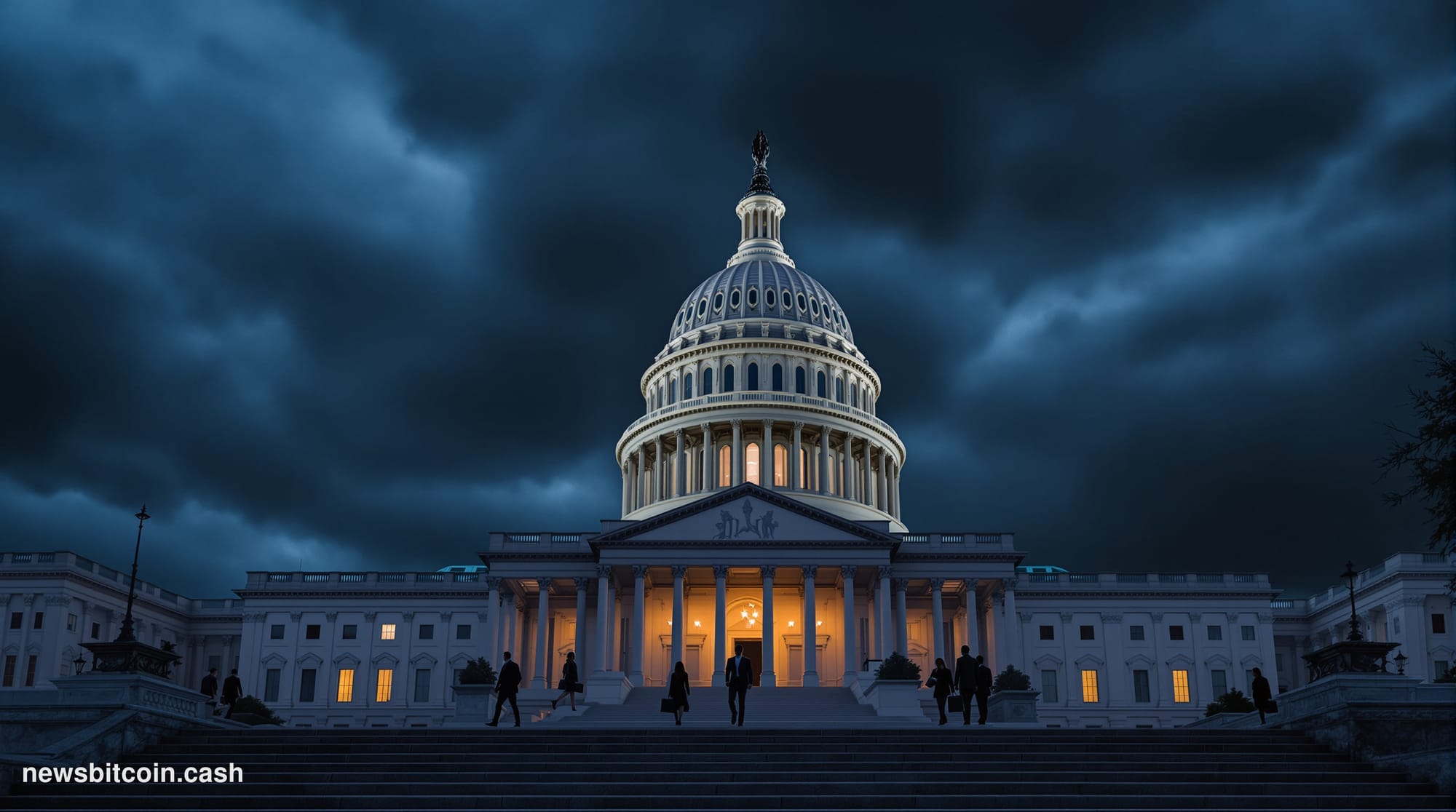
The CLARITY Act has stalled in the United States Senate, falling short of the votes needed to advance and pushing comprehensive federal cryptocurrency regulation further into an uncertain future. With lawmakers now departing for recess ahead of the midterm election, the digital assets industry faces yet another extended wait for the legal clarity it has spent years lobbying to obtain. The failure is not merely a procedural setback — it is a signal about where cryptocurrency sits in Washington's hierarchy of legislative priorities, and the answer is not encouraging.
For the Coinbases and Binances of the world, along with the broader ecosystem of decentralized finance protocols, token issuers, and custodians operating in the United States, the Senate's inability to move the CLARITY Act forward perpetuates the single greatest structural risk to American crypto infrastructure: regulatory ambiguity. Exchanges cannot fully commit to product roadmaps. Institutional investors hedge their exposure. Legal departments run enormous overhead costs interpreting guidance that changes with each new enforcement action or agency statement. This is not a sustainable operating environment, and Congress's inability to act does real economic damage.
What the CLARITY Act Was Meant to Do
The CLARITY Act represented one of the more substantive legislative attempts to draw firm boundaries between which digital assets fall under the jurisdiction of the Securities and Exchange Commission (SEC) and which belong under the Commodity Futures Trading Commission (CFTC). That jurisdictional question — whether a token is a security or a commodity — has been the central, unresolved fault line in American crypto regulation for nearly a decade. Without a legislative answer, the industry has been forced to navigate through enforcement actions, court decisions, and contradictory agency guidance rather than clear statutory law. The bill's collapse means that fault line remains wide open.
The timing compounds the damage. Heading into a midterm election cycle, Congress's appetite for complex financial legislation narrows sharply. Legislators shift focus toward constituent optics, campaign fundraising, and issues that poll well in their districts. Cryptocurrency market structure reform, however consequential to the economy, rarely tops a voter's list of concerns in the way that healthcare or housing costs do. The recess window effectively freezes meaningful legislative movement until after the election results reshape the political calculus, and even then, a newly configured Senate or House may have very different priorities and coalitions around digital asset policy.
Regulatory Vacuum and Its Consequences
The practical consequence of this stall is that the SEC and CFTC continue operating under existing statutory frameworks never designed with Bitcoin, Ethereum, or programmable smart contracts in mind. Both agencies will continue to exercise authority through enforcement rather than rulemaking, meaning the industry learns what is and is not permissible largely through litigation. That dynamic is expensive, unpredictable, and deeply hostile to innovation. It also accelerates capital flight — developers, protocols, and treasury operations migrating to jurisdictions with enacted frameworks, whether that is the European Union's Markets in Crypto-Assets (MiCA) regulation or more permissive regimes in Asia and the Middle East.
This is worth dwelling on. The European Union's MiCA framework is now operational, giving compliant businesses a defined set of rules under which to build and scale. The United Arab Emirates and Singapore have similarly moved to establish clear licensing regimes. Against that backdrop, the United States' ongoing failure to legislate is not a neutral stance — it is an active competitive disadvantage. Every month without federal clarity is a month in which the engineering talent, venture capital, and institutional infrastructure of the digital asset economy has a structural incentive to organize elsewhere.
Midterm Politics and the Path Forward
The Senate's failure to advance the CLARITY Act also raises questions about the internal dynamics of congressional support for crypto legislation. Passing financial market structure reform requires building coalitions across the aisle, navigating committee jurisdictions between the Senate Banking Committee and the Agriculture Committee, and overcoming skepticism from members who remain unconvinced that digital assets require a tailored regulatory regime rather than stricter application of existing securities law. None of those obstacles disappear after the midterms — they simply rearrange themselves around new political realities.
What the industry should anticipate is a prolonged negotiation period, likely stretching well into 2027, before any comprehensive legislation has a realistic path to the President's desk. In the interim, the enforcement-first regulatory environment remains the default, and businesses operating in or adjacent to U.S. markets must continue investing in compliance infrastructure built around uncertainty rather than statutory certainty.
The CLARITY Act's Senate failure is a reminder that regulatory progress in Washington operates on a timeline entirely indifferent to market cycles or industry urgency. The crypto sector will need to sustain its lobbying infrastructure, maintain bipartisan relationships, and keep building the public policy case for a modern digital asset framework — because the legislative window, when it does eventually open again, will require a bill ready to move quickly. That window is not open today.
Written by the editorial team — independent journalism powered by Bitcoin News.