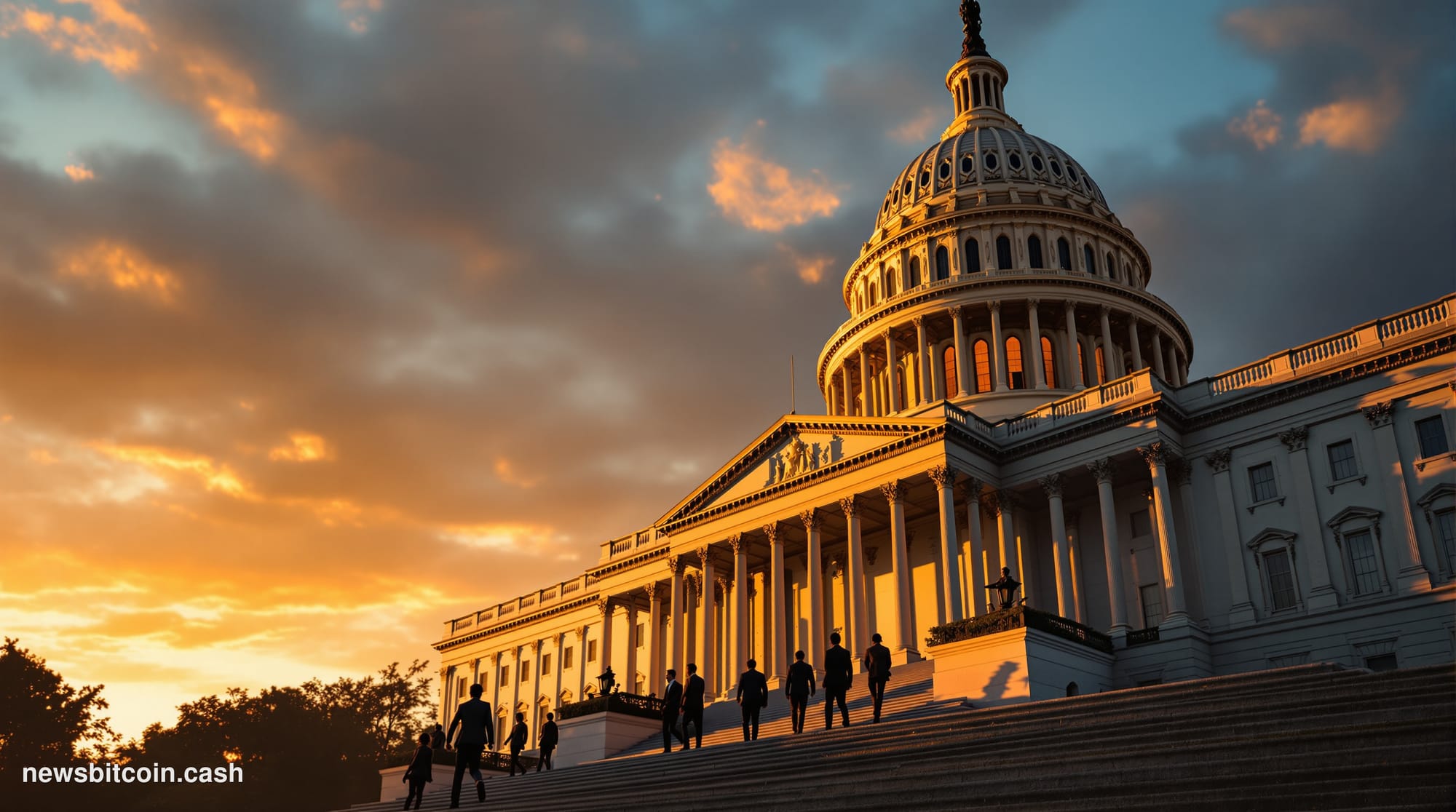
Congressional lawmakers find themselves in a familiar sprint against the clock, this time racing to pass the CLARITY Act before a looming deadline that could determine the trajectory of American cryptocurrency regulation for years to come. The legislation represents perhaps the most significant attempt yet to resolve the regulatory ambiguity that has plagued the digital assets industry since Bitcoin's emergence over a decade ago.
The stakes extend far beyond Washington's typical legislative maneuvering. Industry observers view the CLARITY Act as a potential watershed moment that could fundamentally reshape how institutional investors approach cryptocurrency markets. The bill's passage would establish clear regulatory frameworks that have been conspicuously absent, creating the legal certainty that major financial institutions require before committing substantial capital to digital assets.
This regulatory clarity carries profound implications for institutional adoption, a development that could unlock massive capital flows into cryptocurrency markets. Traditional finance has largely remained on the sidelines, not due to lack of interest, but because of the regulatory uncertainty that makes compliance frameworks nearly impossible to construct. Major banks, pension funds, and insurance companies have repeatedly cited the absence of clear regulatory guidelines as the primary barrier preventing meaningful cryptocurrency investments.
The tokenization sector stands to benefit particularly dramatically from the CLARITY Act's potential passage. Real-world asset tokenization, which involves converting physical assets like real estate, commodities, and securities into blockchain-based tokens, has shown tremendous promise but faces significant regulatory headwinds. Clear regulatory frameworks would accelerate this process, potentially opening trillion-dollar markets to blockchain-based innovation.
Yet the congressional deadline adds an element of uncertainty that reflects the broader challenges facing cryptocurrency regulation in the United States. Previous attempts at comprehensive crypto legislation have foundered on political disagreements, regulatory turf wars, and the inherent complexity of governing rapidly evolving technology. The industry has learned not to count on legislative victories until bills actually receive presidential signatures.
The timing pressures also highlight how cryptocurrency regulation has become entangled with broader political considerations. As congressional sessions wind down, unrelated political priorities often crowd out specialized legislation, regardless of its potential economic impact. This dynamic has frustrated industry participants who argue that regulatory delay imposes real costs on American competitiveness in the global digital assets race.
International developments add urgency to the American legislative timeline. The European Union's Markets in Crypto-Assets (MiCA) regulation has already provided regulatory clarity for European cryptocurrency operations, while other jurisdictions continue advancing their own frameworks. American delay risks ceding leadership in an industry where regulatory clarity often determines where innovation and investment capital flows.
The broader economic implications extend beyond immediate cryptocurrency markets. Clear regulatory frameworks could accelerate blockchain adoption across traditional industries, from supply chain management to financial services infrastructure. Companies currently hesitant to explore blockchain solutions due to regulatory uncertainty might move forward once legal frameworks become established.
What this means for the cryptocurrency industry depends entirely on whether lawmakers can navigate the political complexities and time constraints that have derailed previous regulatory efforts. The CLARITY Act represents more than just another piece of legislation; it embodies the industry's hopes for legitimacy and mainstream acceptance. Success would signal that American policymakers recognize cryptocurrency's permanent place in the financial ecosystem. Failure would extend the regulatory uncertainty that continues to constrain the industry's growth potential, potentially pushing innovation and investment to more welcoming jurisdictions. As the deadline approaches, the cryptocurrency community watches Washington with the understanding that the next few weeks could determine whether the United States embraces or continues to struggle with digital asset regulation.
Written by the editorial team — independent journalism powered by Bitcoin News.