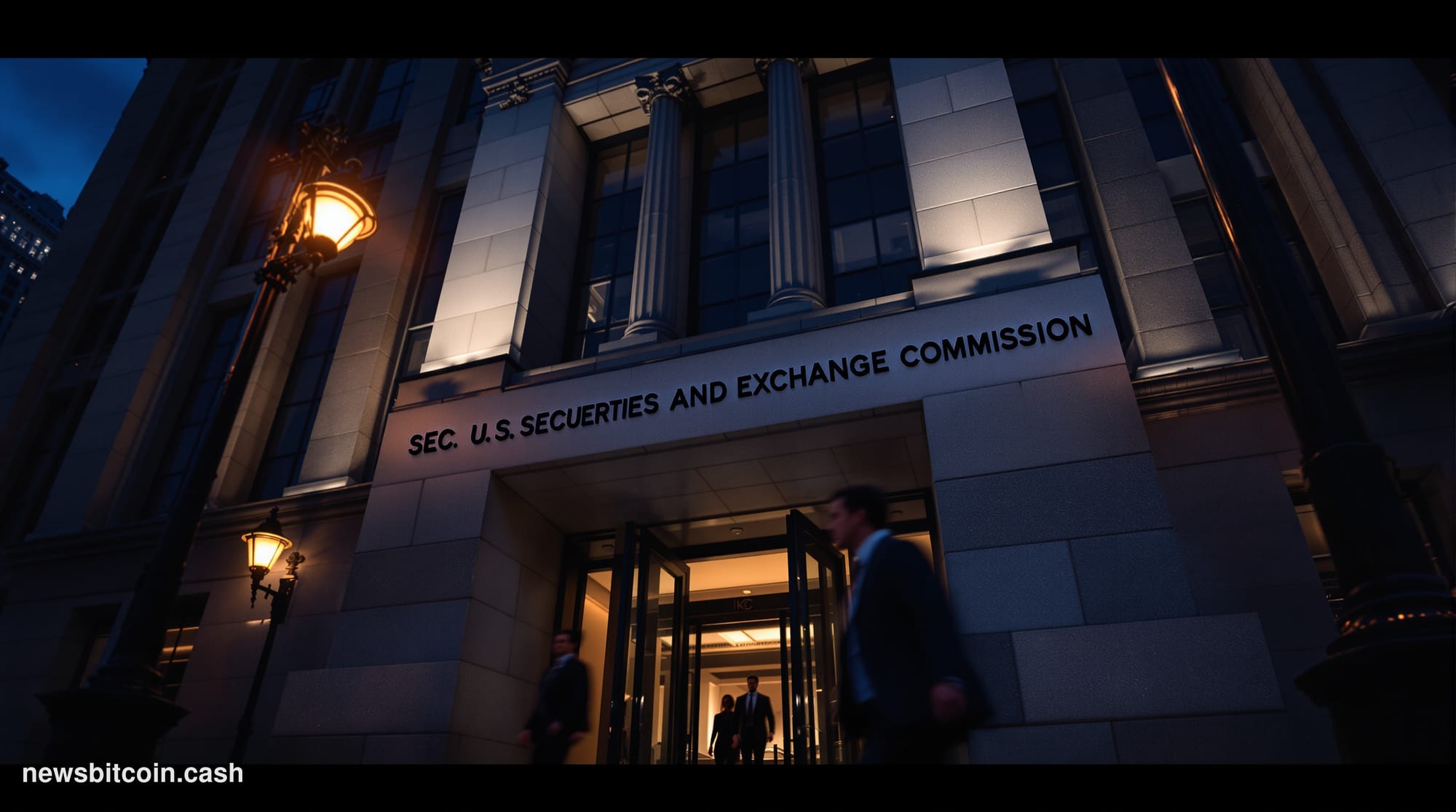
When legislation fails in Washington, regulators rarely sit idle. That is the central warning from Bernstein, the prominent research firm, following Tuesday's collapse of the CLARITY Act's cloture vote in the Senate — a setback that has now cleared the path for the Securities and Exchange Commission and the Commodity Futures Trading Commission to take matters into their own hands through aggressive, agency-driven rulemaking.
The CLARITY Act had represented one of the most ambitious attempts yet to establish a coherent federal framework for digital assets in the United States, delineating jurisdictional boundaries between the SEC and the CFTC and providing the crypto industry with the kind of regulatory certainty it has long demanded. But the cloture vote — a procedural threshold required to advance legislation in the Senate — failed on Tuesday, effectively halting the bill's momentum and leaving a significant vacuum in its wake.
Bernstein's analysts argue that the federal agencies will not interpret this legislative failure as a signal to pull back. Quite the opposite. According to the firm's assessment, both the SEC and the CFTC are expected to publish new rules at an accelerated pace, compensating for the months spent at the negotiating table over a bill that ultimately could not clear its procedural hurdles. In other words, the time regulators lost waiting on Congress is time they now intend to recover through administrative action.
This dynamic is not without precedent. Federal agencies have historically used periods of legislative gridlock as an opening to expand their regulatory footprint through rulemaking — a process that, while slower to implement than statute, carries real legal force and can reshape entire industries without a single vote on the Senate floor. For the crypto sector, which has spent years navigating a patchwork of enforcement actions and informal guidance, the prospect of formal but agency-authored rules represents a fundamentally different — and arguably more unpredictable — threat than legislation crafted through negotiation and public debate.
The stakes are particularly acute because of what the CLARITY Act was designed to resolve: the persistent jurisdictional ambiguity between the SEC and the CFTC over which digital assets qualify as securities versus commodities. That distinction determines everything from listing requirements and disclosure obligations to the applicable enforcement regime. Without a legislative answer, both agencies retain broad latitude to assert jurisdiction where they see fit — and Bernstein's forecast suggests they will use it.
For exchanges, token issuers, and decentralized finance protocols operating in the United States, the calculus has now shifted. Legislative clarity — the very goal embedded in the bill's name — has been deferred indefinitely. What replaces it is the prospect of competing, overlapping rulemakings from two powerful federal agencies, each operating under its own statutory mandate and each potentially drawing different lines around the same set of assets and activities. The compliance burden that falls on industry participants in that scenario is substantial.
There is a broader political dimension worth examining. The CLARITY Act had been developed through a protracted negotiation process, reflecting real effort from both industry advocates and Congressional sponsors to bridge deep disagreements over how digital assets should be classified and regulated. Its failure at the cloture stage suggests that even after those compromises were made, sufficient Senate support could not be assembled. That is a sobering signal for anyone who believes comprehensive crypto legislation is imminent. Congress has repeatedly demonstrated that digital asset policy, despite growing urgency from the industry, remains a difficult arena for consensus-building.
Bernstein's warning, then, is less a prediction of regulatory creativity and more a straightforward reading of institutional incentives. Agencies that have invested significant resources in understanding a new asset class do not step back simply because a bill stalls. They redeploy that expertise through the tools they already possess — notice-and-comment rulemaking, guidance letters, interpretive releases — and they move faster when they no longer need to coordinate their actions with a legislative timeline.
What this means for the industry is a period of heightened regulatory uncertainty delivered not through the deliberative process of legislation but through the faster, more unilateral channels of administrative law. Projects, exchanges, and institutional participants that had been waiting for the CLARITY Act to define their compliance obligations will now need to track not one legislative text but two independent rulemaking agendas simultaneously. The window for shaping the outcome through lobbying and comment periods remains open — but it is narrowing, and the terms of engagement have changed decisively.
Written by the editorial team — independent journalism powered by Bitcoin News.