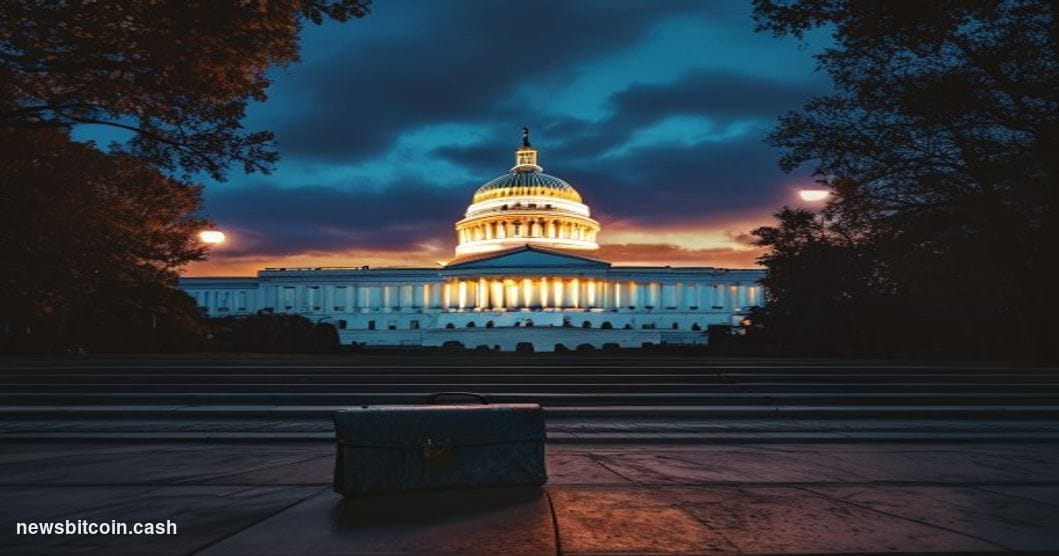
The Clarity Act has cleared one of Washington's most difficult hurdles — partisan gridlock — by securing bipartisan support in the United States Senate. Lawmakers on both sides of the aisle are now pushing for a floor vote before the August 2026 recess, setting up what could be a defining legislative moment for the American digital assets industry. The stakes are high: a structured federal framework for crypto has been debated, delayed, and derailed for years, and this window may be the narrowest yet before the political calendar tightens again.
Bipartisan momentum on crypto legislation is rarer than it sounds. The industry has spent much of the past three years navigating a regulatory environment defined less by law than by enforcement actions, agency turf wars, and competing congressional agendas. The fact that the Clarity Act has attracted cross-party backing suggests that legislators from both camps have calculated — correctly or not — that leaving digital asset markets without a clear statutory foundation is no longer a tenable political position heading into a new election cycle.
What the Clarity Act is designed to do is provide precisely what its name implies: a coherent legal structure distinguishing digital commodities from digital securities, clarifying which assets fall under the jurisdiction of the Securities and Exchange Commission (SEC) versus the Commodity Futures Trading Commission (CFTC), and establishing disclosure and compliance obligations for issuers and exchanges operating in the United States. For an industry that has long demanded rules rather than regulatory ambiguity, the bill's progress represents meaningful movement — even if passage is far from guaranteed.
That uncertainty is quantified starkly in prediction market data. According to current market readings, the probability that the Clarity Act is actually signed into law in 2026 sits at just 32.5% — a YES probability that reflects enthusiasm tempered by political reality. Senate calendars are unforgiving. The August recess is a hard deadline, and anything that misses that window risks being delayed into a post-recess environment where competing legislative priorities, geopolitical developments, or shifts in Senate composition could complicate the calculus entirely. A 32.5% market probability is not pessimism — it is the market accurately pricing a real but fragile opportunity.
The Senate's role here is decisive. The House has previously passed versions of digital asset market structure legislation, making the Senate the key remaining battleground. Bipartisan support is a necessary condition for getting the bill to the floor, but it is not sufficient. Senate leadership must allocate floor time, and procedural maneuvers — from cloture votes to amendment battles — can slow or sink even well-supported legislation. The August recess functions as a forcing mechanism: either the Senate acts before the break, or the bill enters a holding pattern that historically has ended more legislative efforts than it has revived.
For the crypto industry, the practical implications of the Clarity Act's passage would be transformative. Exchanges, custodians, token issuers, and decentralized protocol developers have all operated for years under a patchwork of state-level money transmission licenses, conflicting federal guidance, and the perpetual threat of SEC enforcement actions premised on securities law frameworks designed in the 1930s. A federal market structure law would not eliminate regulatory complexity, but it would replace legal ambiguity with defined obligations — a trade that most serious infrastructure players in the space would accept without hesitation.
The timing also matters geopolitically. The European Union's Markets in Crypto-Assets (MiCA) regulation has been in effect since late 2024, and jurisdictions from Singapore to the United Arab Emirates have moved aggressively to codify crypto regulatory frameworks. The United States has watched capital, talent, and institutional activity drift toward clearer regulatory environments. The Clarity Act, if passed, would signal that Washington is prepared to compete for that activity rather than cede it by default.
What This Means
The Clarity Act's bipartisan support and its targeted Senate vote before August 2026 represent the most credible legislative opening the U.S. crypto sector has seen in years. Yet prediction markets placing passage odds at 32.5% are a reminder that legislative momentum and legislative success are not the same thing. The next several weeks will test whether the Senate can convert cross-party goodwill into an actual floor vote — and whether that vote, if it happens, can produce the outcome that a maturing digital asset industry has long argued is overdue. The window is open, but it is narrow, and it will not stay open indefinitely.
Written by the editorial team — independent journalism powered by Bitcoin News.