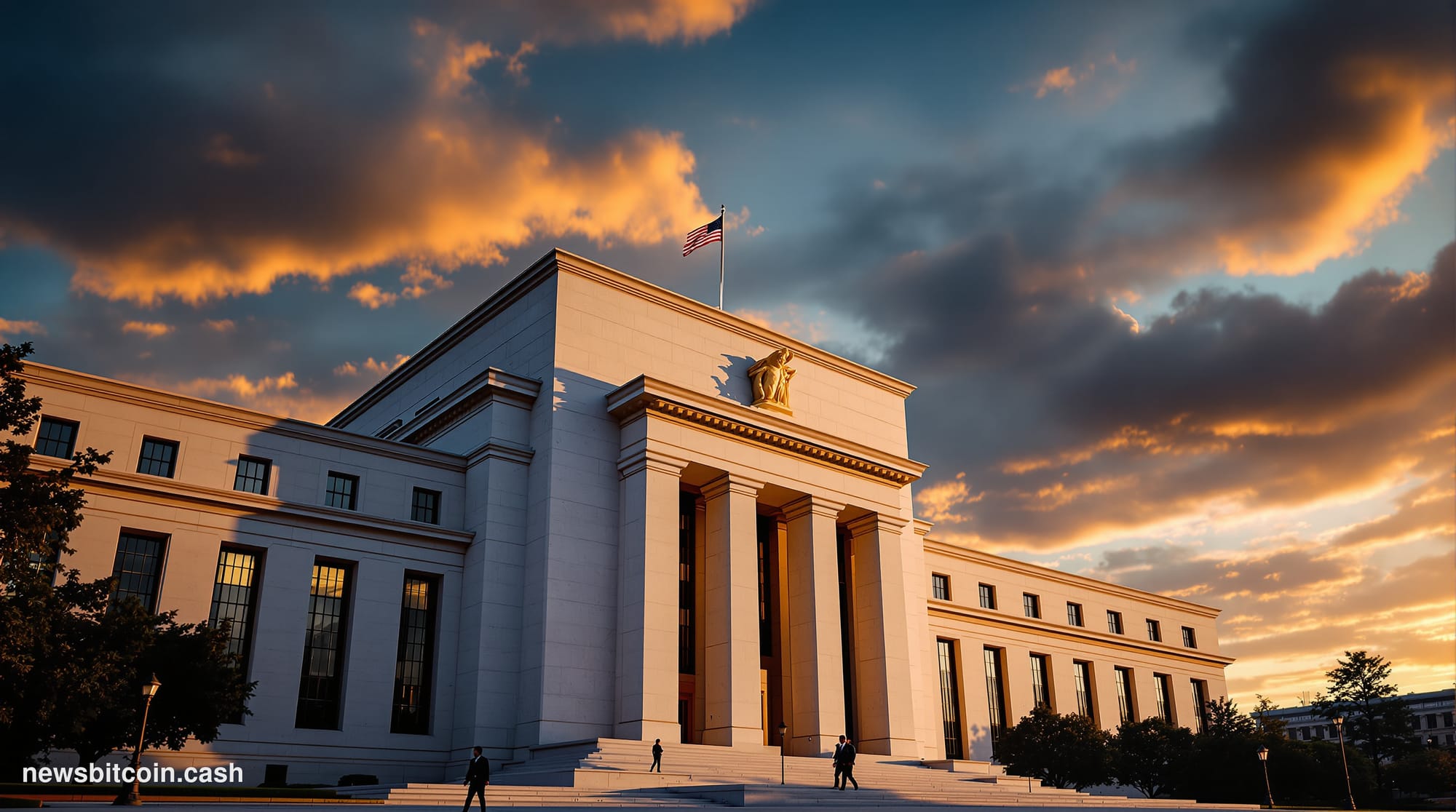
On a Monday that Wall Street would rather forget, millions of Americans discovered their bank accounts were effectively inaccessible. Customers of JPMorgan Chase, Wells Fargo, Bank of America, and U.S. Bancorp — institutions that together hold the financial lifelines of a significant portion of the U.S. population — found themselves unable to log in to their accounts, check balances, or execute transfers. The market's reaction was immediate and unambiguous: bank stocks sold off across the board, and the question that reverberated from trading desks to kitchen tables was the same one that surfaces every time legacy finance stumbles this visibly — is your money actually safe?
The stock damage was broad and swift. JPMorgan Chase led the decline, shedding approximately 2.5% in afternoon trading as complaint volumes mounted online. Bank of America followed with a loss of roughly 2.3%, while Wells Fargo dropped about 2%. U.S. Bancorp fared marginally better but still fell around 1.3%. The near-simultaneous nature of the disruptions across competing institutions made the sell-off feel less like a targeted reaction to any single bank's operational failure and more like a verdict on the sector's systemic fragility.
When Infrastructure Fails at Scale
What makes Monday's events particularly striking is not that a bank suffered a technical outage — these incidents happen with uncomfortable regularity across all industries. What matters is that multiple major institutions appear to have experienced significant service degradation at roughly the same time, leaving customers with nowhere to turn. When one bank goes down, customers shrug and wait. When four of the country's largest financial institutions collectively prevent users from accessing their own funds, it raises harder questions about the shared infrastructure, third-party dependencies, and aging core banking systems that underpin American retail finance.
The modern banking experience has been migrated almost entirely to digital interfaces — mobile apps, web portals, and real-time payment rails that customers now treat as utilities rather than services. That expectation of perpetual availability is precisely what makes outages so corrosive to trust. A customer who cannot check their balance before a rent payment clears, or cannot transfer funds to cover an emergency, has not simply experienced an inconvenience. They have experienced a failure of the basic promise their bank makes to them every day.
The Crypto Infrastructure Counterargument
It would be too convenient — and frankly too simplistic — to declare that Monday's outages prove cryptocurrency is superior to traditional banking. Crypto infrastructure has its own well-documented failure modes: exchange collapses, smart contract exploits, bridge hacks, and network congestion events. But the contrast in architecture is worth examining seriously, not as a marketing exercise, but as a structural question. Public blockchains do not have login servers that go down. They do not have centralized authentication systems that can fail for every customer simultaneously. A wallet holder whose bank app is showing an error can, in principle, still access assets held on a decentralized network.
This architectural difference has long been theoretical for most retail users. Monday's events offer a moment to consider whether that distinction has practical relevance at scale. The irony is not lost on observers that while bank customers were locked out of viewing their own balances, Bitcoin's network continued processing blocks with its customary indifference to Monday's chaos. Ethereum's validators kept attesting. The ledgers kept moving.
Regulatory Pressure and Operational Risk
From a regulatory standpoint, simultaneous outages at systemically important financial institutions are precisely the kind of event that draws Congressional attention and regulatory scrutiny. U.S. banking regulators have increasingly focused on operational resilience standards — the expectation that major banks maintain continuous service availability for critical customer-facing functions. When institutions of the size of JPMorgan Chase and Wells Fargo collectively fail that standard on the same day, it strengthens the hand of regulators who have been pushing for stricter technology and third-party risk management requirements.
The stock declines — 2.5% at JPMorgan, 2.3% at Bank of America, 2% at Wells Fargo, and 1.3% at U.S. Bancorp — are not catastrophic in isolation. But they represent market participants pricing in something beyond a single bad day: reputational risk, potential regulatory backlash, and the deeper unease that comes from watching critical financial infrastructure visibly crack under routine load.
What This Means
Monday's bank outages will likely be resolved with the usual cycle of corporate apologies, assurances of investigation, and pledges to prevent recurrence. Customer deposits remain protected by federal deposit insurance for qualifying accounts, and no bank has indicated that funds were lost or compromised. But the episode lands at a moment when trust in legacy financial infrastructure is already under structural pressure — from digital-native competitors, from stablecoin payment networks, and from a generation of users who grew up expecting technology to simply work. Every outage of this scale is a small but legible argument for the kind of financial sovereignty that distributed systems promise, even if delivering on that promise in practice remains a work in progress for the crypto ecosystem. The balance of that argument shifted slightly on Monday, and Wall Street's afternoon sell-off suggests investors noticed.
Written by the editorial team — independent journalism powered by Bitcoin News.