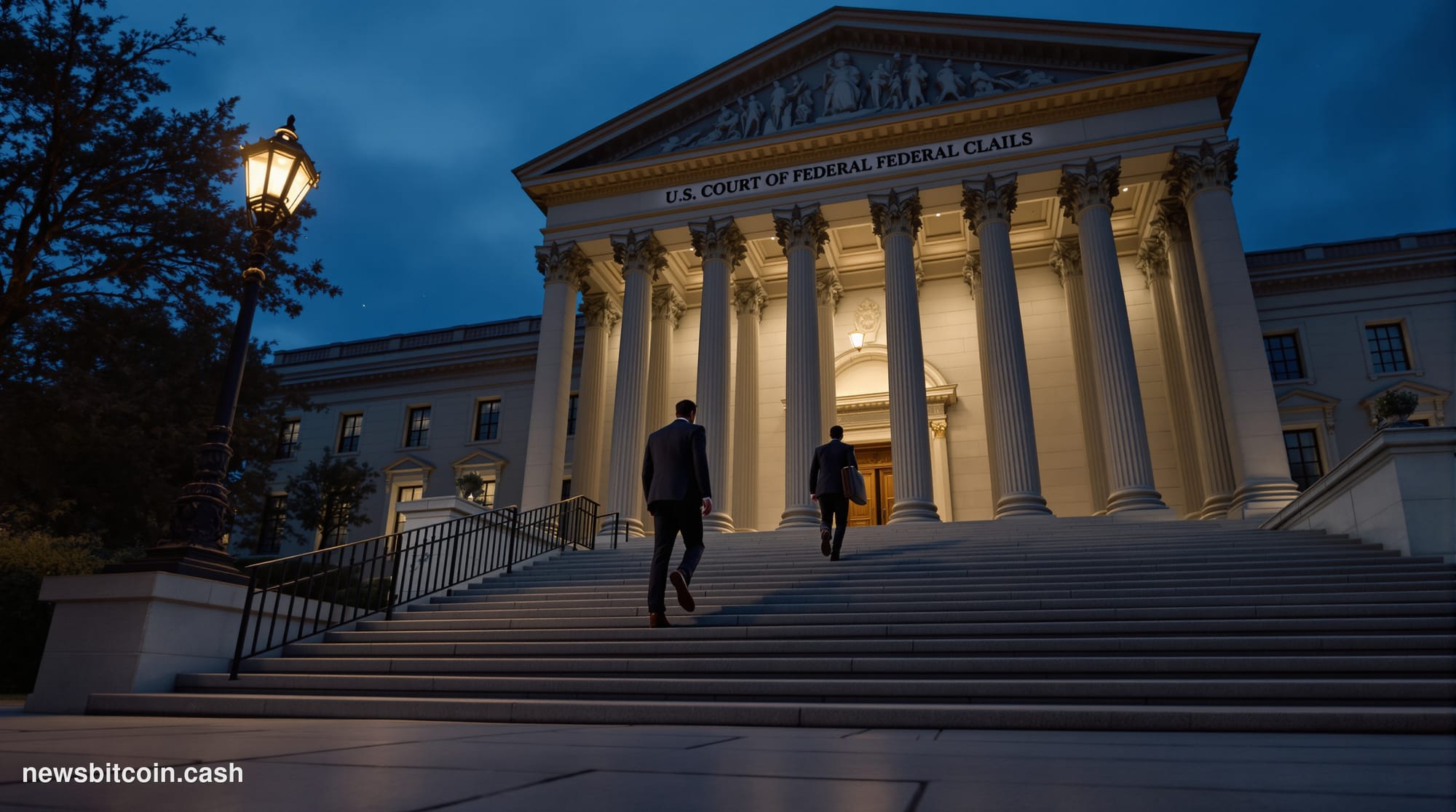
A federal courthouse is now the arena for one of the sharpest competitive battles in blockchain intelligence: Chainalysis Government Solutions has filed a formal bid protest against the U.S. government, challenging a roughly $94.7 million contract that the Department of Homeland Security (DHS) and Immigration and Customs Enforcement (ICE) awarded to rival firm TRM Labs. The complaint, lodged on July 27 in the U.S. Court of Federal Claims, alleges that federal agencies sidestepped the competitive procurement rules that are supposed to ensure a fair and open bidding process. At stake is not just nearly $100 million in government revenue — it is the question of who controls the infrastructure of crypto-crime investigation inside the United States government.
The Contract at the Center of the Fight
The $94.7 million figure is significant by any measure, representing one of the largest single blockchain analytics contracts awarded by a U.S. law enforcement agency. ICE, operating under the DHS umbrella, relies on blockchain intelligence platforms to trace illicit cryptocurrency flows — from darknet drug markets to sanctions evasion and human trafficking financing. Both Chainalysis and TRM Labs have built their reputations on precisely this kind of forensic capability, making the two firms direct competitors for an increasingly lucrative slice of federal spending. When ICE selected TRM Labs without what Chainalysis contends was a proper open competition, the firm chose to escalate through the judicial system rather than absorb the loss.
The Procurement Allegation
The heart of Chainalysis's legal argument is procedural: DHS and ICE allegedly bypassed the competitive procurement processes mandated under federal acquisition regulations. These rules exist specifically to prevent agencies from quietly routing large contracts to preferred vendors without exposing the opportunity to all qualified bidders. If Chainalysis's allegations hold up, the case could compel the government to reopen the bidding process — or at minimum, require a detailed justification for why competitive solicitation was not conducted. The U.S. Court of Federal Claims is the appropriate venue for bid protests of this nature, hearing challenges from contractors who believe they were denied a fair shot at government business.
Two Giants, One Shrinking Pool of Federal Dollars
The lawsuit reflects a broader dynamic reshaping the blockchain analytics industry. As the crypto market has matured and regulatory enforcement has intensified, government agencies have become among the most valuable and stable clients any analytics firm can secure. Contracts with agencies like ICE, the Internal Revenue Service's Criminal Investigation division, or the Department of Justice do not evaporate during bear markets. They renew, they grow, and they lend institutional credibility that translates into commercial sales cycles. Both Chainalysis and TRM Labs have invested heavily in their government practices — building out compliance teams, obtaining security clearances, and tailoring their platforms to law enforcement workflows. A $94.7 million award is not merely a revenue line; it is a reference contract that shapes perception across the entire federal procurement landscape.
Chainalysis's Calculated Gamble
Filing in the Court of Federal Claims is a deliberate and considered move. Bid protests carry real risk — agencies sometimes respond defensively, and a litigious vendor can develop a reputation that complicates future contract pursuits. Chainalysis has clearly calculated that the size of this particular contract, and the precedent it sets for competitive access to federal blockchain intelligence work, outweighs that downside. The July 27 filing date suggests the company moved relatively quickly after the TRM Labs award became known, signaling that it had been monitoring the procurement closely and had legal arguments prepared. That level of readiness points to a company treating federal contracting not as a peripheral business line but as a core strategic priority.
What This Means for the Blockchain Intelligence Market
The outcome of this case will carry implications well beyond the two companies involved. A ruling that finds DHS and ICE failed to follow proper competitive procurement procedures would send a clear signal to federal agencies that blockchain analytics contracts — however specialized the technology — are not exempt from standard acquisition law. It would open the door for more rigorous competition on future awards, potentially benefiting newer entrants to the government market alongside incumbents like Chainalysis. Conversely, if the court dismisses the protest or sides with the government's procurement decisions, it may reinforce agency discretion in sole-source or limited-competition awards for niche technical capabilities — a precedent that would favor whichever firm currently holds the incumbency advantage on any given contract. Either way, the $94.7 million dispute between Chainalysis and TRM Labs is now a test case for how the U.S. government buys the tools it uses to police the blockchain — and whether the market for those tools is as open as the technology it monitors claims to be.
Written by the editorial team — independent journalism powered by Bitcoin News.