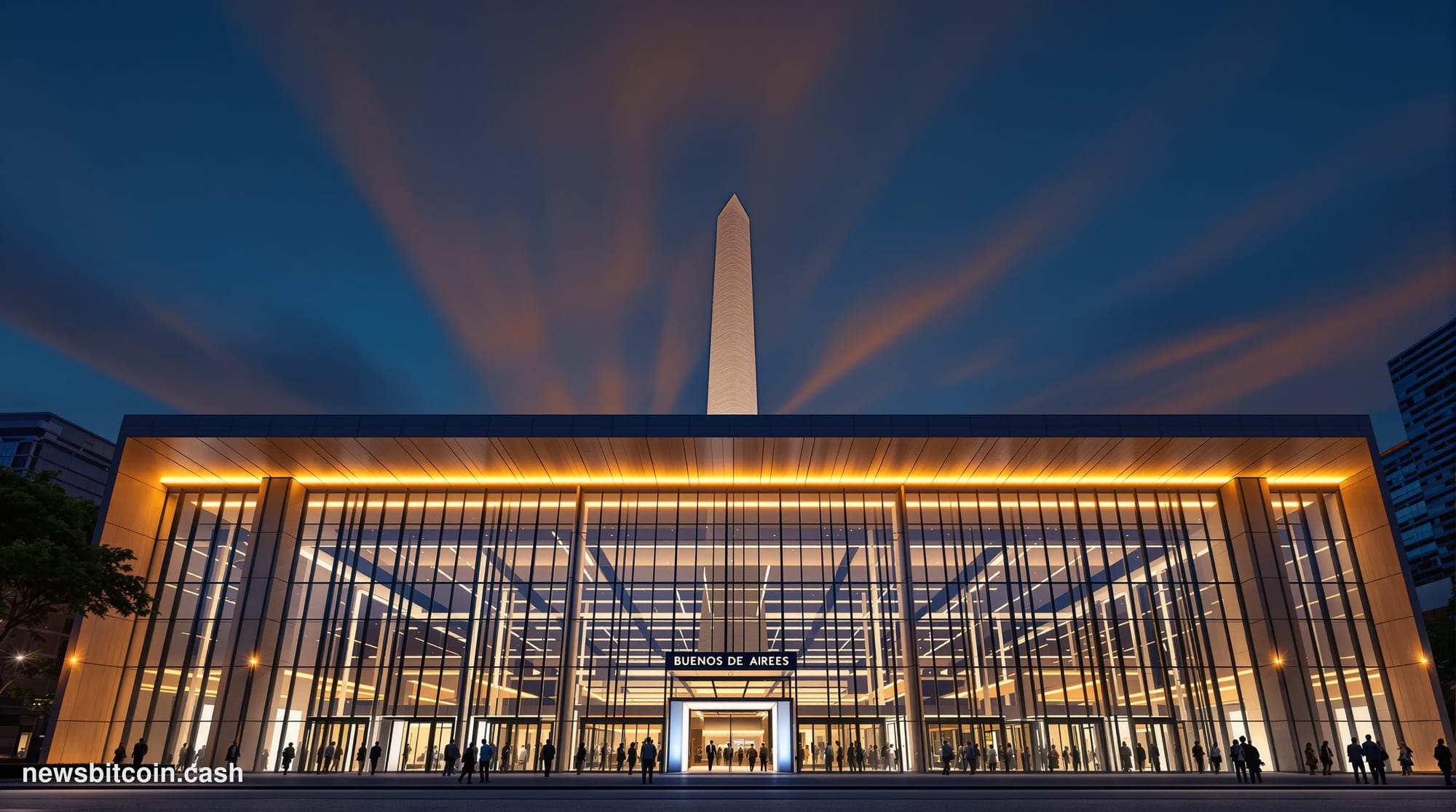
Buenos Aires is set to become the focal point of Latin American digital finance this week as the Latam Digital Assets Conf convenes on August 20 and 21, drawing banks, fintech firms, regulators, and institutional investors into a single conversation about where the region's financial infrastructure is heading. The timing is deliberate and the stakes are real: the global financial establishment is no longer circling the digital asset space from a cautious distance — it has moved in, and Latin America is increasingly central to that story.
The conference agenda centers on three themes that define the current moment in digital finance: stablecoins, tokenization, and regulatory frameworks specific to Latin America. Each of these topics carries distinct urgency for the region. Stablecoins have already become a genuine financial utility across much of Latin America, where dollar-denominated tokens serve populations dealing with currency volatility, limited banking access, and persistent inflation. Tokenization — converting real-world assets such as bonds, real estate, or trade receivables into blockchain-based instruments — represents the next structural shift that institutions are racing to position themselves within. And regulation, always the wildcard, remains uneven across the region's many jurisdictions, making cross-border dialogue between regulators and industry actors more valuable than ever.
The institutional backdrop against which this conference unfolds is striking. JPMorgan launched its own institutional digital currency in late 2025, a move that signaled unambiguously that the largest banks in the world are building settlement and payment infrastructure on blockchain rails. BlackRock's tokenized fund has continued expanding, further legitimizing the tokenization of traditional financial products and demonstrating that asset management giants view on-chain instruments as a durable product category rather than a speculative experiment. These are not peripheral developments — they represent a structural reorientation of how major financial institutions think about capital movement, asset ownership, and settlement efficiency.
For Latin America, that institutional momentum arrives in a region already primed for disruption. Argentina itself has long been a laboratory for monetary innovation born of necessity: dollar substitution, informal currency markets, and a population acutely aware of sovereign currency risk have collectively made Argentine consumers and entrepreneurs among the most sophisticated crypto adopters in the world. Hosting the Latam Digital Assets Conf in Buenos Aires is not incidental — it places the conversation in a city that has lived the problem these technologies claim to solve.
The composition of the conference audience reflects the maturation of the sector across the region. Early crypto conferences in Latin America were dominated by retail advocates and startup founders pitching blockchain solutions to problems not yet fully defined. Today's gathering brings together banks and fintechs alongside regulators and investors — a mix that signals the conversation has shifted from whether digital assets belong in mainstream finance to how, at what pace, and under what rules. That shift in room composition tells you more about where the industry stands than any price chart.
Stablecoin policy is likely to generate the most friction in the room. Regulatory approaches to dollar-pegged tokens vary dramatically across Latin American jurisdictions, and the absence of a regional framework creates both arbitrage opportunities and genuine consumer protection gaps. With the United States having advanced its own stablecoin legislation and the European Union's Markets in Crypto-Assets (MiCA) framework already reshaping how global issuers operate, Latin American regulators face pressure to define their own positions before external frameworks define it for them. The Latam Digital Assets Conf provides a rare venue where that pressure can be addressed collaboratively rather than in isolated national silos.
Tokenization of real-world assets (RWA) is the other major institutional theme. JPMorgan's digital currency launch and BlackRock's tokenized fund are the most visible signals of a broader trend: traditional financial infrastructure being rebuilt, or at minimum replicated, on distributed ledger technology. For Latin American banks and asset managers, the question is no longer theoretical — it is operational. Which assets tokenize first? Which platforms meet compliance requirements? Which custodians can serve both institutional clients and regulatory mandates simultaneously? These are the conversations that happen in hallways and breakout sessions at events like this one, and they have direct consequences for how regional financial markets evolve over the next three to five years.
What this means: The Latam Digital Assets Conf is not a crypto hype event — it is an infrastructure conference for a financial system in transition. With JPMorgan already operating its own institutional digital currency and BlackRock embedding tokenized products into mainstream asset management, the pressure on Latin American banks, fintechs, and regulators to develop coherent, interoperable frameworks is acute. Buenos Aires this week is where some of that pressure gets converted into policy positions, commercial partnerships, and technical standards. The region that attends these conversations as an active participant rather than a reactive bystander will be better positioned for what the next chapter of digital finance actually looks like on the ground.
Written by the editorial team — independent journalism powered by Bitcoin News.