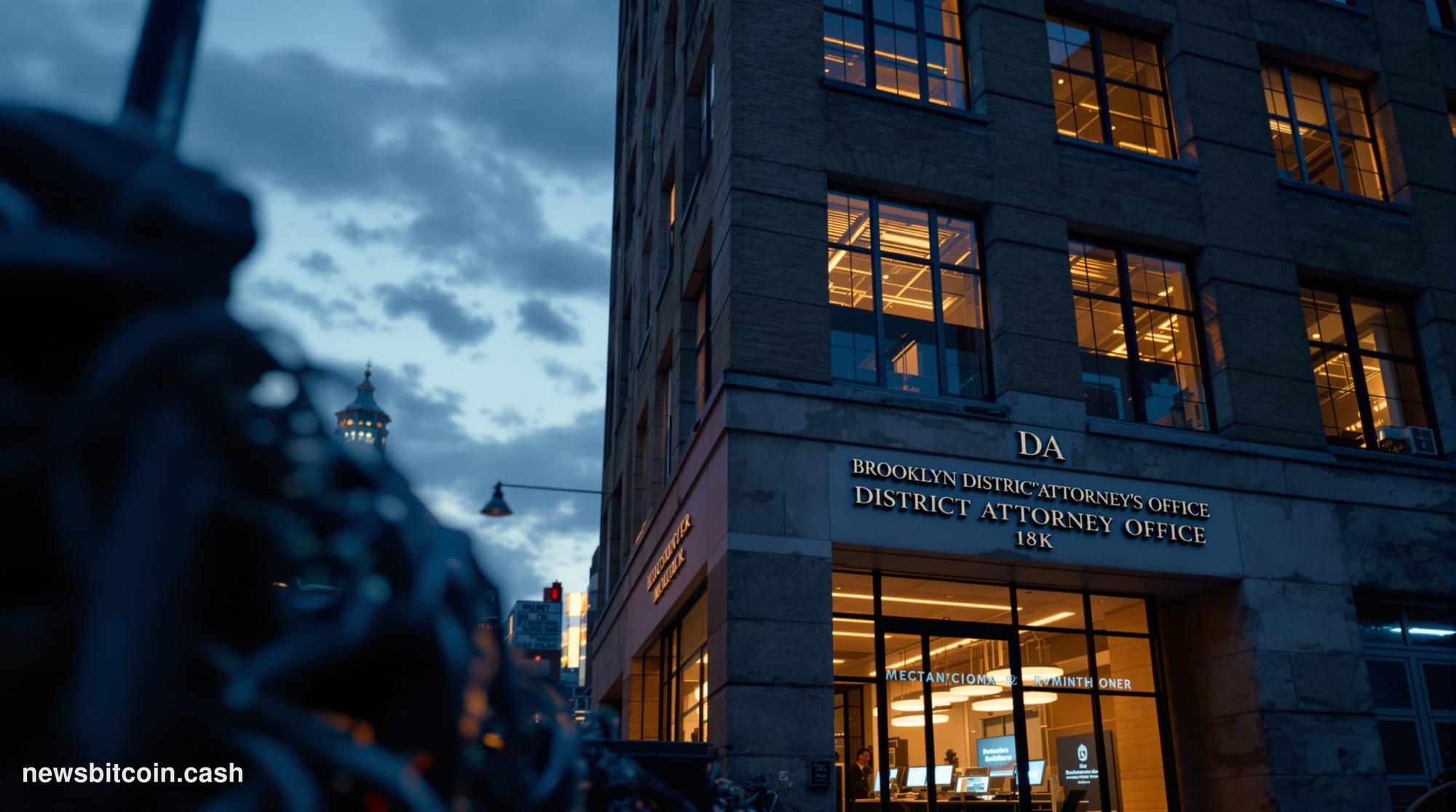
A sophisticated crypto fraud network targeting Russian-speaking communities has been dismantled by the Brooklyn District Attorney's office in one of the more technically exhaustive takedowns of its kind in recent memory. Working alongside the Federal Bureau of Investigation, investigators seized and disrupted 241 scam domains and 112 servers — the digital skeleton of an operation that extracted tens of millions of dollars from victims who, in many cases, were deceived not once, but twice.
District Attorney Eric Gonzalez's office confirmed the scope of the operation, which relied on a deceptively approachable entry point: Facebook advertisements. Fraudsters used targeted ads — almost certainly optimized by language and demographic signals available on the platform — to funnel Russian-speaking users toward fake investment advisors. These manufactured personas built trust gradually, steering victims into what appeared to be legitimate cryptocurrency investment platforms before draining their funds.
The Architecture of a Double Betrayal
What distinguishes this operation from a routine pig-butchering scheme is the secondary layer of victimization uncovered through the seized server data. Once the initial fraud was complete, the infrastructure apparently enabled a second strike — a pattern that investigators were able to reconstruct forensically from the 112 compromised servers. The mechanics of this double-hit approach, while not fully detailed in public disclosures, likely involved follow-on scams targeting the same victims under the guise of recovery services or regulatory refunds — a well-documented tactic in the fraud playbook where perpetrators re-contact victims posing as law enforcement or asset-recovery specialists.
This is precisely why server seizure matters as much as individual arrests. The data held within those machines doesn't just document past crimes — it maps the victim population, the scripts used against them, and the network relationships between operators. In this case, the 241 domains that were disrupted represent a sprawling fake web of investment portals, customer service facades, and likely spoofed regulatory websites. Each domain was a door into the same corrupt house.
Why Russian-Speaking Communities Are Targeted
The targeting of Russian-speaking communities is not incidental. Diaspora populations — particularly those with limited access to local financial literacy resources, or those who harbor institutional distrust of Western banking systems — represent a calculated vulnerability that criminal networks exploit with increasing precision. Language-specific advertising on major social platforms enables a level of demographic precision that was previously only available to sophisticated marketing operations. The same tools that allow a legitimate business to reach a niche audience allow fraudsters to isolate and systematically defraud one.
The scale of losses — described by the DA's office as reaching into the tens of millions of dollars — reflects how long this infrastructure had been operational before investigators moved in. Losses of that magnitude across what is likely a distributed victim base suggest hundreds, potentially thousands, of individual cases. For many victims, the sums lost to these scams represent life savings, retirement funds, or money pooled across extended family networks — a reality that makes the double-victimization aspect of this scheme particularly damaging.
The Role of Infrastructure Takedowns
The decision to prioritize domain and server seizure over a purely arrest-driven strategy reflects an evolving philosophy in crypto fraud prosecution. Individual operators can be replaced; the technical scaffolding they depend on takes time, money, and expertise to rebuild. By dismantling 241 domains and 112 servers simultaneously, the Brooklyn DA's office and the FBI have not only stopped ongoing fraud but significantly raised the cost of reconstituting similar operations.
This approach mirrors tactics used in larger international cybercrime takedowns, where coordination between law enforcement and hosting infrastructure providers is essential. The fact that investigators were able to seize this volume of servers suggests meaningful cooperation from internet service providers and domain registrars — cooperation that is becoming a necessary pillar of effective crypto fraud enforcement.
The broader regulatory and law enforcement community will be watching what the server data ultimately yields. If it contains transaction records, wallet addresses, or communication logs linking operators across jurisdictions, this Brooklyn case could become a template for cross-border crypto fraud prosecutions — the kind of case that generates extradition requests and mutual legal assistance treaty activations well beyond New York's five boroughs.
What This Means
For the crypto industry, this case underscores a persistent vulnerability: fraudsters continue to use the language of legitimate investment — advisors, platforms, returns — to exploit communities that are increasingly interested in digital assets but may lack the tools to verify what they're engaging with. The answer is not to treat curiosity about crypto as a risk factor, but to demand that platforms like Facebook apply meaningful scrutiny to financial advertising that targets vulnerable populations. The infrastructure is gone. The conditions that allowed it to flourish are not.
Written by the editorial team — independent journalism powered by Bitcoin News.