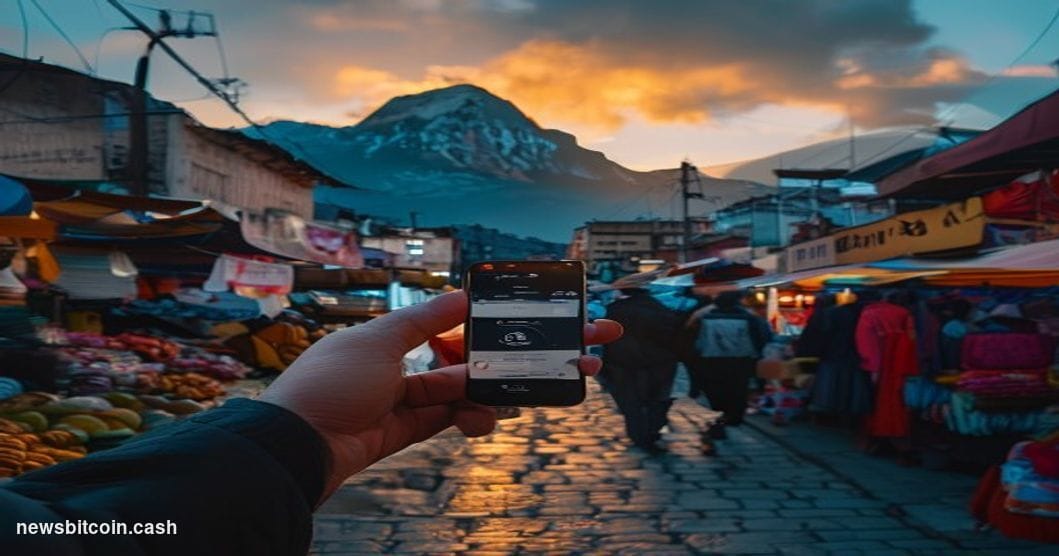
Bolivia is on the verge of a monetary experiment that would have seemed unthinkable just a few years ago. The Andean nation, which once enforced an outright ban on cryptocurrencies, is now actively deliberating whether to adopt Tether's USDT — the world's largest dollar-pegged stablecoin — as an official payment method. The move, if enacted, would represent one of the most dramatic policy reversals in Latin American financial history and place Bolivia alongside a small but growing cohort of emerging economies integrating digital assets into their sovereign monetary frameworks.
The backdrop to this consideration is critical. Bolivia's crypto ban, which prohibited the use and trading of digital currencies within its financial system, was lifted in a reversal that signaled a broader ideological shift within the country's regulatory and economic establishment. That ban had effectively frozen Bolivia out of a global conversation about digital finance that its neighbors were actively joining. Its removal opened the door — and now policymakers appear willing to walk through it at speed.
Why USDT, and Why Now
The choice of USDT as the candidate instrument is telling. Rather than exploring a central bank digital currency or championing Bitcoin as El Salvador once did, Bolivia's deliberations have centered on a private-sector, dollar-denominated stablecoin. This is a pragmatic rather than ideological choice. USDT offers price stability pegged to the U.S. dollar, deep liquidity, and near-universal acceptance across crypto exchanges and payment platforms globally. For a country grappling with currency access issues, those properties are not abstract — they are operationally valuable.
Financial inclusion sits at the heart of the argument being made in favor of adoption. Bolivia has a substantial unbanked and underbanked population, particularly in rural and indigenous communities where traditional banking infrastructure remains sparse. A smartphone-based stablecoin payment rail could, in theory, extend transactional access to populations that formal banking has consistently failed to reach. This is the same argument that drove stablecoin adoption in parts of sub-Saharan Africa and Southeast Asia, and it carries real weight in the Bolivian context.
Currency stability is the second major driver. Bolivia's boliviano has faced pressure as the country navigated foreign exchange reserve challenges in recent years. Access to a dollar-denominated digital asset — one that can be stored and transacted outside the traditional banking system — provides citizens and businesses with a practical hedge against local currency volatility. This is not a novel phenomenon in Latin America; dollarization, both formal and informal, has long been a feature of economies where local currencies have struggled to hold value. USDT would simply be the digital expression of a well-established regional survival mechanism.
Banking Sector Integration: The Real Test
The third pillar of the argument — integration of digital assets into Bolivia's banking sector — is arguably the most structurally significant and the most complex. Allowing USDT to function as an official payment method is one thing; embedding it within regulated banking infrastructure requires solving a different order of problems. Anti-money laundering (AML) and know-your-customer (KYC) compliance frameworks would need to account for stablecoin transactions. Commercial banks would need technical interfaces to settle USDT payments. The central bank would need a clear policy stance on reserve treatment and prudential oversight.
These are not insurmountable challenges — several jurisdictions have navigated them — but they demand regulatory precision that takes time to develop. The gap between "weighing" USDT adoption and actually implementing it as a functioning payment rail within a supervised banking environment is wide. Bolivia's policymakers will need to demonstrate they can bridge it without creating compliance gaps that expose the system to illicit finance risks or undermine confidence in the boliviano itself.
A Regional Signal Worth Watching
Bolivia's deliberations do not exist in isolation. Across Latin America, the relationship between sovereign monetary policy and digital assets is being renegotiated in real time. Brazil has accelerated its digital real rollout. Argentina's parallel crypto economy has grown in proportion to its macroeconomic instability. El Salvador's Bitcoin experiment — however contested — permanently altered the vocabulary of what is politically possible. Bolivia now joins this evolving regional conversation from a unique position: a country that banned crypto, reversed course, and is now contemplating a stablecoin at the official payments layer.
What distinguishes Bolivia's approach, at least at this stage, is the focus on a private stablecoin rather than a state-issued instrument. That choice reflects both pragmatism and urgency — the infrastructure for USDT already exists, the network effects are already present, and adoption could theoretically be accelerated without the years-long development cycle required for a central bank digital currency. Whether Bolivian regulators ultimately formalize USDT's role or use this deliberation as a pathway toward their own digital currency framework remains to be seen. Either outcome, however, confirms that the post-ban era in Bolivia is not a passive reopening — it is an active, consequential restructuring of the country's monetary imagination.
For the stablecoin sector broadly, Bolivia's consideration is another data point in the expanding map of sovereign-level interest. The fact that a nation which once banned crypto outright is now debating stablecoin adoption at the payments layer speaks to the irreversible mainstreaming of dollar-backed digital assets as infrastructure — not speculation — in emerging market economies.
Written by the editorial team — independent journalism powered by Bitcoin News.