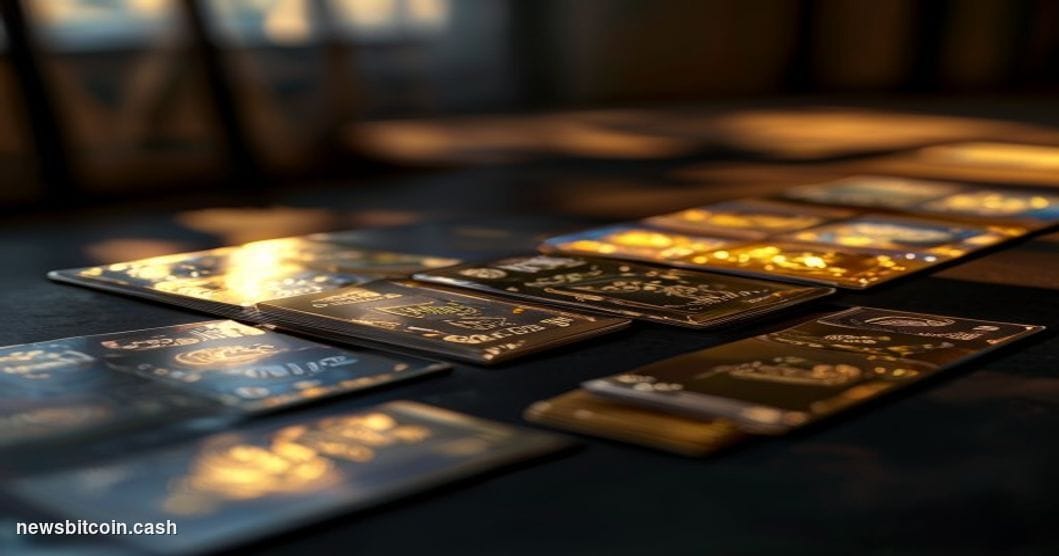
There is a moment every serious collector knows: the slow peel of a foil pack, the resistance of the seal, and then the reveal — a rare card, or nothing at all. Bitcoin Magazine has identified something in that moment that maps almost perfectly onto the mechanics of Bitcoin, and the publication is now formalizing that intuition into a dedicated editorial focus on trading cards. Written by Dennis Koch, the initiative reframes physical collectibles not as a nostalgic aside, but as a conceptual sibling to the hardest digital asset in existence.
The argument at the heart of BMAG's new direction is deceptively simple: trading cards and Bitcoin are built on the same foundational pillars — authenticity, scarcity, and value. Strip away the medium and the mechanics are nearly identical. A holographic first-edition Charizard and a satoshi both derive their worth from the same economic logic: there are only so many of them, provenance can be established, and the market agrees on what that means. What BMAG is doing is making that logic explicit for an audience that likely already senses it but has never seen it articulated in a publication focused on Bitcoin infrastructure and culture.
Scarcity as a First Principle
Scarcity is the backbone of both markets. Trading card manufacturers have long understood that controlled supply drives collector demand — limited print runs, short-print variants, serial-numbered parallels, and foil treatments exist precisely to manufacture rarity within a defined set. Bitcoin's scarcity, of course, is absolute and algorithmic: 21 million coins, issued on a predictable schedule, with no issuing authority capable of diluting the supply on a whim. The scarcity is provable, auditable, and enforced by code rather than corporate policy.
That distinction matters, but the psychological and economic response it triggers in participants is strikingly similar. Collectors who spend hours hunting box breaks for a low-population graded card are operating under the same mental model as Bitcoin holders who understand the significance of diminishing block rewards. Both groups are betting that verifiable rarity commands a premium, and history in both markets suggests they are right.
Provable Ownership and the Authentication Problem
The second pillar BMAG highlights — provable ownership — is where the two worlds speak most directly to each other. Trading card authentication has become a sophisticated industry in its own right. Grading services examine cards for centering, surface condition, corners, and edges, then encapsulate them in tamper-evident slabs with registered serial numbers. The goal is to make counterfeiting prohibitively difficult and to create a transferable, verifiable record of a card's condition and authenticity. Sound familiar?
Bitcoin's ownership model does the same thing on-chain, without the need for a centralized grading authority. A wallet address holding a Bitcoin is a cryptographic proof of ownership — no third-party certification required, no risk of slab tampering, no dependence on a grading company's continued existence. The comparison illuminates something important: the card market's elaborate physical authentication infrastructure is essentially trying to solve the same problem that Bitcoin solved digitally and more completely. BMAG is smart to draw that line in explicit terms.
Why Culture Alignment Matters for Adoption
Editorial pivots by serious publications rarely happen without strategic intention. BMAG's move into trading card culture is not about chasing a trend — the trading card boom peaked several years ago and has since moderated into a more disciplined collector market. This is about identifying a community of people who already understand value theory intuitively and showing them that the mental frameworks they apply to a graded rookie card apply equally to a cold storage wallet.
Collectors are, by nature, long-term thinkers. They grade, they store, they hold. They understand that liquidity is secondary to authenticity and that a market's integrity depends on verifiable scarcity. These are precisely the habits of mind that Bitcoin advocates have been trying to cultivate in the broader public for over a decade. A collector who has spent years navigating the PSA and BGS grading ecosystem is already halfway to understanding why self-custody matters and why supply-capped assets behave differently from fiat currencies.
Rare Pulls and the Block Reward
Koch's framing of "rare pulls" as a conceptual parallel to Bitcoin's mining reward structure is the editorial detail that gives this initiative its sharpest edge. Opening a sealed product is a probabilistic event — the odds of hitting a short-printed card are published, fixed, and identical for every pack. The randomness is real, but the scarcity underpinning the reward is guaranteed by the set's design. Bitcoin mining operates on a similar logic: the difficulty adjusts, the reward halves on schedule, and the probability of finding a block is a function of hashrate. The randomness is real; the scarcity is structural.
Framing these two experiences in the same analytical language gives Bitcoin Magazine a cultural bridge that most crypto-focused publications have never bothered to build. It treats collectors as intellectually serious rather than as a demographic to be converted, and it positions Bitcoin's properties as something to be recognized rather than explained from scratch.
What This Means
BMAG's trading card editorial focus is a culturally literate expansion of Bitcoin's conceptual territory. By grounding the comparison in the hard mechanics of authenticity, scarcity, and provable ownership, the publication is not softening Bitcoin's intellectual proposition — it is extending it into a community already fluent in the language of verifiable rarity. For Bitcoin's broader adoption story, finding populations who already think in these terms is far more efficient than converting people who don't. The sealed pack and the cold wallet are, in the end, both answers to the same question: how do you hold something genuinely rare in a world determined to produce more of everything?
Written by the editorial team — independent journalism powered by Bitcoin News.