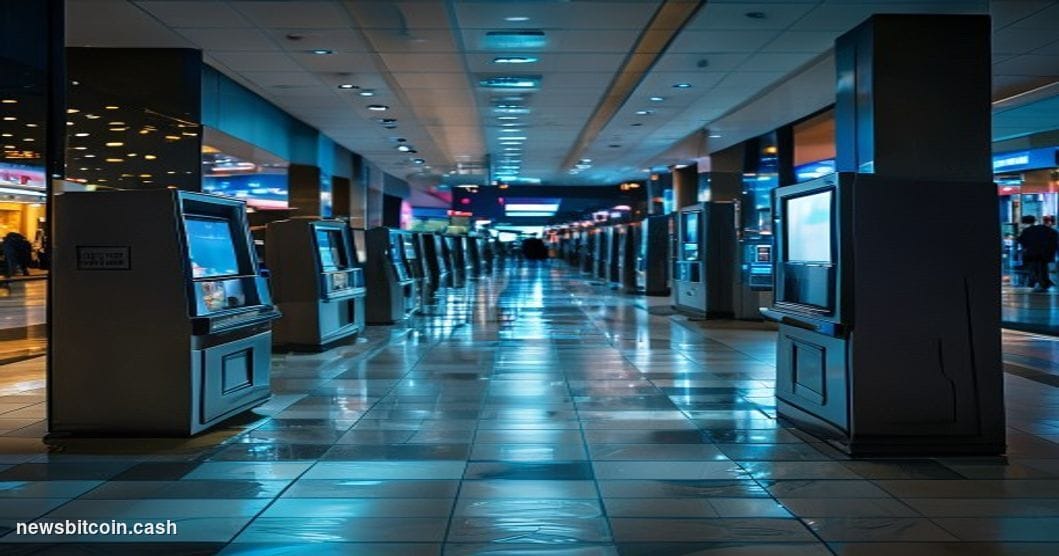
The spectacular collapse of Bitcoin Depot sends shockwaves through the cryptocurrency retail infrastructure landscape, as the company that once dominated North America's Bitcoin ATM market filed for Chapter 11 bankruptcy protection Monday. The Atlanta-based fintech company's stock plummeted 80% following the announcement, marking one of the most dramatic falls from grace in the crypto services sector.
Bitcoin Depot's voluntary bankruptcy filing in the U.S. Bankruptcy Court for the Southern District of Texas represents more than just another corporate casualty in a volatile market. The company's decision to wind down all operations and pursue an asset sale signals the end of what was once the continent's largest Bitcoin ATM network, leaving thousands of retail locations without crypto purchase options and exposing fundamental weaknesses in the physical crypto infrastructure model.
The timing of Bitcoin Depot's collapse reveals deeper structural problems plaguing the Bitcoin ATM industry. These machines, which once seemed like the bridge between traditional banking and cryptocurrency adoption, have struggled with razor-thin margins, regulatory compliance costs, and shifting consumer preferences toward mobile trading platforms. The company's rapid descent from market leader to bankruptcy protection illustrates how quickly the ground can shift beneath even established crypto infrastructure providers.
For cryptocurrency adoption, Bitcoin Depot's failure represents a significant setback in retail accessibility. The company's extensive network served communities often underserved by traditional financial institutions, providing a cash-to-crypto on-ramp for users who preferred physical transactions over digital exchanges. The sudden disappearance of this infrastructure creates gaps in the crypto ecosystem that competing services may struggle to fill quickly or comprehensively.
The broader implications extend beyond mere market consolidation. Bitcoin ATM operators have faced mounting pressures from anti-money laundering regulations, which require extensive compliance infrastructure and ongoing monitoring. These regulatory costs, combined with the volatility of cryptocurrency markets and competition from established exchanges like Coinbase and Binance, have created an increasingly difficult operating environment for physical crypto infrastructure providers.
The asset sale process will likely attract interest from competitors seeking to acquire prime retail locations and existing customer relationships. However, the valuation of these assets in a distressed sale may reflect the fundamental challenges facing the Bitcoin ATM model rather than any premium for market position. Potential buyers will need to assess whether they can operate the infrastructure more efficiently than Bitcoin Depot managed during its final quarters.
Bitcoin Depot's bankruptcy also highlights the evolution of cryptocurrency adoption patterns. Early assumptions that physical ATMs would play a crucial role in mainstream crypto adoption have given way to reality of mobile-first financial services. Younger demographics, who represent the core of crypto adoption, increasingly prefer app-based solutions that offer better rates, more features, and integrated wallet services compared to the limited functionality of ATM networks.
The collapse serves as a cautionary tale for the crypto infrastructure sector about the importance of sustainable business models over rapid expansion. Bitcoin Depot's aggressive growth strategy, which prioritized market share and geographic coverage, may have stretched resources too thin while failing to build the operational efficiency necessary for long-term survival in a commoditized market.
What this means for the cryptocurrency ecosystem is a sobering reassessment of physical infrastructure's role in digital asset adoption. While Bitcoin ATMs filled an important niche during crypto's early expansion phase, their decline suggests the market is maturing beyond the need for such bridge technologies. The future of crypto retail infrastructure may lie not in replicating traditional banking models, but in creating entirely new paradigms that leverage the inherent advantages of digital assets over their physical counterparts.
Written by the editorial team — independent journalism powered by Bitcoin News.