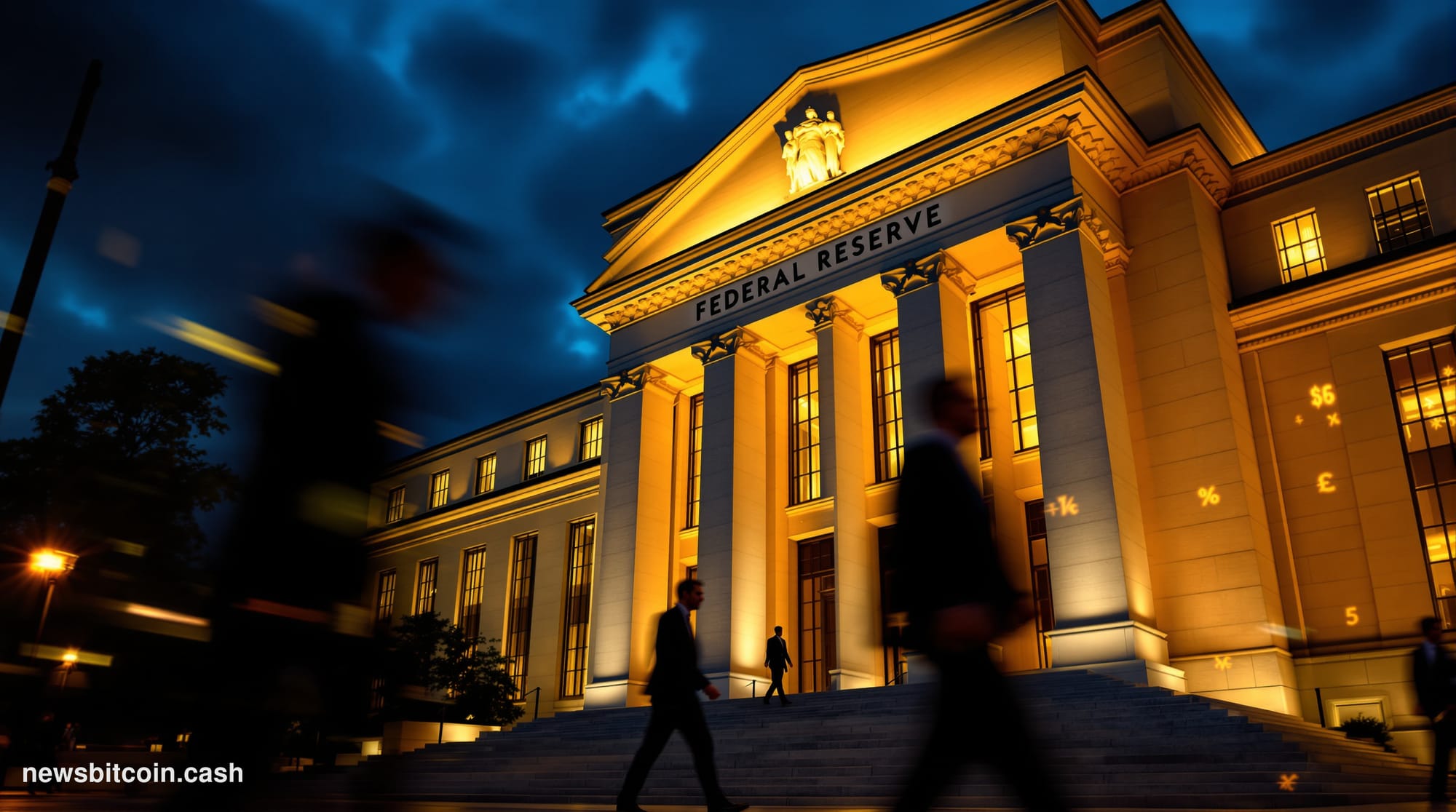
Something significant is happening in global capital markets, and Bitcoin is not the beneficiary. Over a four-week stretch, global equity funds absorbed a record $266 billion in inflows — a figure that underscores just how aggressively institutional and retail capital alike is chasing traditional risk assets. Bitcoin, meanwhile, sat on the sidelines, unable to capture a meaningful share of that momentum. And with Federal Reserve rate hike odds for December now sitting at 84.4%, the macro backdrop that once supercharged crypto's narrative as an inflation hedge and monetary escape valve has been fundamentally rewritten.
The $266 billion headline is striking on its own terms. Record equity fund inflows over any four-week window are historically rare — they signal coordinated, high-conviction capital deployment across equity markets globally. When that kind of money moves, it reflects more than speculative appetite. It reflects portfolio managers rotating into assets they believe will perform in a defined macro environment. The environment they appear to be pricing in right now is one where the Fed tightens further, real yields stay elevated, and traditional earnings-driven equities offer cleaner risk-reward than speculative digital assets.
That read is reinforced by the December rate hike probability. At 84.4%, the market has essentially made its decision: another hike is coming. The Federal Reserve's rate cycle was supposed to be winding down — that was the thesis underpinning much of crypto's recovery optimism through the middle of this year. A prolonged tightening campaign, or even the credible threat of one, compresses the multiple on assets with no cash flows, no earnings yield, and no dividend to anchor valuation. Bitcoin, whatever its long-term store-of-value credentials, lives squarely in that category when institutional allocators are running spreadsheets.
The Rotation Problem
What makes this moment particularly worth examining is not simply that Bitcoin lagged — it has lagged before during equity rallies. The more telling issue is the scale of the divergence. When equity funds are pulling in $266 billion over four weeks and Bitcoin cannot harness even a fraction of that momentum as a correlated risk-on asset or as an uncorrelated alternative, it raises real questions about where Bitcoin sits in the current institutional asset allocation framework. During the 2020-2021 bull cycle, Bitcoin rode equity enthusiasm while simultaneously attracting its own dedicated inflows. The dual-channel support helped drive dramatic price appreciation. That dynamic does not appear to be replicating here.
Part of the explanation lies in the rate environment itself. Higher rates raise the opportunity cost of holding non-yielding assets. With U.S. Treasury yields offering genuinely competitive returns — something that was not true during the zero-interest-rate-policy era that turbocharged the last crypto bull run — the calculus for parking capital in Bitcoin versus short-duration Treasuries or dividend-paying equities has shifted materially. An 84.4% probability of another Fed hike is not just a data point about December; it is a signal that the low-rate conditions that made Bitcoin's risk profile attractive to a broad swathe of institutional capital may remain absent well into the foreseeable future.
Structural Questions for Crypto's Institutional Thesis
The Bitcoin community has spent years building the case for institutional adoption — exchange-traded funds, custody solutions, regulatory clarity, and corporate treasury allocations have all been marshaled as evidence that Bitcoin was maturing into a legitimate asset class. The infrastructure arguments remain valid. But infrastructure does not automatically translate into flows when the macro environment actively incentivizes capital to go elsewhere. Record equity inflows at a moment when Bitcoin lags is precisely the kind of data point that institutional risk committees will note and file away when evaluating portfolio allocations for 2027.
None of this is a verdict on Bitcoin's long-term trajectory. Markets cycle, and the same rate environment that is currently sending capital into equities will eventually pivot. When the Fed moves from hiking to holding to cutting, the conversation about monetary debasement and hard-asset alternatives tends to resurface quickly. Bitcoin has historically been a beneficiary of that conversation. But the current moment demands an honest accounting: at 84.4% December hike odds and with $266 billion flowing into equity funds rather than digital assets, Bitcoin is not currently functioning as the automatic institutional safe haven or risk-on amplifier that its most enthusiastic advocates have projected.
What this means for the near term is straightforward — investors should watch December Fed communications closely. Any signal of a pause or a softening in the rate trajectory could rapidly reprice the opportunity cost equation that is currently keeping capital out of Bitcoin and inside equity vehicles. Until that signal arrives, the record equity inflow data tells a clear story: institutional capital knows where it wants to be right now, and Bitcoin is not on that map.
Written by the editorial team — independent journalism powered by Bitcoin News.