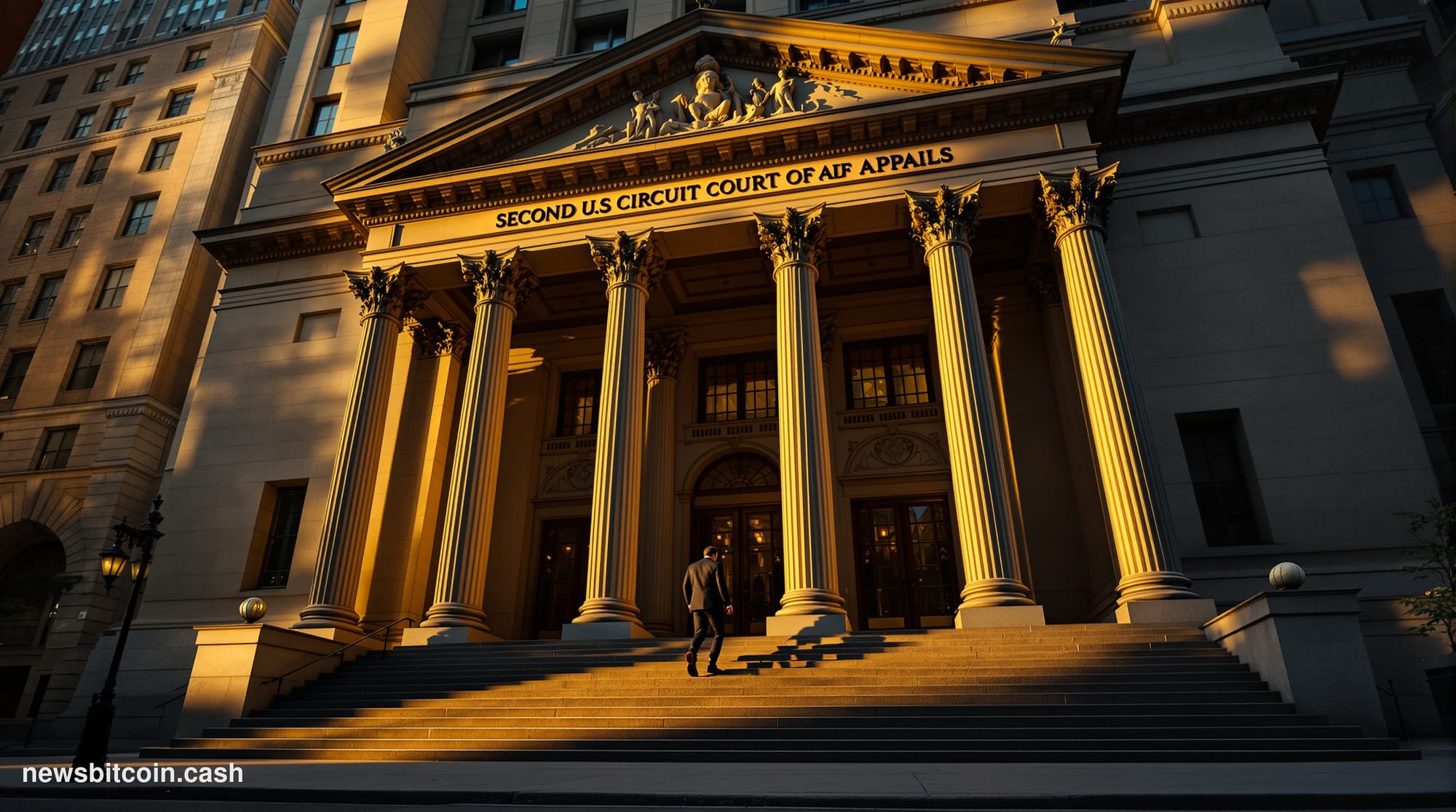
The legal walls continue closing around FTX founder Sam Bankman-Fried, whose hopes for overturning his criminal convictions have been definitively crushed by federal appellate judges. The Second US Circuit Court of Appeals rejected his challenge to both his fraud convictions and 25-year prison sentence, eliminating what many legal observers considered his most viable path to freedom through the traditional court system.
This appellate defeat represents a critical inflection point in one of crypto's most consequential criminal cases. Bankman-Fried's legal team had argued that procedural errors and judicial misconduct during his original trial warranted either a complete reversal or significant sentence reduction. The appeals court's rejection signals that federal judges found the evidence of fraud sufficiently compelling and the original proceedings fundamentally sound.
The failed appeal dramatically narrows Bankman-Fried's remaining legal options to essentially one avenue: presidential clemency. This reality places the former crypto billionaire in the unusual position of potentially needing political intervention rather than judicial relief. With Donald Trump returning to the presidency, speculation has emerged about whether the administration might consider clemency for high-profile financial crimes, though such interventions remain extraordinarily rare for fraud convictions of this magnitude.
The appellate court's decision validates the prosecution's case that Bankman-Fried orchestrated systematic fraud at both FTX and Alameda Research, misappropriating billions in customer funds. The original conviction covered seven counts of fraud and conspiracy, stemming from the collapse of what was once the world's second-largest cryptocurrency exchange. Federal prosecutors successfully argued that Bankman-Fried used customer deposits to cover trading losses, fund political donations, and maintain his lavish lifestyle.
The timing of this appellate rejection carries particular significance for the broader crypto industry. As digital asset markets experience renewed institutional adoption and regulatory clarity, the definitive legal consequences for FTX's collapse serve as a stark reminder of the enforcement priorities that persist regardless of market cycles. The case has become a touchstone for discussions about corporate governance, customer protection, and executive accountability in digital finance.
For Bankman-Fried personally, the failed appeal means his 25-year sentence stands as imposed, with standard federal guidelines suggesting he could serve approximately 21 years with good behavior. At 32 years old, this timeline would see him released in his early fifties, effectively ending his involvement in the crypto industry during its most formative decades. The severity of this sentence reflects federal judges' view of customer fund misappropriation as among the most serious forms of financial fraud.
The appellate defeat also closes the book on arguments that Bankman-Fried's autism spectrum diagnosis, ADHD medication usage, or alleged inadequate legal representation during trial constituted grounds for conviction reversal. These mitigating factors, heavily emphasized by his defense team, failed to persuade appellate judges that the original proceedings were fundamentally flawed or that the evidence was insufficient to support the fraud convictions.
What this means for the crypto industry extends beyond one individual's legal fate. The definitive nature of this appellate loss reinforces that traditional fraud statutes apply fully to digital asset businesses, regardless of technological innovation or regulatory ambiguity. As lawmakers and regulators continue developing crypto-specific frameworks, the Bankman-Fried case demonstrates that existing financial crime enforcement remains robust and effective in prosecuting digital asset fraud. His failed appeal eliminates any remaining uncertainty about whether crypto's technological complexity might create legal loopholes, instead confirming that customer fund misappropriation faces severe consequences regardless of the underlying technology.
Written by the editorial team — independent journalism powered by Bitcoin News.