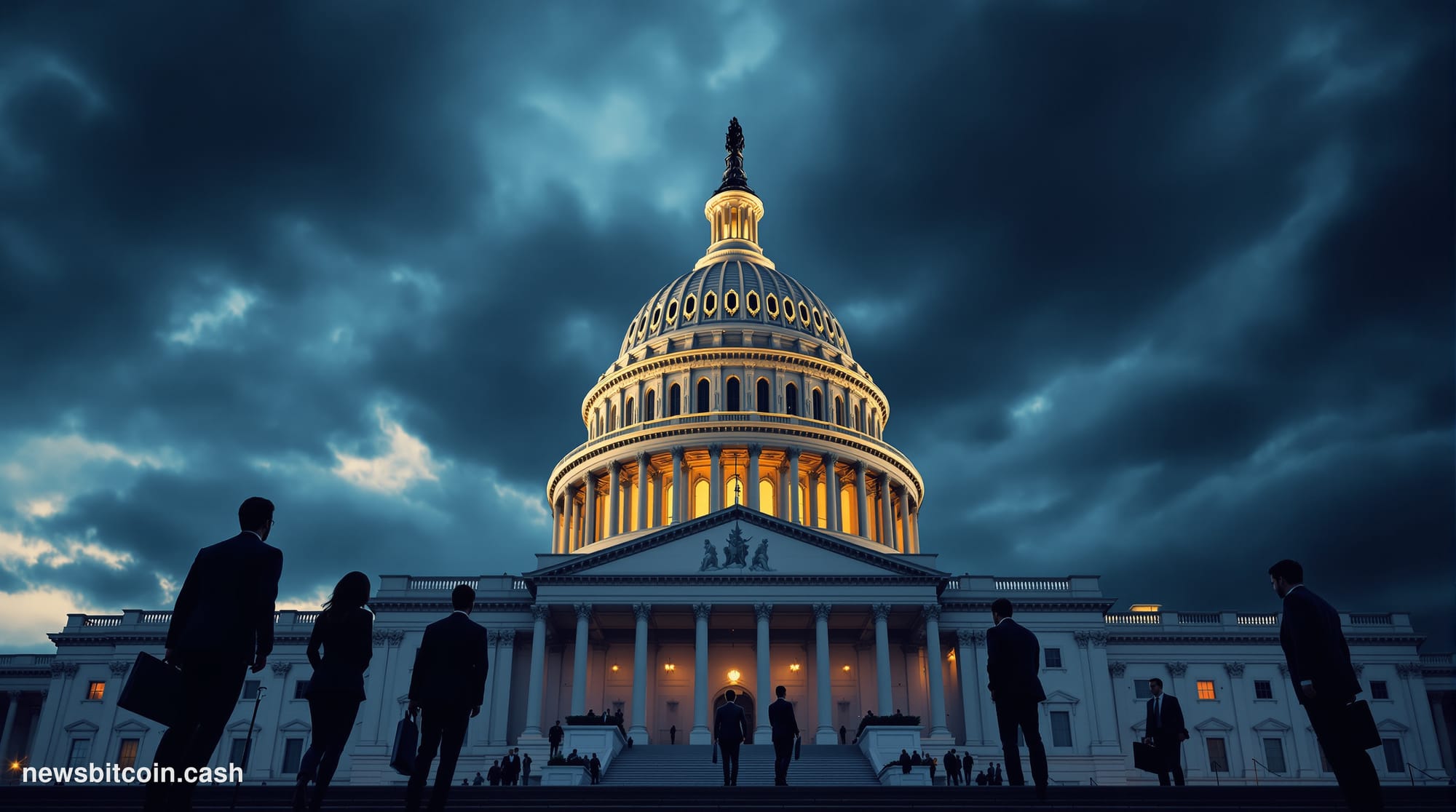
The battle lines are drawn in Washington as traditional banking interests mobilize against the cryptocurrency sector's legislative priorities, with the CLARITY Act emerging as the latest flashpoint in an escalating policy war over stablecoin regulation.
This confrontation represents more than routine legislative maneuvering—it signals a fundamental struggle between established financial institutions and the digital asset ecosystem for control over the future of American monetary infrastructure. The CLARITY Act, which aims to provide regulatory framework for stablecoins, has become ground zero for this clash between old and new financial paradigms.
The Stakes Behind Stablecoin Supremacy
Stablecoins represent a $150 billion market that has become critical infrastructure for digital finance, serving as the primary settlement layer for cryptocurrency trading and decentralized finance protocols. Companies like Tether and Circle have built massive operations around these digital dollar proxies, creating parallel payment systems that operate outside traditional banking rails.
For traditional banks, this represents both existential threat and missed opportunity. The banking lobby's opposition to the CLARITY Act reflects deeper concerns about losing control over payment processing and monetary transmission—functions that have generated billions in fee revenue for decades. When consumers and businesses can settle transactions instantly using stablecoins, the traditional correspondent banking system becomes increasingly obsolete.
The timing of this legislative battle is particularly significant as major financial institutions simultaneously race to launch their own digital asset services. Coinbase has already captured substantial institutional market share, while traditional players like JPMorgan and Goldman Sachs scramble to develop competitive offerings.
Regulatory Capture Meets Innovation Pressure
The banking lobby's strategy reveals classic regulatory capture dynamics, where incumbent industries leverage political relationships to constrain competitive threats through legislative means rather than market competition. This approach has worked effectively in previous technological transitions, from limiting credit union expansion to constraining fintech lending platforms.
However, the crypto sector presents unique challenges to traditional lobbying tactics. Unlike previous financial innovations that remained within existing institutional frameworks, stablecoins enable completely disintermediated financial systems. Users can hold, transfer, and earn yield on digital dollars without ever touching a traditional bank account.
The CLARITY Act's provisions would formalize this parallel system through federal regulatory recognition, potentially cementing stablecoin issuers as legitimate competitors to traditional payment processors. For banks, preventing this legitimization represents a last opportunity to constrain crypto's growth through regulatory means.
Global Competition Adds Urgency
International developments add pressure to America's stablecoin debate. European regulators are advancing their own digital asset frameworks through the Markets in Crypto-Assets regulation, while Asian financial centers compete aggressively for crypto business. China's digital yuan pilot programs demonstrate how central bank digital currencies could challenge dollar-based stablecoin dominance.
This global context makes the banking lobby's obstructionist approach potentially counterproductive to American financial competitiveness. Delaying clear stablecoin regulation could drive innovation and capital to more accommodating jurisdictions, undermining both crypto entrepreneurs and traditional banks' long-term interests.
The Federal Reserve's own central bank digital currency research adds another layer of complexity. A digital dollar could ultimately compete with both private stablecoins and traditional banking services, suggesting that regulatory clarity might benefit all private sector players relative to government-issued alternatives.
What This Means
The outcome of this legislative battle will determine whether America leads or follows in the global transition toward programmable money. The banking lobby's resistance to the CLARITY Act represents rational self-interest from institutions facing technological disruption, but their success could paradoxically accelerate the very displacement they seek to prevent.
Clear stablecoin regulation would enable traditional banks to participate more actively in digital asset markets while providing consumer protections that legitimize the sector. Regulatory uncertainty, by contrast, advantages unregulated actors and offshore platforms that operate beyond American oversight.
As this crypto policy war intensifies, the fundamental question remains whether American financial regulation will evolve to accommodate innovation or attempt to preserve incumbent advantages through legislative barriers. The CLARITY Act represents a test case for this broader challenge, with implications extending far beyond stablecoin markets to the entire future of digital finance.
Written by the editorial team — independent journalism powered by Bitcoin News.