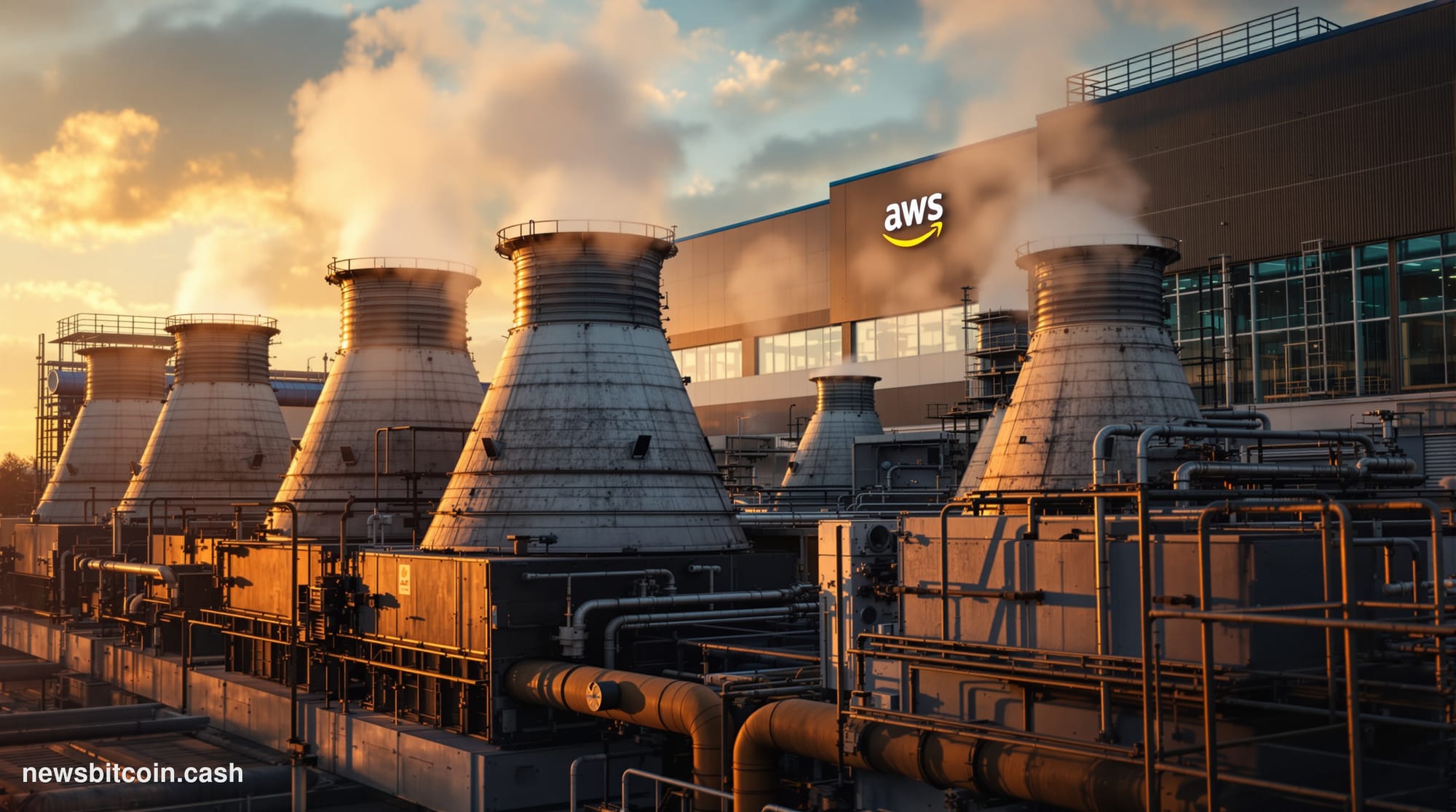
A simple overheating incident at Amazon Web Services (AWS) on Thursday knocked Coinbase offline for seven hours, exposing a fundamental weakness in how crypto infrastructure depends on centralized cloud providers. The thermal event at Amazon's data centers didn't just disrupt one exchange—it highlighted the industry's dangerous reliance on a handful of tech giants for critical financial services.
The outage struck during peak trading hours, leaving millions of users unable to access their accounts, execute trades, or monitor positions as cryptocurrency markets continued their relentless 24/7 cycle. For an industry built on the premise of decentralization and eliminating single points of failure, the irony was stark: a heating problem at one of Amazon's facilities could paralyze one of America's largest crypto exchanges.
This wasn't a sophisticated cyberattack or complex software bug—it was basic infrastructure failing under thermal stress. The incident underscores how crypto companies, despite their revolutionary technology, remain vulnerable to the same physical limitations that plague traditional data centers. When cooling systems fail and servers overheat, even the most advanced blockchain applications become inaccessible.
The Hidden Dependencies
Coinbase's seven-hour downtime reveals the uncomfortable truth about crypto infrastructure: for all the talk of decentralization, most major platforms depend heavily on centralized cloud services. AWS, Microsoft Azure, and Google Cloud collectively host the majority of crypto exchanges, wallet services, and blockchain infrastructure providers. This concentration creates systemic risks that the industry has been reluctant to address.
The thermal event at Amazon's data centers didn't affect just Coinbase. Multiple services across various industries experienced disruptions, demonstrating how interconnected modern digital infrastructure has become. When a single cloud provider experiences problems, the ripple effects extend far beyond their direct customers, impacting entire ecosystems of dependent services and applications.
Market Impact and User Trust
Seven hours might seem brief in traditional finance terms, where markets close for nights and weekends. But crypto markets never sleep, and extended outages during volatile periods can cost traders millions in missed opportunities or forced liquidations. Users took to social media to express frustration, with many questioning why a platform handling billions in daily volume couldn't maintain basic uptime.
The incident also raises questions about disaster recovery planning. While Coinbase has multiple data centers and backup systems, the outage suggests these failsafes weren't sufficient to prevent extended downtime. For a platform that positions itself as institutional-grade infrastructure, such extended outages undermine confidence in crypto's readiness for mainstream adoption.
Infrastructure Evolution
The AWS thermal event points to broader challenges facing cloud infrastructure as digital services scale. Data centers consume enormous amounts of energy, and managing heat loads becomes increasingly complex as computational demands grow. Climate change and extreme weather events add additional stress to cooling systems that were designed for more predictable operating conditions.
Some crypto companies are beginning to diversify their infrastructure dependencies, spreading operations across multiple cloud providers and geographic regions. However, this approach requires significant investment and technical complexity that smaller players may not be able to afford. The result is a two-tier system where only the largest platforms can achieve true infrastructure resilience.
What This Means
Thursday's outage serves as a wake-up call for an industry that prides itself on eliminating intermediaries yet remains heavily dependent on traditional tech infrastructure. As crypto continues its push toward mainstream adoption, these fundamental infrastructure vulnerabilities need addressing. The next thermal event, network failure, or natural disaster affecting major cloud providers will likely cause even more widespread disruption as crypto usage grows.
The path forward requires crypto companies to invest in truly distributed infrastructure, not just distributed ledgers. Until then, the industry remains vulnerable to the same centralized failure points it claims to solve—whether from overheated servers in Virginia or any number of other physical world constraints that no amount of cryptographic innovation can eliminate.
Written by the editorial team — independent journalism powered by Bitcoin News.