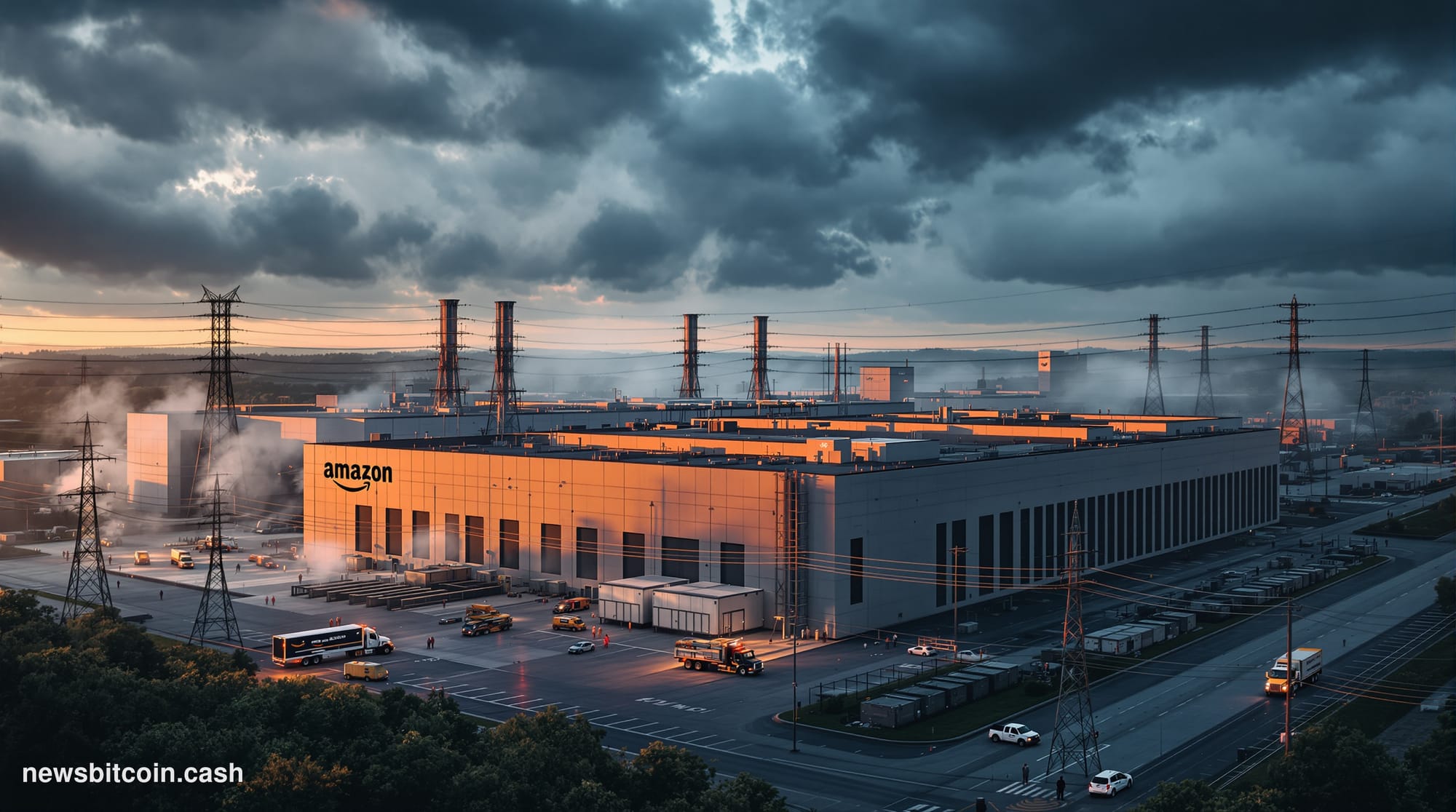
A cooling system failure at Amazon Web Services Northern Virginia data center on Friday forced Coinbase to restrict trading operations, placing its markets in "cancel only" mode while engineers worked to restore full functionality. The incident underscores the crypto industry's growing dependence on centralized cloud infrastructure and the cascading risks that accompany this architectural choice.
Coinbase announced Friday that its markets would temporarily operate under restricted conditions, allowing users to cancel existing orders but preventing new trade executions. The exchange indicated that normal trading operations would resume "shortly" as the underlying infrastructure issues were resolved. The timing couldn't be more pointed—occurring during active trading hours when market volatility typically peaks.
The Northern Virginia facility represents one of AWS's most critical operational hubs, housing infrastructure that powers countless financial services, government agencies, and technology platforms. When cooling systems fail in these environments, server temperatures spike rapidly, forcing automated shutdowns to prevent permanent hardware damage. The resulting service disruptions ripple through every application layer, from basic web services to complex trading engines that require millisecond response times.
For cryptocurrency markets that operate continuously across global time zones, even brief infrastructure interruptions carry amplified consequences. Unlike traditional financial markets with defined trading hours and built-in circuit breakers, crypto exchanges promise 24/7 availability. When that promise breaks, traders find themselves locked out of positions during potentially volatile periods, unable to respond to market movements or manage risk exposure.
The incident highlights a fundamental tension in crypto's evolution from decentralized protocols to institutionalized trading platforms. While Bitcoin and Ethereum networks themselves operate across thousands of distributed nodes worldwide, the exchanges that facilitate most retail and institutional trading increasingly rely on concentrated cloud infrastructure. This architectural decision prioritizes performance and operational efficiency over the resilience that distributed systems theoretically provide.
Coinbase's infrastructure strategy reflects broader industry patterns. Major exchanges have gravitated toward hyperscale cloud providers like AWS, Microsoft Azure, and Google Cloud Platform to handle massive traffic spikes and complex computational workloads. These partnerships enable rapid global expansion and sophisticated trading features, but they also introduce single points of failure that can affect multiple services simultaneously.
The AWS Northern Virginia region hosts critical infrastructure for numerous crypto-related services beyond Coinbase. Blockchain analytics firms, custodial services, and decentralized finance protocols often rely on the same underlying cloud infrastructure, meaning localized technical failures can trigger industry-wide disruptions. This concentration risk challenges the cryptocurrency sector's foundational claims about eliminating systemic vulnerabilities through decentralization.
What this means for the crypto infrastructure landscape extends beyond immediate operational concerns. As institutional adoption accelerates and regulatory frameworks solidify, exchanges and related services face increasing pressure to demonstrate enterprise-grade reliability. The industry must balance the operational advantages of cloud infrastructure against the systemic risks that centralized dependencies introduce. Friday's overheating incident serves as a reminder that even the most sophisticated data centers remain vulnerable to physical realities—and that crypto's digital revolution still relies on very analog infrastructure that can overheat, flood, or fail when least expected.
Written by the editorial team — independent journalism powered by Bitcoin News.