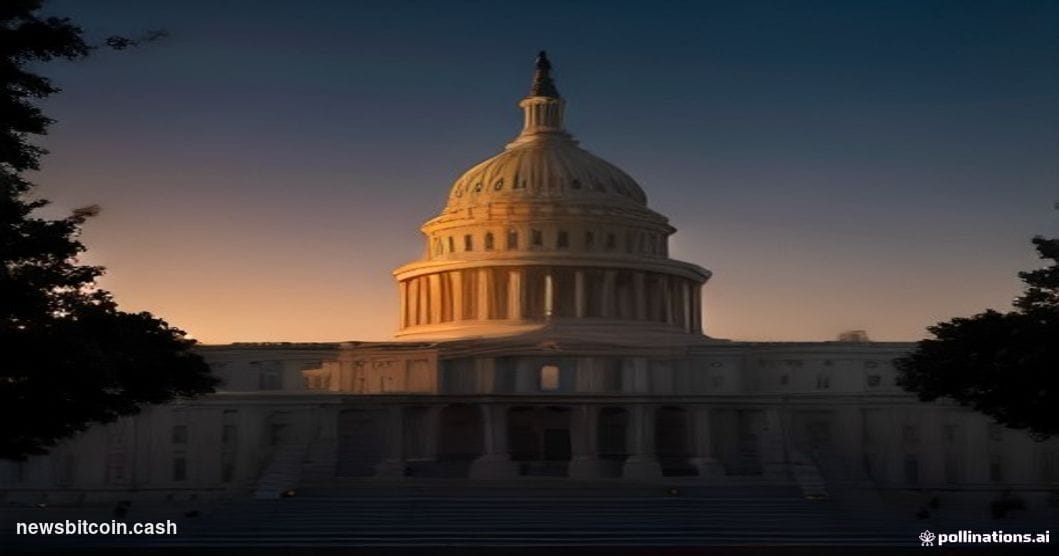
Venture capital giant Andreessen Horowitz is making its position clear: the United States must lead the world on crypto regulation, and the ongoing CLARITY Act discussions represent the most consequential legislative moment the industry has faced in years. The firm's vocal support for domestic crypto leadership arrives at a moment when Washington is actively weighing how deeply — and how coherently — it intends to govern digital assets. What happens in those deliberations will reverberate far beyond American borders.
Why the CLARITY Act Matters Now
The CLARITY Act is not simply another piece of regulatory housekeeping. It represents a structural attempt to define how the United States will categorize, supervise, and ultimately legitimize the crypto industry at a federal level. The core tension in any such legislation is familiar: how do you write rules comprehensive enough to protect consumers and markets without strangling the very innovation that makes the sector worth regulating in the first place? That balance has eluded Washington for the better part of a decade, and the CLARITY Act talks signal a renewed commitment — or at least a renewed attempt — to get it right.
For Andreessen Horowitz, a firm that has deployed billions of dollars across blockchain infrastructure, decentralized finance protocols, and Web3 startups, the stakes are existential in a very practical sense. Regulatory ambiguity in the U.S. has historically pushed development talent, capital formation, and protocol launches offshore. When founders cannot get a clear answer about whether their token constitutes a security, they frequently choose jurisdictions that will give them one — even if that answer comes with its own set of constraints. The result has been a slow, steady erosion of American primacy in a sector that the U.S. arguably helped create.
The Global Regulatory Race
A16z's backing of U.S. crypto leadership is also a geopolitical argument dressed in the language of innovation policy. The European Union's Markets in Crypto-Assets regulation, known as MiCA, is already operational, giving European regulators a first-mover advantage in setting baseline standards for stablecoins and crypto asset service providers. Meanwhile, jurisdictions across Asia, the Middle East, and the United Kingdom have all moved aggressively to attract digital asset businesses with clear licensing regimes and defined legal frameworks.
The risk for the United States is not merely that it loses some startup activity at the margin. It is that the foundational technical and legal standards for the next generation of financial infrastructure get written in Brussels, Singapore, or Abu Dhabi — and that American firms are then forced to comply with frameworks they had no hand in designing. From that vantage point, Andreessen Horowitz's push for decisive U.S. legislative action reads less like lobbying and more like a warning.
Market Dynamics Hang in the Balance
The CLARITY Act discussions are already influencing market dynamics, even before any final legislative text is adopted. Institutional capital that has been sitting on the sidelines — waiting for a clear regulatory signal before committing to crypto-native investment strategies — tends to move quickly once that signal arrives. Conversely, prolonged uncertainty has a cost: it depresses valuations, slows hiring, and makes it harder for credible projects to differentiate themselves from bad actors in the absence of enforceable standards.
Innovation trajectories are equally at stake. The sectors most likely to benefit from regulatory clarity are also among the most consequential: tokenization of real-world assets, on-chain lending markets, payment infrastructure built on public blockchains, and the broader convergence of decentralized finance with traditional financial services. Each of these verticals requires legal certainty to scale. Without it, the most ambitious use cases remain confined to whitepapers and small-scale pilots, unable to attract the institutional partnerships necessary for mainstream adoption.
What Andreessen Horowitz's Position Signals to the Industry
When a firm of a16z's scale and political engagement aligns itself publicly with a specific legislative direction, it carries weight that a smaller operator's advocacy simply cannot. The firm has built substantial Washington infrastructure — policy teams, legal experts, and ongoing dialogue with regulators — precisely because it recognizes that the returns on its crypto portfolio are partially a function of the regulatory environment in which those investments operate. Its endorsement of U.S. leadership on the CLARITY Act is therefore a calculated bet that coherent federal rules will expand the addressable market for every company in its portfolio more than an unregulated free-for-all ever could.
The broader industry should read Andreessen Horowitz's positioning as a signal that the window for shaping this legislation is open — but not indefinitely. Regulatory frameworks, once passed, tend to calcify. The entities that engage most actively during the drafting and deliberation phases are the ones whose interests are most faithfully reflected in the final text. That is not cynicism; it is how representative governance works. The question is whether the rest of the crypto industry will show up with the same urgency that a16z is bringing to the table.
What This Means
The CLARITY Act talks are a fork in the road for American crypto policy. Andreessen Horowitz's visible support for U.S. leadership in this process underscores the size of what is at stake — not just for venture returns, but for the architecture of global digital finance. If the U.S. seizes this moment with legislation that is both protective and permissive in the right measures, it can reclaim the standard-setting role it has been ceding to other jurisdictions. If the deliberations stall or produce another round of ambiguity, the capital and talent will continue to flow toward clearer skies elsewhere. The market dynamics are already reacting to that uncertainty. The CLARITY Act is the U.S. government's clearest opportunity in years to change the equation.
Written by the editorial team — independent journalism powered by Bitcoin News.