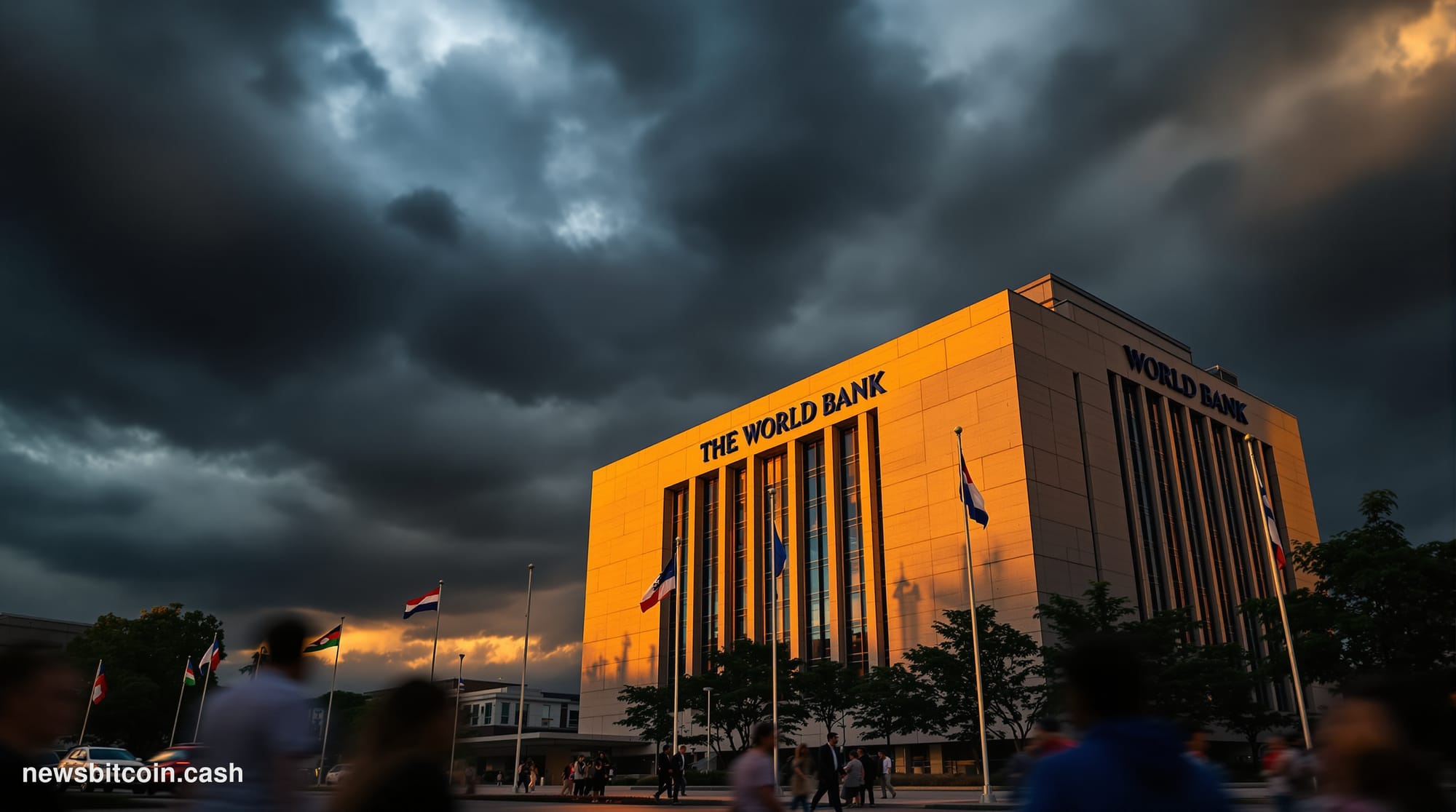
A confidential World Bank document has exposed the staggering scope of economic devastation rippling across the developing world, with 27 countries now scrambling for emergency crisis funding as the Iran conflict continues to destabilize global markets. The unprecedented surge in funding requests represents one of the largest coordinated appeals for financial assistance in the institution's recent history.
The rapid activation of crisis funding mechanisms by these 27 nations underscores just how quickly geopolitical conflicts can cascade through interconnected global supply chains and financial systems. What began as a regional military confrontation has evolved into a systemic economic shock that is forcing governments across Africa, Asia, and Latin America to seek emergency liquidity support from international financial institutions.
The document reveals severe economic vulnerabilities that were previously hidden beneath the surface of seemingly stable developing economies. Countries that appeared financially sound just months ago are now facing acute foreign exchange shortages, supply chain disruptions, and inflationary pressures that threaten to spiral beyond their capacity to manage independently. The Iran war fallout has exposed these structural weaknesses with brutal efficiency.
Energy-dependent economies have been hit particularly hard, as oil and gas price volatility has created impossible budget arithmetic for nations that rely heavily on energy imports. The conflict has disrupted traditional trade routes through the Persian Gulf region, forcing countries to seek more expensive alternative supply channels while simultaneously dealing with reduced export revenues as global demand contracts.
The potential for regional instability now looms large as these 27 countries grapple with the twin pressures of economic crisis and social unrest. History demonstrates that financial crises in developing nations rarely remain contained within national borders, particularly when they occur simultaneously across multiple countries. The domino effect of currency devaluations, debt defaults, and political upheaval could create a contagion that spreads far beyond the initial crisis zones.
What makes this situation particularly concerning is the speed with which these funding requests materialized. The rapid activation suggests that many of these countries were operating with minimal financial buffers, leaving them exposed to external shocks. This vulnerability raises fundamental questions about the sustainability of current global economic architecture and whether international financial institutions have adequate resources to respond to multiple simultaneous crises.
The World Bank's crisis funding mechanisms were designed for isolated emergencies, not for coordinated global economic distress affecting nearly three dozen countries simultaneously. The institution now faces the challenge of distributing limited resources across a unprecedented number of applicants while maintaining the conditionalities and oversight requirements that govern emergency lending programs.
For the broader cryptocurrency and digital assets ecosystem, this crisis illuminates both the fragility of traditional financial systems and the potential role that decentralized alternatives might play in future economic disruptions. As central banks struggle with currency stability and traditional banking systems face liquidity pressures, the appeal of borderless digital assets becomes increasingly apparent to both institutional and retail participants seeking alternatives to volatile national currencies.
The unfolding crisis serves as a stark reminder that in our interconnected global economy, no conflict remains truly regional. The 27 countries now seeking World Bank assistance represent just the beginning of what could become a much larger reckoning with the economic consequences of geopolitical instability. How effectively international institutions respond to this coordinated crisis will likely determine whether the current situation stabilizes or escalates into something far more destabilizing for global financial markets.
Written by the editorial team — independent journalism powered by Bitcoin News.